The United States shot down four Iranian one-way attack drones and struck a ground control station around Bandar Abbas, and Iran said it targeted an American airbase in response to the new U.S. strikes.
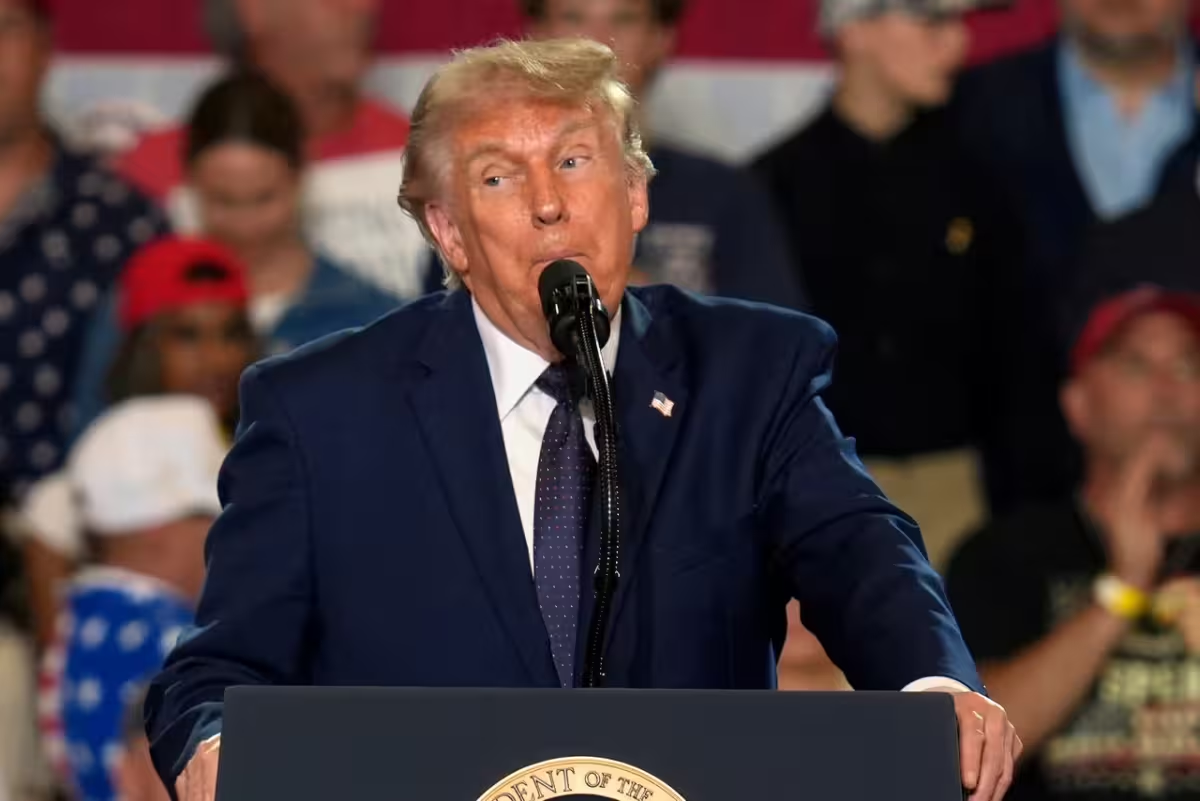
President Donald Trump, who hours earlier signaled that an agreement between the two sides was not close, told aides and allies he would not be rushed by international economic pressure or the political pressure of upcoming midterm elections.
The weight of the exchange is stark: four Iranian one-way attack drones were destroyed and a control site near the Strait of Hormuz was hit after U.S. military officials assessed the ground control station as presenting a direct threat to U.S. forces and commercial shipping. Iran called the U.S. strikes a “a “blatant violation”” of both the shaky ceasefire between the two countries and international law and said it responded by targeting a U.S. airbase.
The sequence of actions — U.S. shoot-downs, a precision strike on command infrastructure, and Iran’s reported retaliation — undercut diplomatic momentum. Hours earlier, Trump had publicly suggested an agreement to ease tensions and reopen the Strait of Hormuz was not imminent, and he refused to let global economic or domestic political calendars dictate U.S. moves.
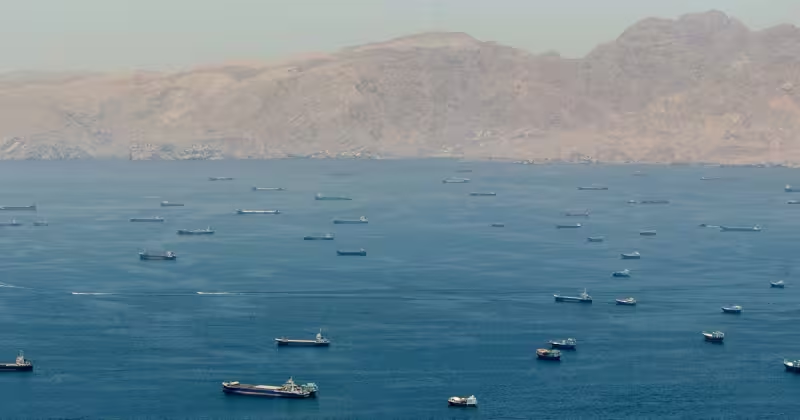
Context matters. A fragile ceasefire has governed U.S.-Iran interactions since higher-intensity exchanges earlier this year, and reopening the Strait of Hormuz — the shipping lane crucial to global energy flows — is central to any deal. The latest us strikes iran episode revived questions about whether either side still sees a negotiated pause as durable, or merely as a temporary halt between escalations.

Tension shows up in a factual contradiction: U.S. commanders say the ground control station posed an imminent threat to both deployed forces and commercial vessels, while Iran describes the strikes as a breach of the ceasefire and international norms. That gap — who posed the immediate danger, and whether a preemptive strike was justified — is the heart of the impasse. It leaves diplomats without a clear common narrative to broker the next step, even as both sides claim to want stability.
On American soil, the rising drumbeat of foreign confrontation came on the same day as a catastrophic industrial accident in Washington state that Governor Bob Ferguson called feared to be “the deadliest industrial accident in modern history.” A chemical tank implosion at the Nippon Dynawave paper mill in Longview on Tuesday morning killed two people, officials confirmed, and nine others are presumed dead.
Seven additional employees were hospitalized after the implosion. The tank, built to hold 900,000 gallons of white liquor used in the pulping process, failed in a blast that survivors and neighbors described as a sudden, overwhelming cloud of steam and vapor. Among the victims killed was 52-year-old Gilbert Bernal.
Gilbert Bernal’s son, Eli Bernal, described the scene in a way the numbers cannot capture: "Just that big steam cloud, it was everywhere," he said. "It was so vast, just like a cloud on the floor." The family’s loss and the scale of the presumed fatalities have shifted attention at home even as Washington sorts through an acute foreign-policy crisis.
Both stories land on one practical point: military action and domestic catastrophe sharpen political pressure. The strikes and counterstrikes make a negotiated reopening of the Strait of Hormuz harder to sell to domestic constituencies; the paper mill implosion piles on grief and scrutiny at home that leaders will have to answer for even as they weigh further steps abroad.
The most consequential question now is whether this exchange has irreparably damaged the narrow diplomatic track for ending the standoff and reopening the Hormuz corridor. Given the timing — Trump’s explicit refusal to be hurried, the U.S. assessment that the Bandar Abbas control site posed a direct threat, and Iran’s immediate charge that the strikes were "a “blatant violation”" — the practical effect is likely a pause, not rapprochement. That leaves the Strait of Hormuz and the region’s fragile calm hanging on a new set of decisions, with few obvious off-ramps.