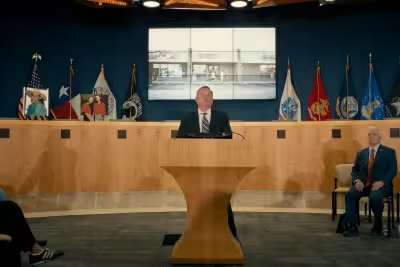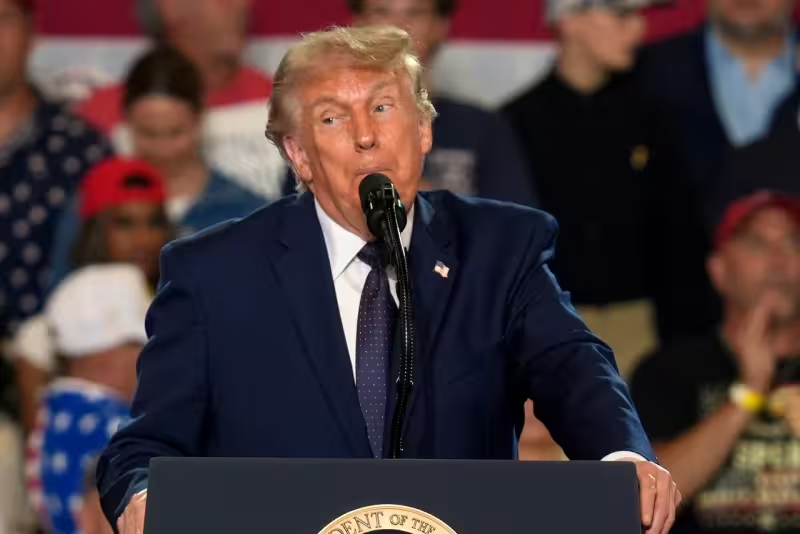
Donald Trump is scheduled to participate on Monday, May 25, in the traditional wreath-laying ceremony at Arlington National Cemetery, with the Ceremony of Floral Tribute in Honor of the Armed Forces set to begin at noon at the Tomb of the Unknown Soldier.
The ritual will open a day of official remembrance that already bears the scale markers of the holiday: on May 21, soldiers from the U.S. Army Old Guard placed about 250,000 flags in front of graves at Arlington, continuing a flag-placing tradition that has been held every year since 1948 after the U.S. Army's 3rd Infantry Regiment was designated the Army's official ceremonial unit.
Those figures anchor why the small, private moment at the Tomb is not only symbolic. The 250,000 flags echo earlier acts of public mourning: in 1868, about 5,000 people decorated the graves of more than 20,000 soldiers at Arlington in a ceremony led by James A. Garfield, after the Civil War ended in 1865 with about 620,000 soldiers dead. John A. Logan later proclaimed May 30, 1868, as the official national day of tribute, a start point that turned local acts of decoration into a national ritual.
Later on Monday the National Memorial Day Observance will take place at the Memorial Amphitheater, where the president and the vice president are expected to deliver speeches; both the Ceremony of Floral Tribute at the Tomb of the Unknown Soldier and the Amphitheater observance will be livestreamed for viewers beyond the cemetery grounds. Memorial Day itself is observed on the last Monday in May — in 1971 Congress made it a federal holiday under the Uniform Monday Holiday Act — and this year that date falls on May 25.
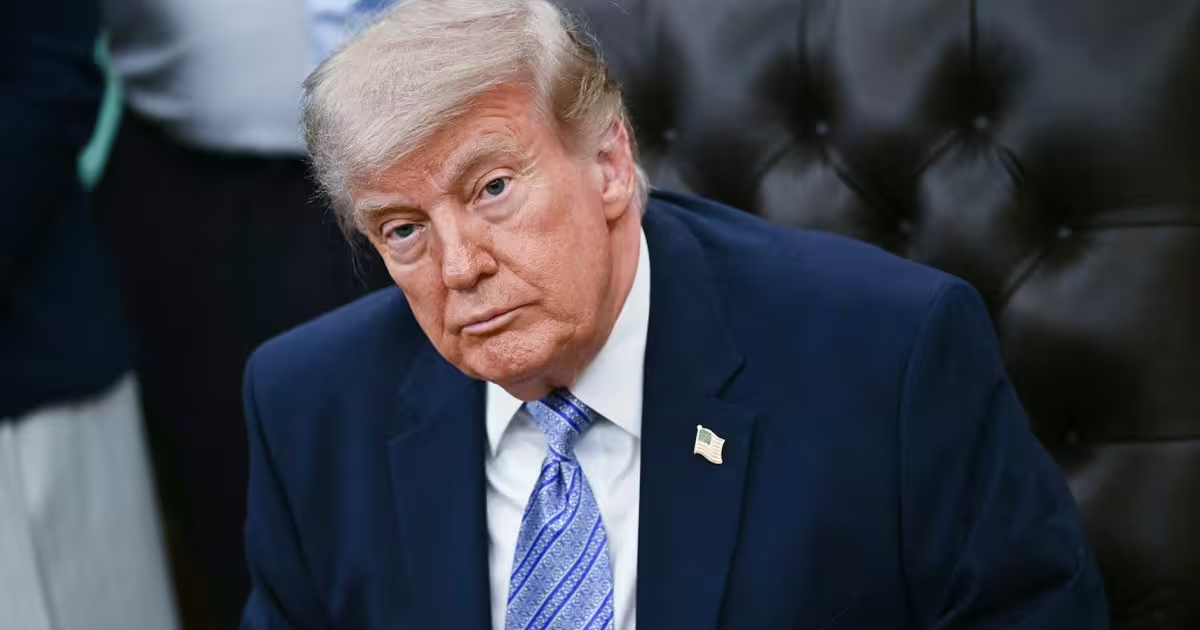

Officials have said attendees expected to be present include Senator JD Vance, media personality Pete Hegseth and Major General Antoinette Gant, reflecting how the day's events bring elected officials, veterans' advocates and senior military leaders into the same ceremonial frame. That mix is part of what keeps Arlington the focal point: a place where private grief, public ritual and national ceremony converge.
There is a persistent tension built into the holiday’s routine. Memorial Day began as Decoration Day after the Civil War; it formally honored Union dead in 1868 and was anchored initially to May 30 before the holiday calendar shifted. The nation now observes Memorial Day as a federal holiday on the last Monday in May, a scheduling change enacted in 1971, yet the ceremonies retain the older language and forms — wreaths, flags and grave decorations — even as organizers add modern elements such as livestreaming to expand audience reach.
That blend of the old and the new will be visible throughout Monday’s program. The Tomb ceremony’s noon start is the formal beginning, but the day’s emotional weight rests on the layers of ritual behind it: decades of Arlington traditions, the Old Guard’s early-morning work placing a quarter-million flags, and the ritual roots that date to the Decoration Day gatherings of the 19th century.
For viewers at home, both the floral tribute at the Tomb of the Unknown Soldier and the National Memorial Day Observance at the Memorial Amphitheater will be available live, making the ceremonies not only a local act of remembrance but a national broadcast. On May 25, Arlington will once again be the place where the country’s formal remembrance is staged — a day that, by design, joins the immediate presence of leaders to a ritual that began in the shadow of the Civil War.
At noon on Monday, Donald Trump will stand at the Tomb as the first public act of the day; later, speeches at the Amphitheater by the president and the vice president will close the official program, with the quarter-million flags and Arlington’s long history underscoring what Memorial Day was created to do: honor those who died while serving in the U.S. Armed Forces.