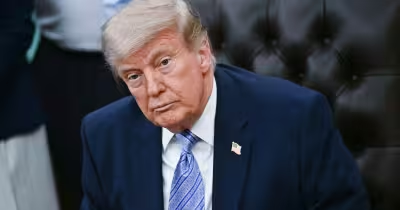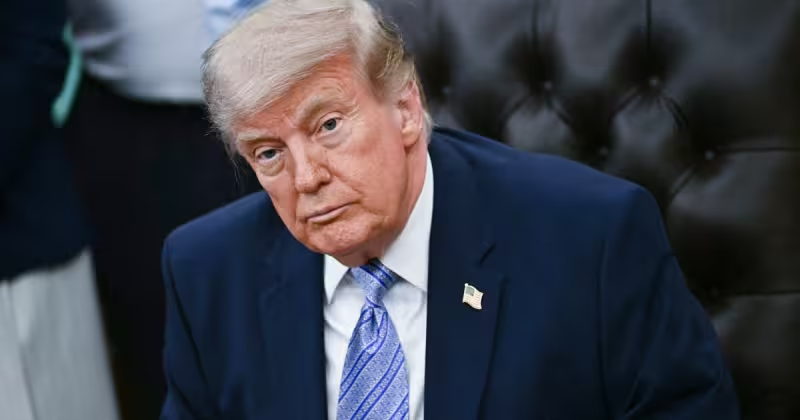
President Donald Trump said Saturday that "An Agreement has been largely negotiated, subject to finalization between the United States of America, the Islamic Republic of Iran, and the various other Countries, as listed," and that "Final aspects and details of the Deal are currently being discussed, and will be announced shortly."
Trump said he had discussed the package on a call with the Emir of Qatar, the Saudi Crown Prince, the Turkish President, the Pakistan Army chief, the King of Jordan, the United Arab Emirates president and the Egyptian president. Two regional diplomats told News that Vice President JD Vance and Steve Witkoff were also on the call. The president added he had a separate phone call with Israeli Prime Minister Benjamin Netanyahu that "went very well."
On the substance, Trump said several headline elements remain part of the plan. "In addition to many other elements of the Agreement, the Strait of Hormuz will be opened," he said. He also warned of the deal’s fragility: when asked about the odds of success, he told Axios the outcome was "50/50," that the talks could produce something "good," or could "blow[ed] them to kingdom come."
Trump said he would meet with Jared Kushner and Steve Witkoff on Saturday and that he would likely make a decision by Sunday on whether to resume the war. Earlier in the week he said he had called off a planned attack on Iran, and on Thursday he said the two nations could reach a deal to end the war in just a few days.


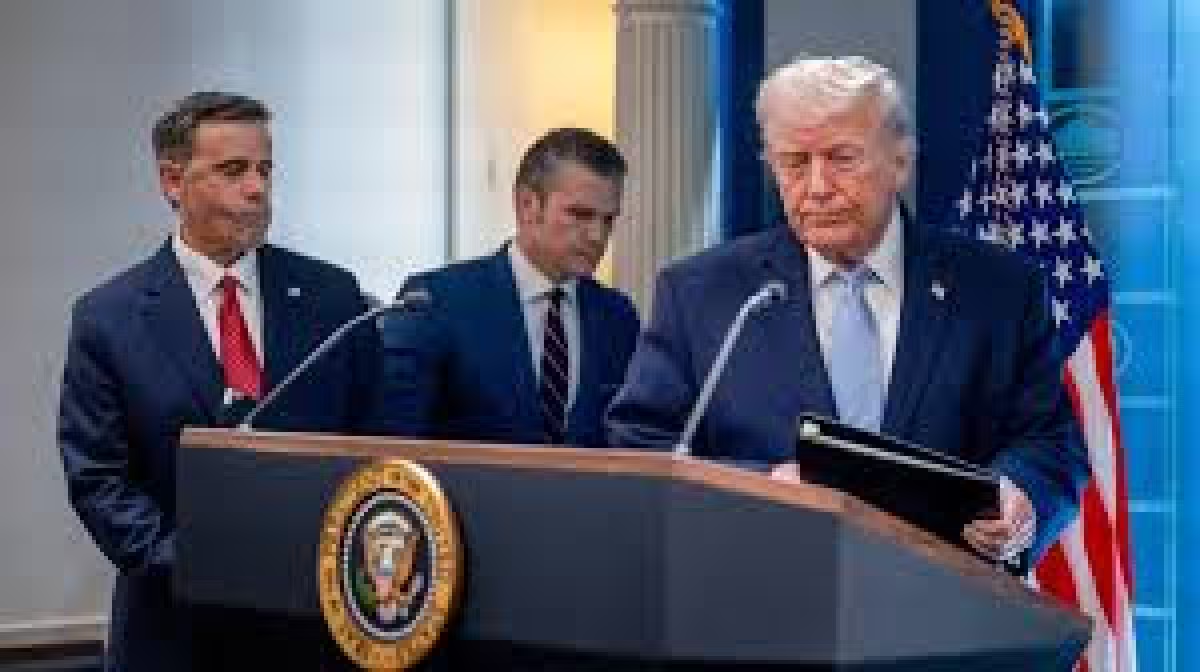
Iranian Foreign Ministry spokesperson Esmail Baghaei offered a notably more cautious public read. "we are very far from and very close to an agreement," he said, adding negotiators "have become closer, but not to the point of an agreement rather to the point where a solution may be possible." Baghaei described a working plan to draft a memorandum of understanding to end the war and to continue discussions to finalize the agreement over "30 to 60 days."
Secretary of State Marco Rubio, speaking in India on Saturday, told reporters "there may be news later today" regarding Iran — a timeline that echoes the president’s suggestion that final announcements could be imminent. The public mix of assertions — an American president touting a largely negotiated deal and an Iranian spokesperson warning talks are not yet complete — landed alongside concrete scheduling: a draft memorandum and a multiday window for further negotiation.
The context for the current push is a fragile, almost two-month ceasefire between the United States and Iran and weeks of behind-the-scenes negotiation. What Mr. Trump described Saturday would involve not only Washington and Tehran but a list of regional powers whose backing he said he’d secured on calls over the last days.
The tension is stark. Public optimism from the White House, including promises that the Strait of Hormuz would be reopened and that final details "will be announced shortly," sits next to an Iranian diplomat’s insistence that parties remain both "very far from and very close to an agreement" and a timetable from Tehran that points to a 30–60 day drafting period. Meanwhile, the president’s own warning of a "50/50" outcome and his stated intention to decide by Sunday whether to resume the war underline how quickly the calculus could swing back to open conflict.
Given those competing signals, the likeliest immediate outcome is procedural: a memorandum of understanding that lays out terms and a continued negotiation window rather than an instantaneous, fully verified peace. That path would buy time and create a framework for verification, but it would also leave the ceasefire’s survival dependent on rapid follow-through — and on a presidential decision the White House now says could come as soon as Sunday.