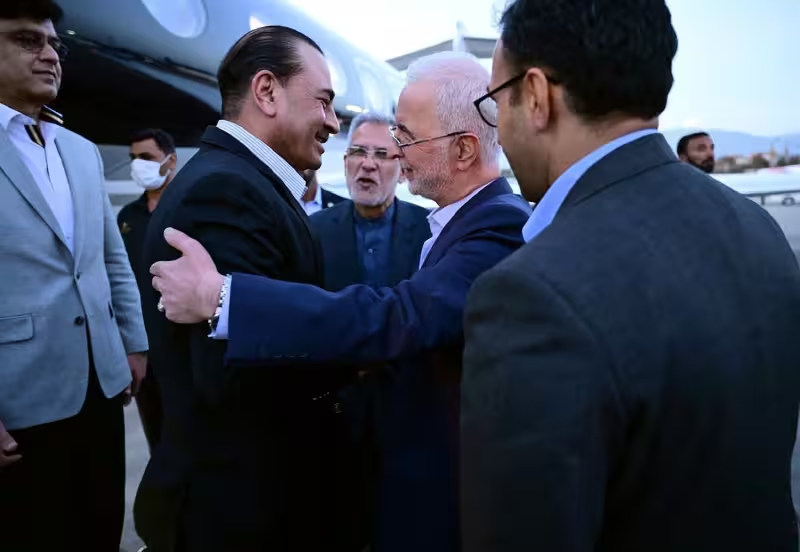
Senator Lindsey Graham posted on X that Saudi Arabia and other Arab and Muslim countries should join the Abraham Accords as a price to pay for ending the Israeli‑US war on Iran.
Graham made the case bluntly, arguing that adding partners to the normalization framework would raise the stakes of any deal and reshape regional alignments. "If in fact as a result of these negotiations to end the Iranian conflict, our Arab and Muslim allies in the region agreed to join the Abraham Accords, it would make this agreement one of the most consequential in the history of the Middle East," he wrote.
Graham singled out Saudi Arabia, Qatar and Pakistan as candidates whose inclusion would be especially consequential. He described the idea in emphatic terms: "beyond transformative for the region and world." He also praised the proposal's political authors, calling it "a brilliant move by President Trump."
The senator framed the proposal as a bargaining chip to be extracted during talks to end the Iranian conflict and the broader Israeli‑US military confrontation with Iran. He urged the president to treat accession to the Abraham Accords as part of the negotiations, writing directly to the White House: "President Trump: Stick to your guns in getting a good deal with Iran" and, he added, "Equally important, stick to your guns in insisting Saudi Arabia and others join the Abraham Accords as part of these negotiations."
Weight for Graham's proposal comes from the scale he assigns to it: bringing major Sunni powers into a formal normalization framework would, in his view, alter not only diplomatic ties but the security architecture of the Middle East. The senator warned that the choice is binary. "To Saudi Arabia and others: Now is the time to be bold for the future of a new Middle East," he wrote, and he warned of consequences for those who decline: "If you refuse to go down this path as suggested by President Trump, it will have severe repercussions for our future relationships and make this peace proposal unacceptable."
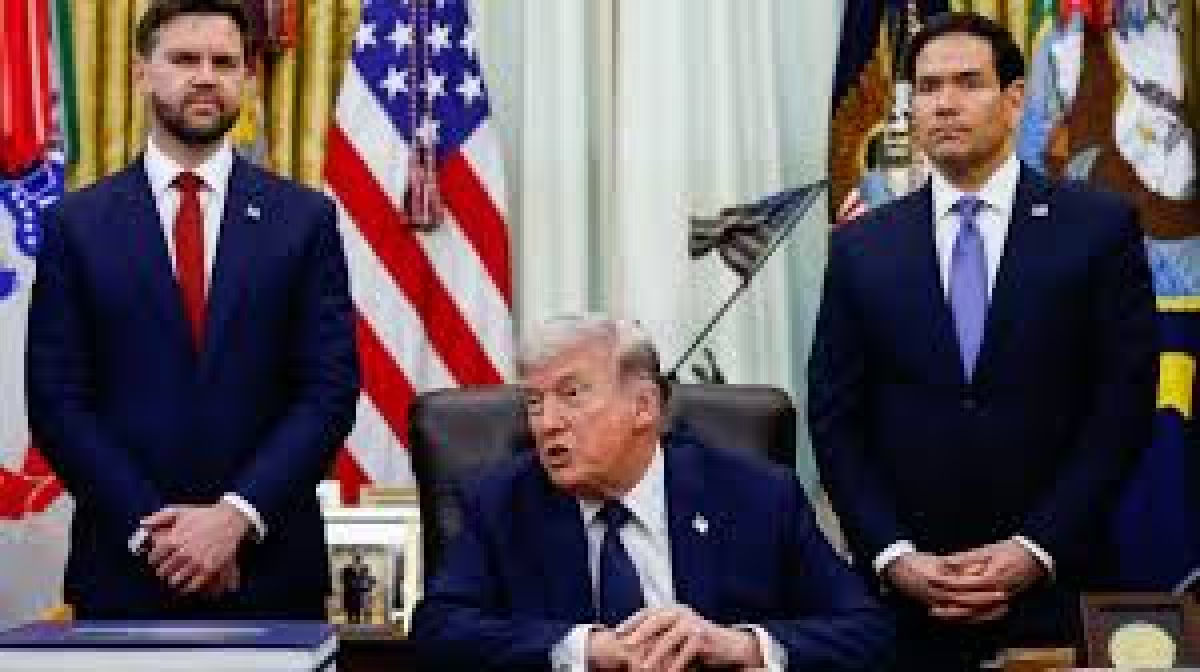
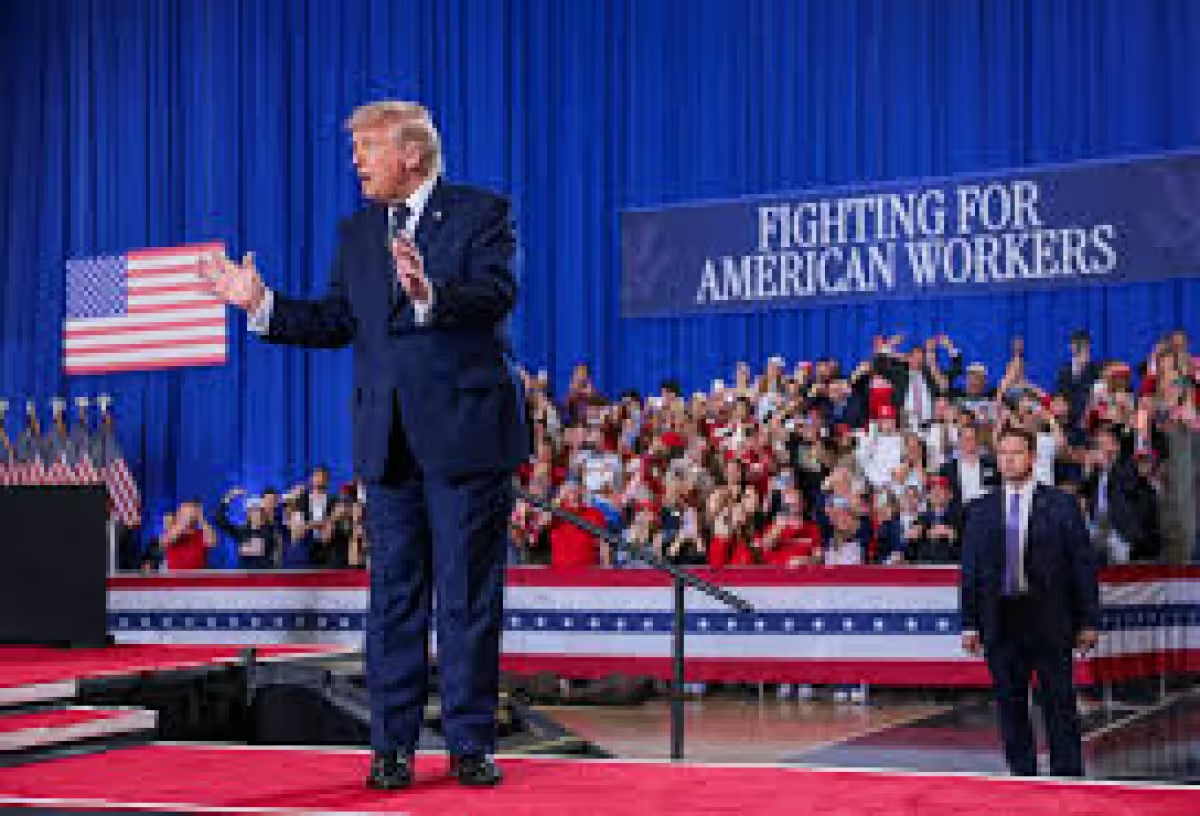
Graham pressed the political dimension further by suggesting history will judge any refusal harshly. "Would be seen by history as a major miscalculation," he warned, framing acceptance as both opportunity and obligation for regional capitals contemplating a break with Iran‑aligned actors.
Context matters and it comes after the claim: the Abraham Accords referenced by Graham are the normalization framework already used by a handful of Arab states. Graham situates any expansion of that framework inside ongoing negotiations aimed at ending the Iranian conflict and the concurrent Israeli‑US confrontation with Iran — negotiations he implies are still active and consequential.
The tension in Graham's public push is immediate. He treats accession as a condition for a successful peace process, but he also warns that refusal will render the entire proposal unacceptable. That creates a high‑stakes ultimatum: press Saudi Arabia, Qatar and others to join, and they may balk; accept refusal, and the senator insists the diplomatic package collapses into political failure. The posture leaves little room for halfway agreements.
The next move belongs to the White House and to the capitals Graham named. He has urged the president to "stick to your guns" in negotiations — both in extracting concessions from Iran and in demanding new normalization commitments from Arab and Muslim partners. If the president presses the point, the region could face a choice between rapid diplomatic reordering and entrenched rejection. If he does not, Graham predicts the plan will be judged harshly in history.
Graham framed his argument as strategy and warning at once. Whether Riyadh, Doha or Islamabad respond by embracing the Abraham Accords as part of a negotiated end to the conflict with Iran is the single consequential question now left on the table; for Graham, their answer will determine whether the effort is transformative or a missed opportunity that history will call a miscalculation.