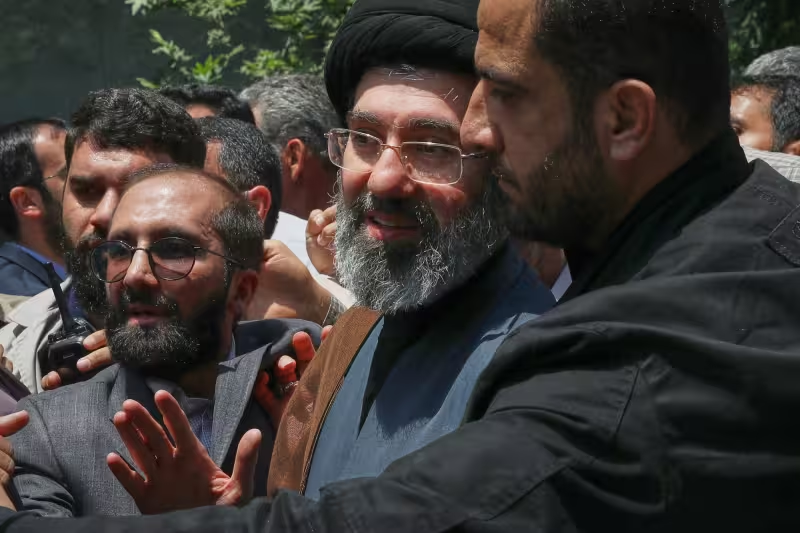
U.S. intelligence shows Iran's supreme leader is effectively holed up in an undisclosed location and reachable only through a labyrinth of couriers, a condition officials say is slowing communications with negotiators in Washington.
The leader identified by U.S. agencies is Mojtaba Khamenei, who U.S. officials say has not been officially seen or heard in public since before the start of the war and was injured in U.S. and Israeli strikes during Operation Epic Fury.
That isolation has practical consequences: Iranian officials who are authorized to work with the Trump administration are having a difficult time communicating inside their own government system, producing long delays before the United States receives responses to proposed details.
“Watching them try to figure out how to talk to each other is almost like watching a sitcom. They are completely exasperated,” a U.S. official said, describing the internal confusion and slow chains of approval.
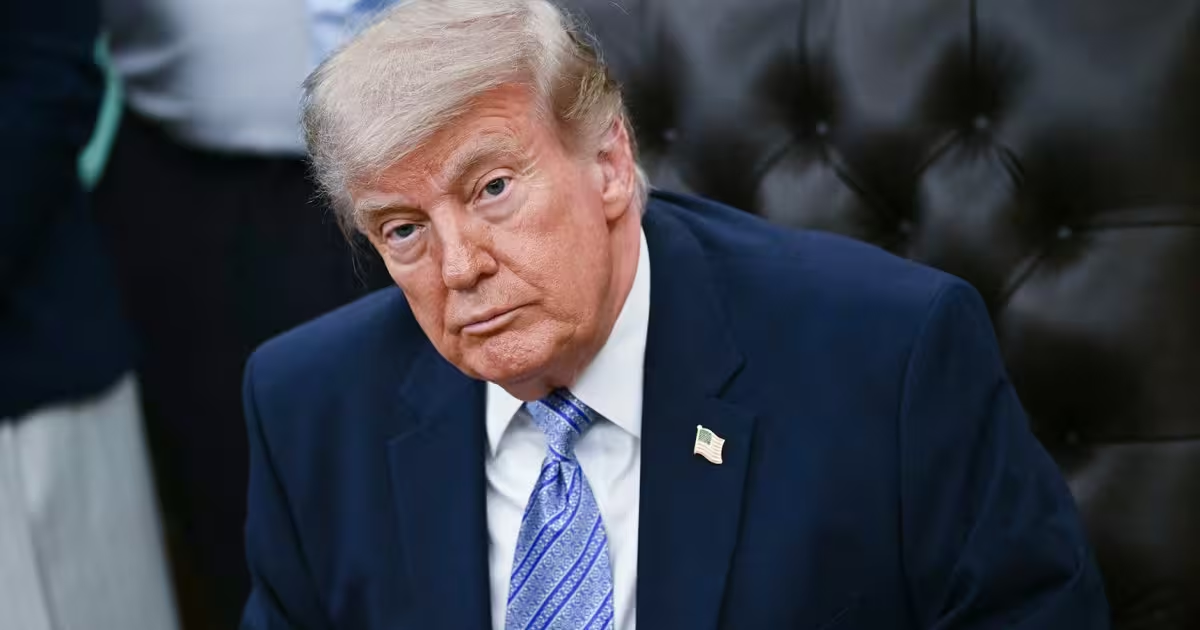
Those delays matter now because negotiators in Washington believe they have reached the broad contours of a draft agreement. A senior administration official said Sunday the supreme leader had agreed to the contours of the current draft agreement, and President Donald Trump posted on Truth Social that he anticipated final word in the next few days.
U.S. officials say the reality on the ground does not move at the speed of posts or press accounts. “This is why you see people saying things like, 'The supreme leader has agreed to the framework,' or 'We're waiting to hear back on the final deal points.' Every piece of information he receives is dated and there's a lot of latency to his responses,” the same U.S. official said.


The Financial Times has reported additional details that map onto the intelligence picture: Khamenei has established a tightly controlled command structure with two committees tasked with managing mediation efforts and reporting directly to him, and he has largely avoided electronic communications, relying on handwritten or hand-delivered messages.
That courier-driven model is not hypothetical. Dr. Omar Mohammed drew a blunt comparison: “The U.S. has driven its leader into the same kind of operational invisibility that bin Laden lived in for 10 years in Abbottabad,” he said. “Bin Laden survived with no cables out of the Abbottabad compound. Communications were carried by hand by two trusted couriers, the Kuwaiti brothers,” Dr. Mohammed added, and then: “Bin Laden stayed hidden for the rest of his life because the moment he surfaced was the moment he died. Mojtaba’s incentives point the same way. Mojtaba Khamenei won’t emerge.”
Intelligence accounts describe a system designed to obscure location: the supreme leader's messages are passed through a network of couriers, every piece of information he receives is dated, and officials say that most Iranian leaders have been spending weeks inside highly fortified bunkers during the war to limit exposure.
Those operational choices have created a tension at the heart of the current effort to seal a deal. On one side, negotiators say top-level agreement appears to exist in principle; on the other, the mechanics of getting signed and time-stamped approval through a courier chain produce unpredictable lags and missed deadlines.
The immediate consequence is procedural. Iranian responses arrive only after layers of transmission and verification, and that latency has already delayed answers to proposed details. President Trump’s public optimism — and the senior administration official’s assessment that the supreme leader has agreed to the draft’s contours — are at odds with an operational picture that favors caution and delay.
Given the courier network, the avoidance of electronic channels and Khamenei’s undisclosed, highly secured posture, the best-supported judgment is blunt: Washington may have a shared framework in principle, but final, dated sign-off is unlikely to move as quickly as officials hope. The next days will show whether couriers can deliver the last approvals fast enough to match the political timeline, or whether secrecy and latency will force negotiators back to square one.