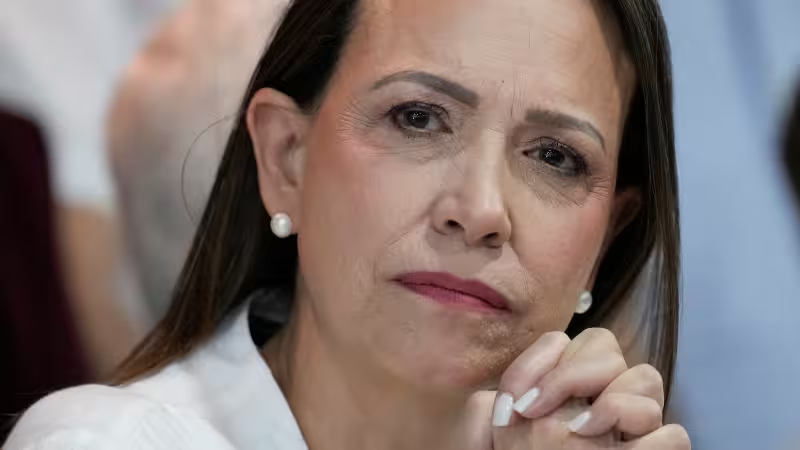
María Corina Machado announced on Saturday that she plans to run for president again and intends to return to Venezuela before the end of 2026, telling reporters in Panama City that she and fellow opposition leaders remain committed "through free and fair presidential elections, where all Venezuelans inside and outside the country vote."
The announcement came as Machado, who has been in exile since December, met in Panama with several fellow Venezuelan opposition leaders. She emerged from 11 months in hiding somewhere in Venezuela, traveled to Norway where she was honored with the Nobel Prize, and then left the country; on Saturday she laid out a timetable and a list of conditions she says are necessary for a credible vote.
Machado said an election with democratic conditions would take between seven and nine months of planning and that those conditions would include "the appointment of neutral electoral authorities, voting registration updates and the ability of opposition candidates to run for office without government interference." She repeated that she would stand in any proper contest: "I will be a candidate, but there may be others, of course," and, "I would love to compete with everyone, with anyone who wants to be a candidate."
The stakes she placed on the process underscore how deeply contested Venezuela's last presidential vote was. In the 2024 presidential election, Maduro's government barred Machado from running; she chose retired ambassador Edmundo González Urrutia to represent her on the ballot. Officials loyal to the ruling party declared Nicolás Maduro the winner mere hours after the polls closed, even as Machado's campaign collected evidence showing González had defeated Maduro by a more than a 2-to-1 margin.
That clash between rival tallies and barriers to candidacy is the clearest reason Machado framed a return date and a planning window: without neutral authorities and unhindered registration, she argues, any contest will lack legitimacy. On Saturday she pressed that point in Panama City and signaled the opposition will not accept a repeat of 2024’s disputed process.
Context for the announcement is immediate. Machado rose to become Maduro's strongest opponent in recent years, and her exile since December follows a period in which she spent nearly a year hidden inside Venezuela before leaving for Europe. The international attention she received in Norway after being honored with the Nobel Prize added momentum to her profile abroad, even as the timing and organization of another presidential vote in Venezuela remain unclear.
Tension sits at the heart of Machado’s pledge. She says an election meeting her stated conditions would require seven to nine months of preparation, but it is unclear when Venezuela will hold a presidential election. The government that barred her in 2024 remains in power, and officials aligned with it were quick to declare results in the prior race. Machado’s insistence on neutral electoral authorities and registration updates is a direct demand on institutions the ruling side controls, creating a deep procedural gap between what the opposition says is necessary and who currently runs the electoral machinery.
Her choice to announce the timeline and to promise a return before the end of 2026 forces a political calendar onto an uncertain landscape: either Caracas and opposition negotiators agree to the structural changes she lists or any future vote risks repeating the 2024 dispute. Machado campaigned last year through a proxy after being barred, and her team argues the evidence they collected showed a decisive margin against Maduro; she is now saying she will run personally when conditions permit.
The most consequential unresolved question is whether Caracas will allow the changes Machado says are prerequisites. If it does not, her return and candidacy will set up another confrontation with the government that excluded her from the last race; if it does, Venezuela would face a months-long process to rebuild voter lists, select neutral electoral authorities and certify candidates — the seven- to nine-month window she described. Either way, Machado’s promise to come back before the end of 2026 refocuses attention on an opposition leader who has spent the past year in hiding and exile and now intends to carry the fight back onto Venezuelan soil.