Troy Melton was activated from the 60-day injured list on May 24, 2026, and was sent to the mound to start Game 2 of a doubleheader at Oriole Park at Camden Yards as the Detroit Tigers reshuffled their pitching staff.
Melton’s return marked his first appearance of the 2026 season after he missed time with right elbow inflammation suffered in late February during spring training. He completed four rehab starts — one at the Triple-A level — before rejoining the big-league club and drawing the start in Baltimore.
The roster move required a cut: the Tigers designated Connor Seabold for assignment to create space for Melton. Seabold had signed a one-year, $800,000 contract with Detroit before Opening Day and had posted a 3.45 ERA with five walks and 14 strikeouts in 15 2/3 innings over 11 games this season.
Melton arrives with a short but promising record. He made his major-league debut in July 2025 and finished that season with a 2.76 ERA, 36 strikeouts and 15 walks in 45 2/3 innings across 16 games, including four starts. The Tigers are banking on that 2025 performance and the work he put in on rehab assignments to translate into immediate depth for a staff that has been working through injuries.
Manager A.J. Hinch, speaking after the doubleheader, said the club needed to find a way to win the first game and lamented how quickly the contest flipped late; he added that the team would have to turn around in a few hours and get back at it without many words to spare. His comments underscored the quick decisions Detroit has had to make as it juggles short-term results and longer-term health priorities.
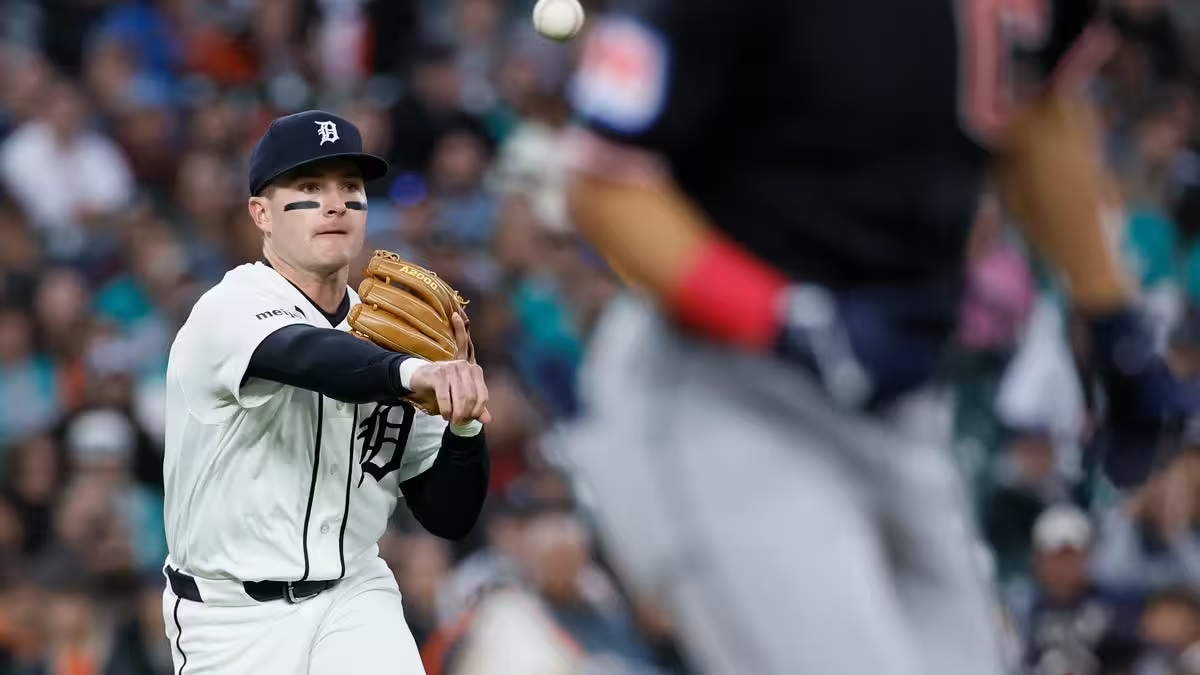
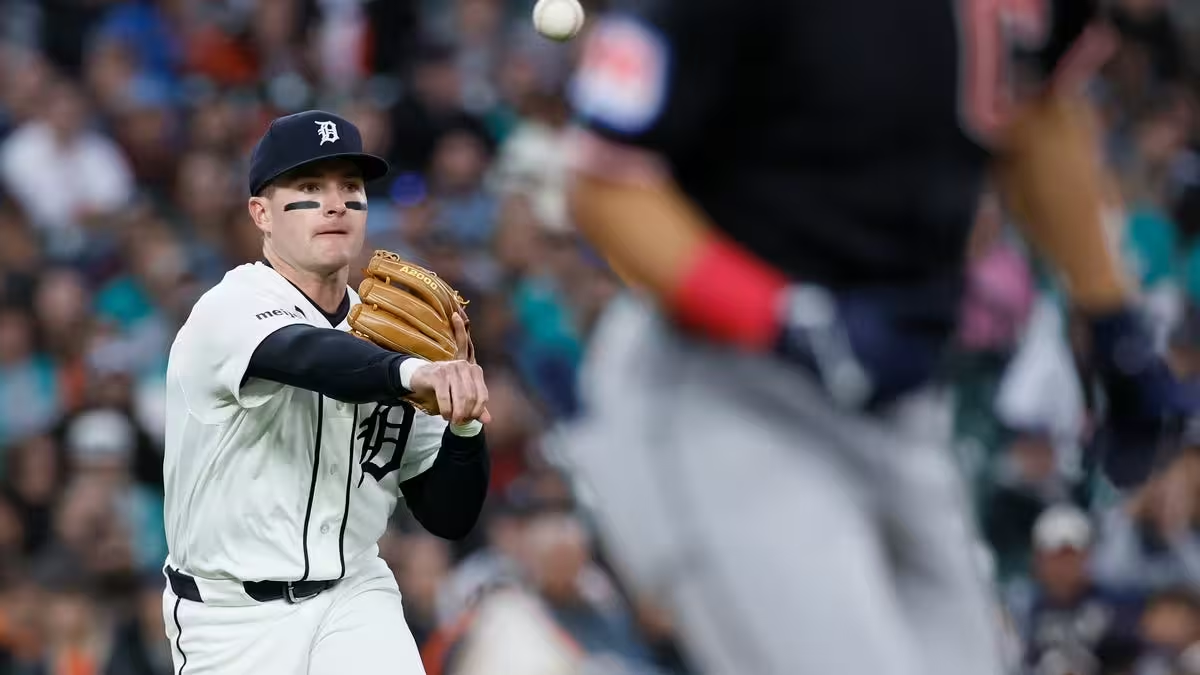
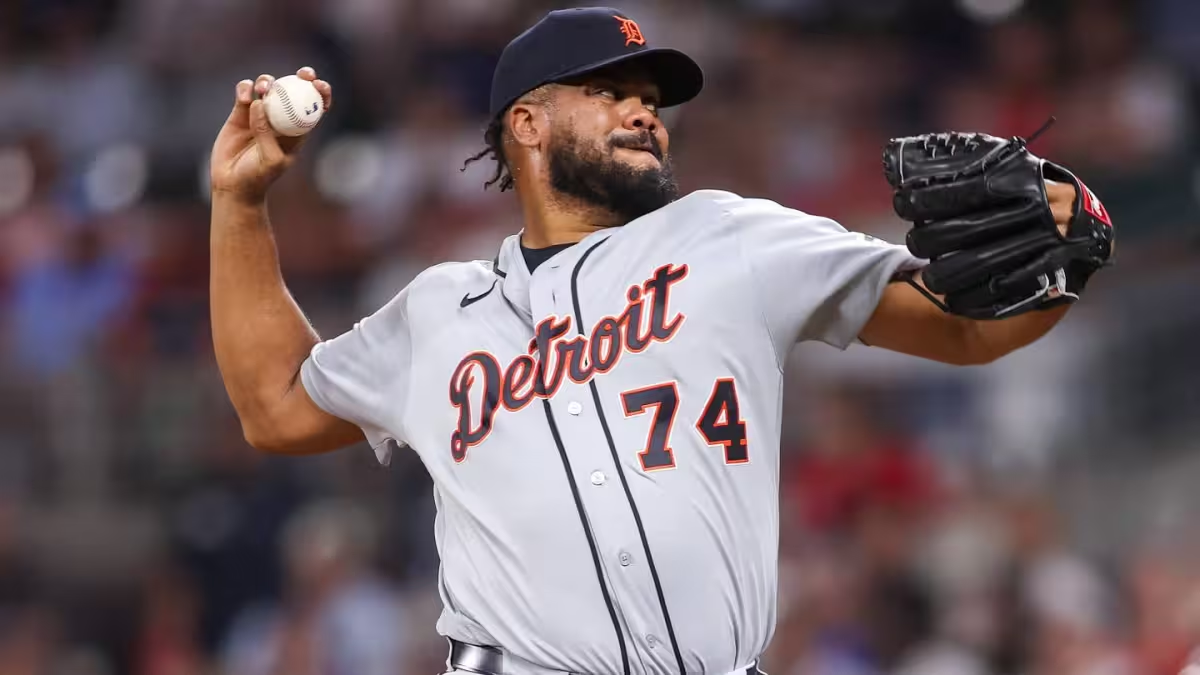
The return of Melton also changes the look of the rotation. After his activation the Tigers’ rotation included Framber Valdez, Casey Mize, Jack Flaherty and Keider Montero alongside Melton. Detroit is also tracking the recoveries of Tarik Skubal and Justin Verlander, both expected to rejoin the rotation soon after live batting practice sessions, which would further alter the club’s plans for innings and matchups.
Detroit’s pitching depth was already strained. The club placed Brant Hurter on the 15-day injured list before Game 1 with lumbar spine inflammation and called up Ricky Vanasco from Triple-A in the corresponding move. Those parallel transactions highlight why the organization moved to activate Melton as soon as he was cleared: the Tigers needed immediate options that could eat innings and provide swing-man flexibility.
The choice to cut Seabold—who had shown serviceable numbers in limited work—illustrates the friction at the heart of Detroit’s roster choices. Seabold’s 3.45 ERA and 14 strikeouts in 15 2/3 innings suggested a steady depth arm, but making room on both the 26-man and 40-man rosters for Melton forced a decision between a veteran journeyman and a young pitcher whose upside and 2025 production hinted at a larger role.
Melton’s return carries a clear question: can a pitcher coming off elbow inflammation be trusted to handle a workload that could expand as veteran starters return and others land on the injured list? The Tigers are betting on his 2025 numbers and the four rehab starts he completed, including a Triple-A outing, to justify that gamble.
For Melton, the moment was simple and immediate: his first big-league appearance of 2026 and a chance to push for a rotation spot in a club that needs reliable arms now more than ever. The next few weeks will show whether Detroit’s decision to open roster space for him—and to absorb the loss of Seabold—was the right call.