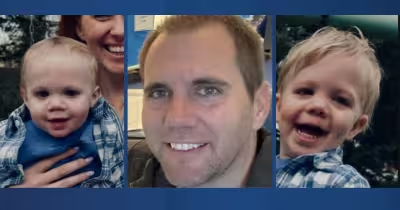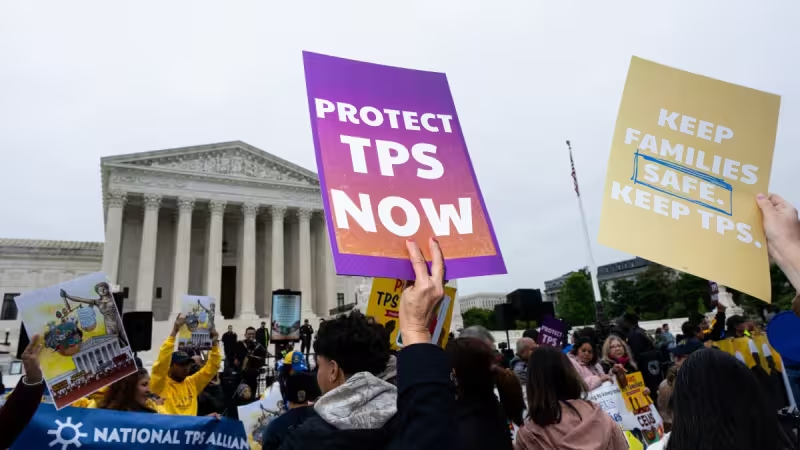
The Supreme Court has less than two months to decide whether Temporary Protected Status will end for hundreds of thousands of haitians, and one of them — travel nurse Harlaine Dominique — says the ruling could rip her family apart.
Dominique, the mother of 16-month-old J.J., came to the United States in 1995 when she was 7 years old and overstayed her visa. She and her mother, Roz, were granted deportation protection in 2010 after a magnitude-7.0 earthquake struck Haiti that killed over 200,000 people; their TPS status has been renewed several times because of ongoing political instability and gang violence. More than 300,000 haitians could face deportation if the Supreme Court allows the TPS program to end.
Dominique worked on the front line treating patients during the Covid-19 pandemic as a travel nurse, a job she says let her provide for her family while serving the country. "It hurts deeply to know that just six years ago, I was a hero. Now I am considered a burden to this country," she said. She added that "TPS has allowed me to live the American dream that we all pray for — knowing that can all be stripped away from me keeps me up at night."
The stakes are immediate. Dominique’s mother needs a kidney transplant, and Roz lost her access to Medicare this year after the Trump administration restricted access for TPS holders. Dominique says losing legal protection would not only put her at risk of deportation but also remove the ability to care for her son and to help secure medical care for her mother. "I can only imagine what that would do to my son. For him to lose his mom — he’s my everything. He depends on me. He needs me," she said.
Temporary Protected Status allows eligible people to live and work legally in the United States but offers no pathway to permanent residency or citizenship. Administrations have renewed TPS for Haitians repeatedly since the 2010 disaster because of continued violence and instability at home. Critics, including the Trump administration and Republicans in Congress, have argued that TPS permits migrants to remain in the country for years without pursuing permanent status.
The contradiction at the center of Dominique’s case is stark: a nurse who treated patients during a national health crisis and built a life here now faces the possibility of being labeled expendable. Dominique put it plainly: "We’ve built a life here. We have our family. We’ve helped build this economy, this country. Stripping us of it is inhumane." Her description of herself as both a caregiver and a parent frames the legal question as a human one — whether the country that relied on her labor and sacrifice will continue to protect her.
Legal advocates warn that if the Supreme Court allows the program to end, deportations could begin for more than 300,000 people who have lived and worked in the United States under TPS, disrupting families, removing workers from critical sectors and forcing people back to a country many have not seen since childhood. For Dominique, who arrived in 1995 and has renewed TPS status multiple times, the decision is not abstract policy; it is a countdown to a possible separation from her son and a loss of her ability to keep her mother alive.
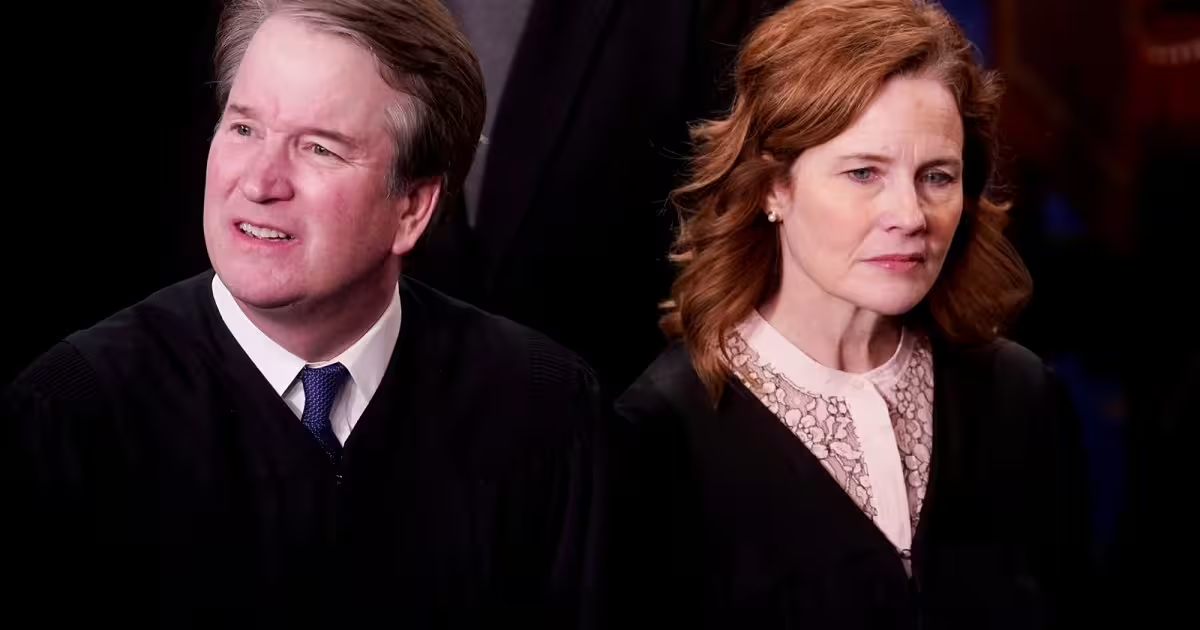
The most consequential unanswered question is how the court will weigh decades of temporary protection against arguments that the program has exceeded its intended purpose. But for Dominique the question is far simpler and more urgent: can the country that relied on her as a frontline worker and let her build a life here allow her to keep it? "I know this is your worst part. It’s all clean," she told a nurse caring for her son recently, an image that underlines how close to home the ruling will land. If the court ends TPS, Dominique’s life and hundreds of thousands of others’ will be remade in less than two months.