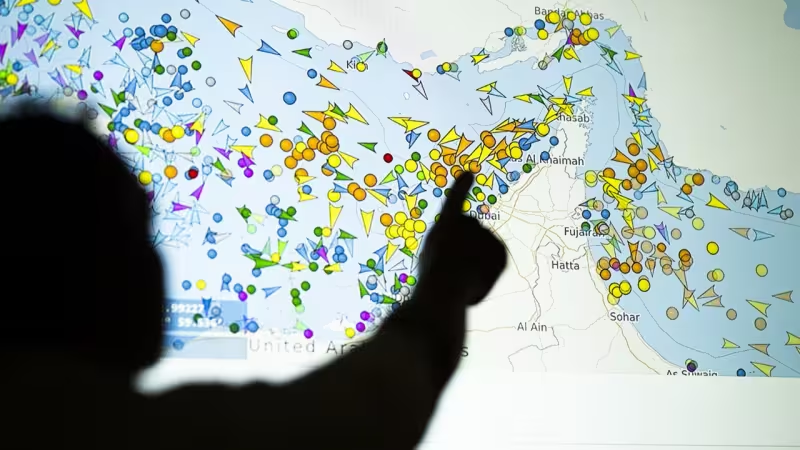
U.S. forces shot down four Iranian drones and struck a control centre in the southern city of Bandar Abbas on Thursday, actions an American official called "measured, purely defensive, and intended to maintain the ceasefire." The moves came as oil prices jumped and regional tensions flared anew.
Brent North Sea crude rose by 1.8 percent to $95.95 a barrel on Thursday morning trade, while WTI increased by 1.7 percent to $90.17, reflecting a swift market reaction to the iran strikes and to competing claims from Tehran and Gulf states. Hong Kong's Hang Seng index dipped more than 1.5 percent, Seoul was down nearly one percent and Shanghai ticked 0.3 percent lower; Taipei's main index gained more than one percent and Tokyo was flat at the midday break. In an otherwise volatile session, SK hynix hit a $1 trillion market capitalisation.
The American official said the military shot down four Iranian drones and also struck one control centre in Bandar Abbas, describing the latest actions as "measured, purely defensive, and intended to maintain the ceasefire." Tehran's state media gave a different account, saying Iranian forces had fired at four ships in the strait. Kuwait said its air defences were responding to missile and drone attacks, underscoring the multiplicity of sources and the fast-moving risk on the water and in the skies.
The market reaction came after a day of mixed signals. On Wednesday, markets had fallen on hopes of an imminent deal to end the conflict; by Thursday morning, the new U.S. strikes pushed oil prices higher again as traders reassessed supply risk. The sudden swings exposed how sensitive energy markets remain to headlines: Stephen Innes said, "The Strait may eventually reopen fully, but until there is something more concrete than draft frameworks and political theatre, every barrel remains hostage to headline volatility, even if sub-$100," a warning that captures how thin the margin for error has become.

These strikes are the latest test of a shaky ceasefire in the Middle East war. Months before Thursday, shipping through the Strait of Hormuz had all but halted because of the conflict; the strait remains the most direct route for much of the region's seaborne crude and any interruption has an outsized effect on global energy flows. Fragile talks aimed at ending the war have been under way, and markets had briefly priced in hopes of an imminent resolution before the fresh confrontations.
The immediate friction in the narrative is stark. U.S. officials say their actions were defensive and intended to preserve the ceasefire; Iranian state media reports and Gulf reactions describe incoming fire on ships and active air-defence engagements. Kuwait's report that its defences were responding to missile and drone attacks adds a third, regional perspective that broadens the risk beyond a bilateral exchange. Those conflicting accounts leave traders and policymakers scrambling to assess the real damage to shipping, infrastructure and the ceasefire itself.
That uncertainty matters now because it hits at the point where markets, diplomacy and monetary policy intersect. Economists have warned that if the war pushes inflation higher by worsening energy supply, central banks may have to raise interest rates. A bounce in crude to the mid-$90s a barrel tightens that calculus even before any further escalation. For investors and consumers, the central question is whether fragile diplomatic talks can produce concrete steps that reduce the risk to shipping and energy supply—or whether headline-driven spikes will become the new normal.
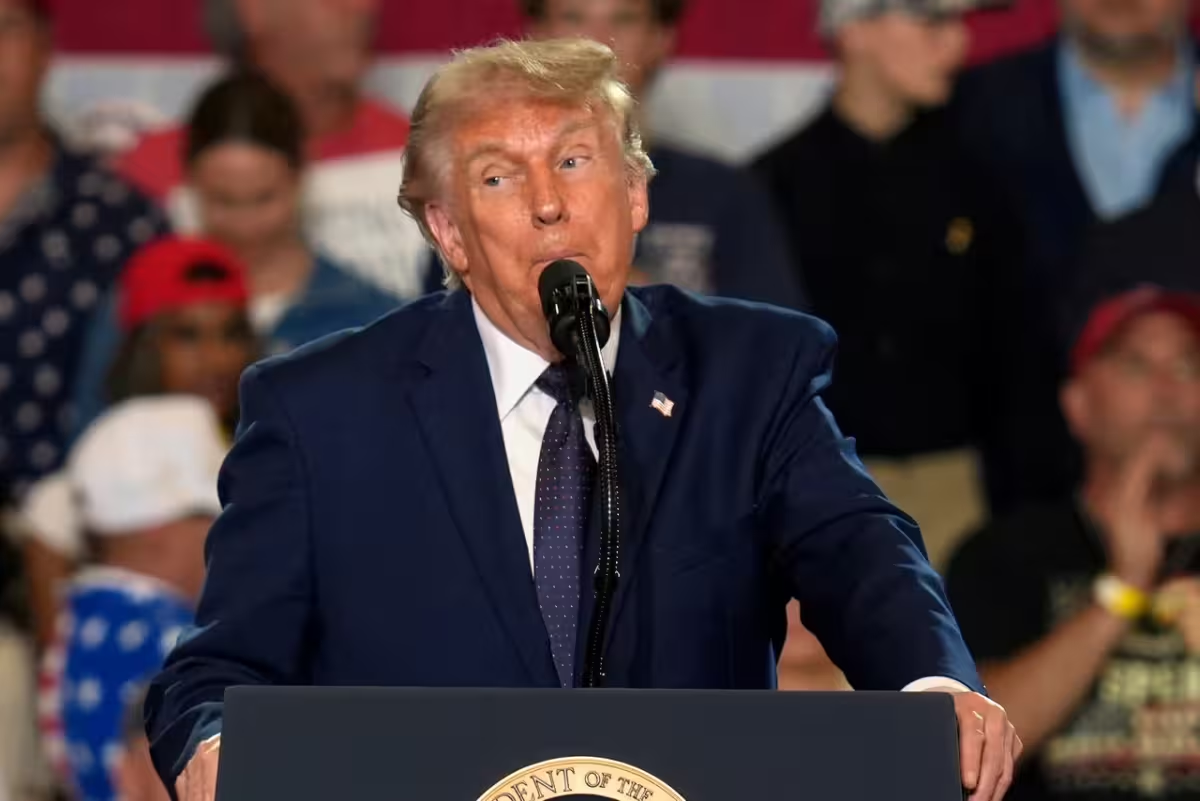
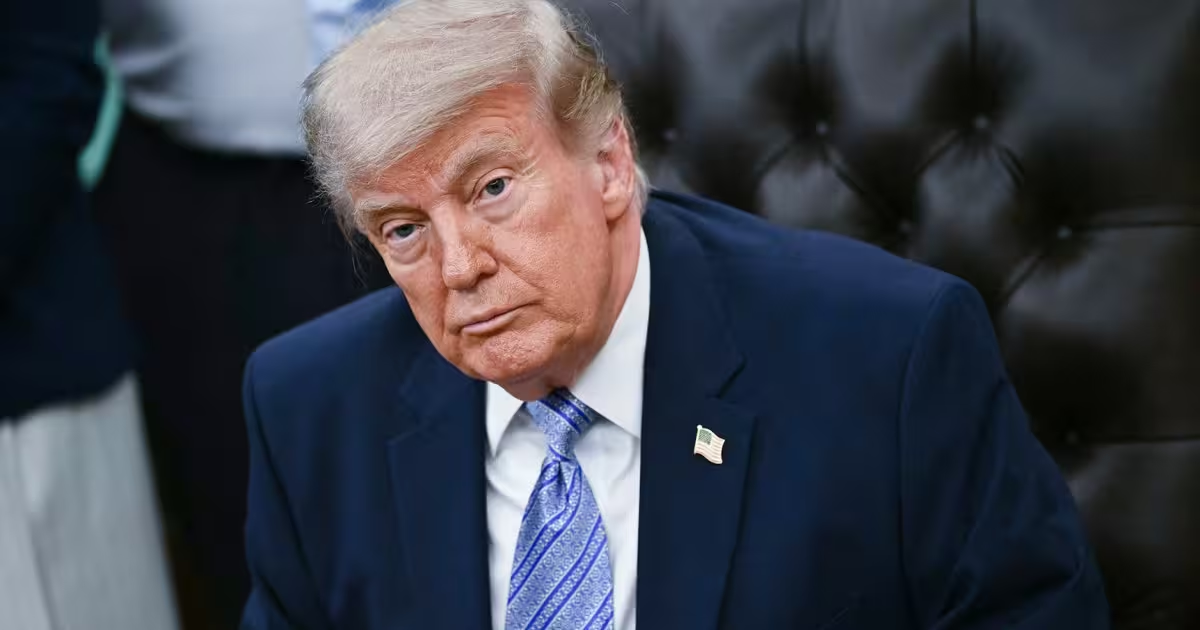
Donald Trump added a political overlay to the day when he threatened to "finish the job" if a peace deal was not reached, injecting a public escalation into a situation U.S. officials describe as measured. For traders watching the Strait and for governments nervously monitoring their air defences, Thursday's strikes underscore how volatile the market and the region remain. Stephen Innes's blunt assessment — that every barrel remains hostage to headline volatility — may be the clearest measure of what comes next: until negotiators produce a concrete, verifiable deal, markets will treat each new incident as a test with immediate price consequences.