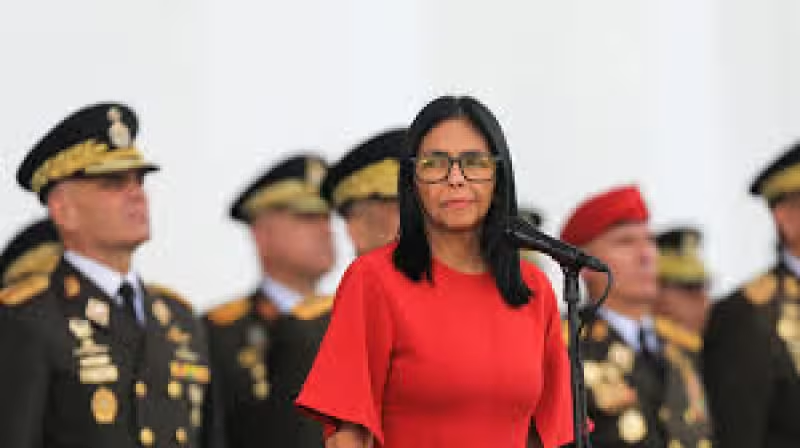
On May 27 Delcy Rodríguez told an audience in the Venezuelan state of Anzoátegui not to fear a Venezuela without sanctions and urged citizens to join the government's national pilgrimage demanding their definitive lifting.
Speaking at the second stage of the Peregrinación Nacional contra las Sanciones, Rodríguez stood before supporters and said plainly: "No le tengan miedo a una Venezuela desbloqueada, no le tengan miedo a una Venezuela sin sanción." She reiterated the theme a second time in the same speech: "No le tengan miedo a Venezuela, cese al miedo contra Venezuela."
Rodríguez pressed the crowd to turn the pilgrimage into a single national demand: "Nuestra peregrinación busca sumar esfuerzos, que cada venezolano y cada venezolana se una en un solo canto, en una sola oración: caminar juntos para exigir el cese de las sanciones." She framed the effort as a long diplomatic push, saying that Caracas "does not rest in its diplomatic agenda" with the United States, Europe and other governments that have imposed sanctions.
The event in Anzoátegui was the second stage of a campaign that began with a first stage from April 19 to April 30 in several Venezuelan cities. Rodríguez urged attendees to join the Peregrinación Nacional por una Venezuela sin Sanciones y en Paz and to direct efforts so "the fight for an end to the economic blockade against Venezuela reaches wherever it must go." The pilgrimage, she said, is meant to unite Venezuelans behind a single demand for sanctions relief.
Those remarks landed against a narrow set of recent policy moves. At the beginning of May the U.S. Treasury's Office of Foreign Assets Control granted a license that would allow some legal entities to advise the Venezuelan government and PDVSA on a possible restructuring of its debt. The sources say Washington has eased restrictions on Venezuela's hydrocarbons, mining and public financial system through specific licenses, even as the sources say the broader sanctions package remains in force.
European institutions have pushed in a different direction. On April 30 the European Parliament urged the Council of the European Union not to lift sanctions on people accused of human rights violations in Venezuela until the country adopts "significant steps toward a peaceful transition to democracy." That demand highlights a recurring gap between the government’s public push for rapid sanctions relief and European legislators’ insistence on political benchmarks before any lifting of restrictive measures.
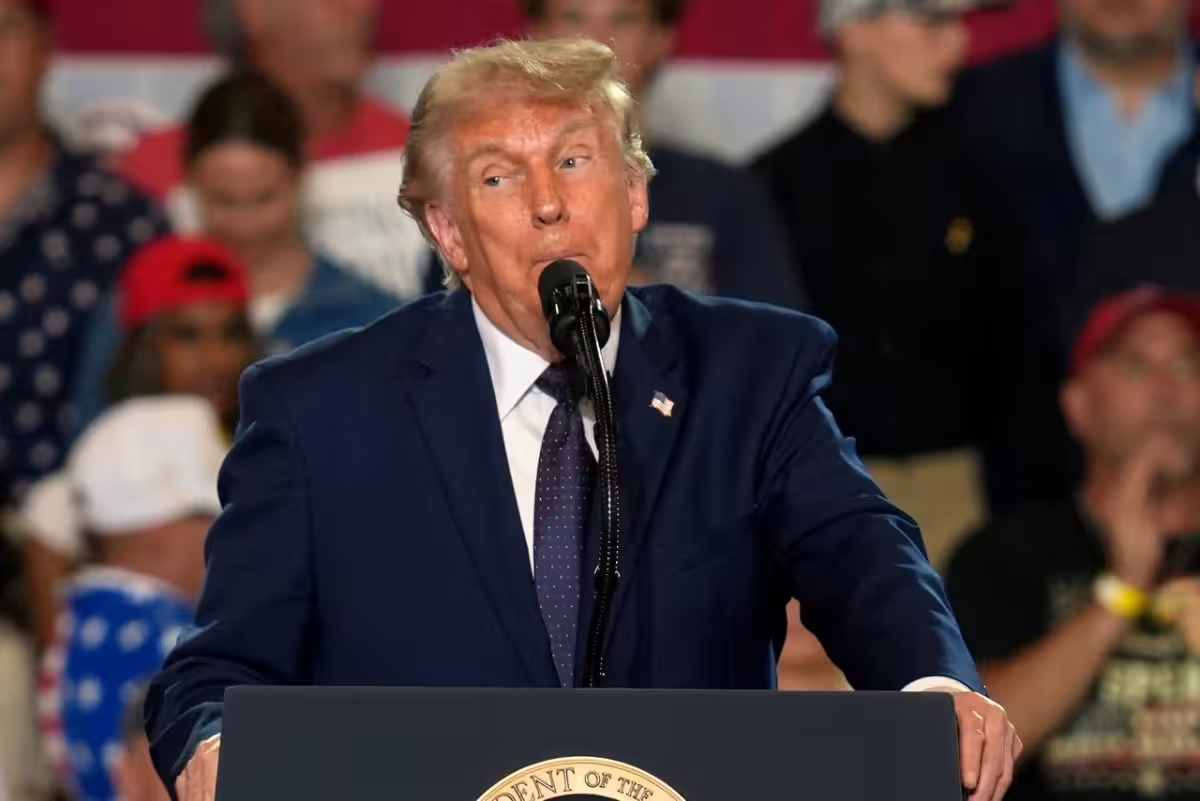
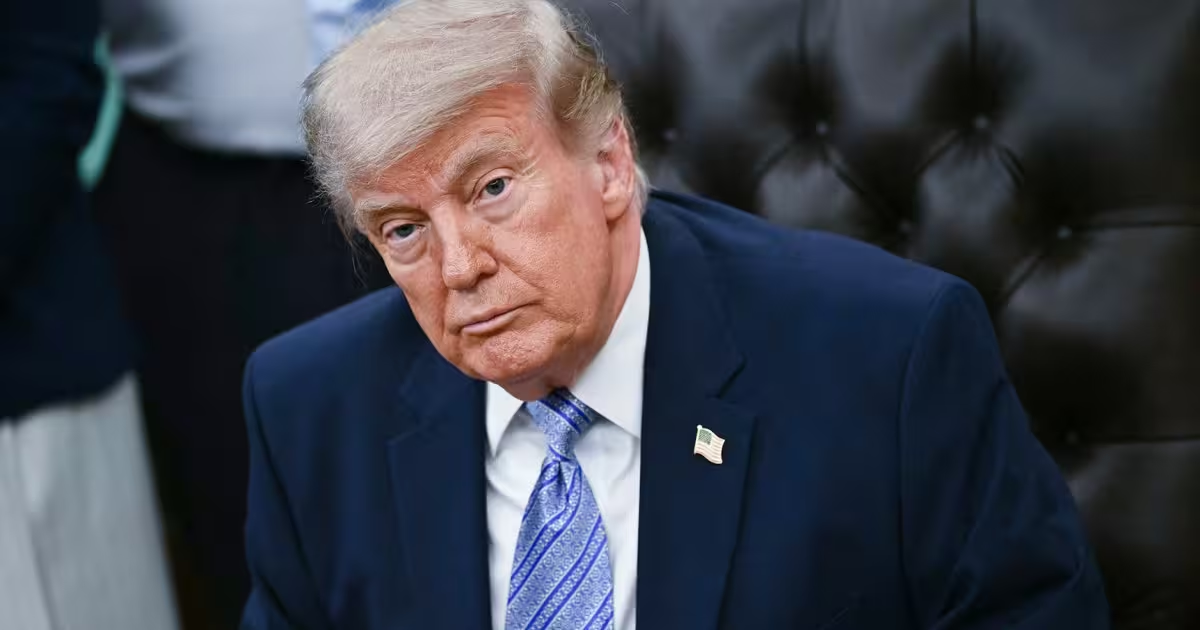
The tension in Rodríguez’s message is plain. The government proclaims a sustained diplomatic and popular offensive to end what it calls an economic blockade; the United States has offered narrow, technical licenses that ease some transactions; and the European Parliament insists on democratic steps as a precondition for relief. Rodríguez acknowledged the diplomatic effort when she told supporters that Caracas would not rest in its engagements with foreign governments, echoing a May 19 comment in which she addressed then-President Donald Trump and said she would not rest until Venezuela is free of sanctions.
That mix leaves a hard question unresolved. The OFAC license opens procedural pathways — advisers and debt talks — but does not dismantle the structural sanctions that Rodríguez’s pilgrimage seeks to erase. At the same time, the European Parliament’s April 30 position ties removal to political change the Venezuelan government has not accepted as an immediate priority, creating a policy stalemate in which limited U.S. easing and broad political conditions coexist.
Rodríguez framed the pilgrimage as a unifying domestic campaign to push those diplomatic gaps toward a single outcome: an unblocked Venezuela that can cooperate internationally without the stigma of sanctions. Whether that mobilization and a handful of narrow U.S. licenses will be enough to alter European and U.S. thresholds for relief is the central question now facing both Caracas and foreign capitals — and the answer will determine whether the peregrination remains a symbolic march or becomes the opening of a real shift in policy.
Previous reporting has detailed other parts of Rodríguez's international entanglements, including a story that showed the Trump White House told Miami prosecutors to stand down on Delcy Rodríguez (Venezuela: Trump White House told Miami prosecutors to stand down on Delcy Rodríguez — a reminder that sanctions, diplomacy and legal avenues have long been tangled in Venezuela’s international disputes.