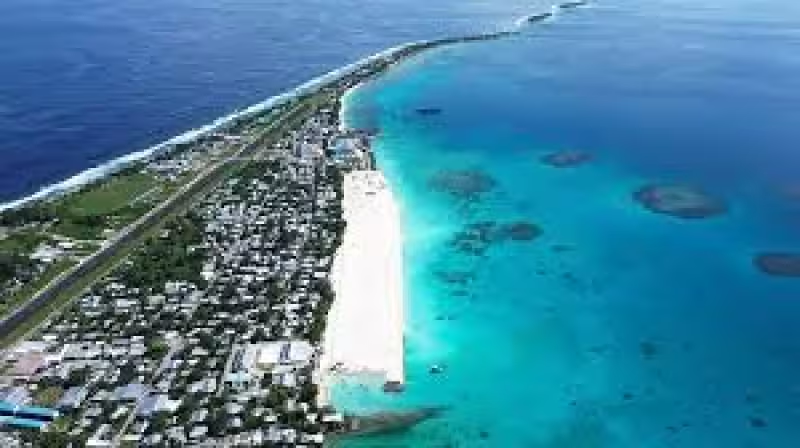
I landed on Niulakita, Tuvalu’s southernmost island, after a roughly 13‑hour boat journey from Funafuti through two narrow openings in the surrounding coral.
The passageways that admit small boats are just big enough for a relatively small dinghy. There are no ports on Niulakita; only two coral gaps let people come ashore. The island itself is about 40 hectares, and during my month there it held roughly 11 households, each with between four and eight people.
The numbers matter because they sketch the scale of life here. Tuvalu is a nation of nine low‑lying coral islands, home to just over ten thousand people, and most of the country rises only a few meters above sea level. On Niulakita, a single dirt pathway runs around the island. A school, a church and a large event tent serve the community’s everyday needs, and the cadence of life is set by everyday things: school and church services, devotion times, birthdays and holidays, fishing and crab hunting, volleyball, collecting fresh fruit, community cleanups, helping neighbors with construction projects, cooking, and long hours spent visiting with friends and family.
That everyday life is deliberately simple, community members told me during my stay. The remoteness and the fragility of the shoreline shape choices: who travels, when they travel and how often. Tuvaluans have been afraid to board boats bound for Niulakita because the landing can be dangerous. There have been fatal accidents in the past at Niulakita’s landing site, a history that keeps many people away and makes each trip a calculated risk.
Context sharpens the stakes. Tuvalu is scattered across the vast Pacific Ocean and its islands sit low above the waves. For Niulakita — a small, remote slab of coral with two narrow entries for small boats — the geography is the governing fact. A 13‑hour journey from the main island of Funafuti is long enough to make travel rare; the lack of a port makes it perilous. Those conditions determine how the island functions: how children get to school, how supplies arrive, how people gather for weddings or funerals, and how often families see relatives who live elsewhere in Tuvalu.
The friction between routine life and the island’s hazards is constant. Niulakita’s community keeps the island livable through mutual work and shared spaces — the event tent is used for gatherings; neighbors help each other with cleaning and construction; fishing and harvesting fruit sustain households. Yet every one of those activities depends on access that is both limited and hazardous. The coral passages that permit entry are tiny; only a relatively small dinghy can make it through. When the seas are rough, the island can feel cut off. The fear of landing is not an abstraction: it is a daily limiter on movement and opportunity.
That reality leads to a clear conclusion. Until safer, more reliable access exists, Niulakita will remain a tightly knit, self‑sufficient community that lives cautiously at the edge of the map. Its 11 households — some four to eight people each — will continue to rely on the school, the church, the event tent and the single dirt loop that ties the island together. The danger at the landing, and the memory of past fatalities, will keep many Tuvaluans from traveling there unless conditions improve.
Standing on Niulakita, you can see how geographic facts determine daily life: a few meters of elevation in most places, two narrow coral doors to the sea, no port and a long trip from Funafuti. Those facts are not abstractions for the people who live there; they are the limits and the supports of community life. For an island nation of nine low‑lying coral islands and just over ten thousand people, Niulakita is a small, vivid example of how remoteness, narrow access and fragile shorelines shape what people do next.