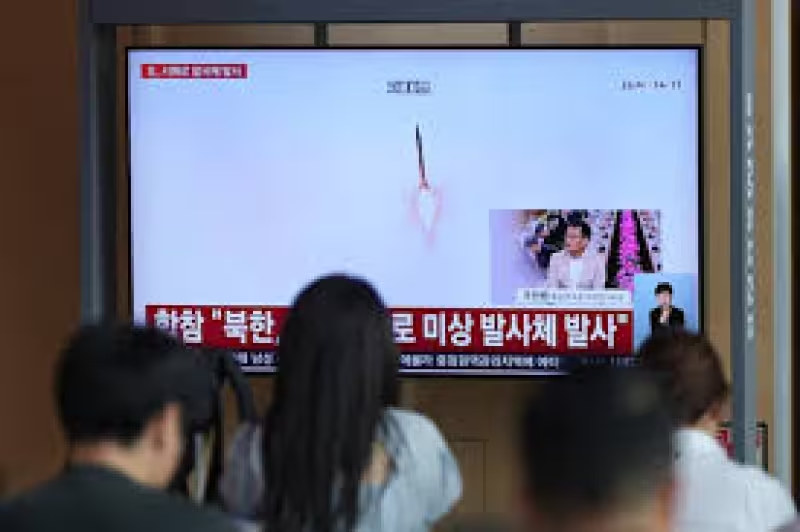
North Korea launched a close-range ballistic missile and other weapons toward the sea on Tuesday, May 26, 2026, South Korea’s military said, prompting a public pledge from Lee Jae Myung of national self-reliance on security. "resolve to take responsibility for and protect our own security ourselves" was how Lee put Seoul’s response, underscoring a determination to meet the challenge without delay.
South Korea’s Joint Chiefs of Staff said the missile was fired from Jongju, a city near North Korea’s west coast, and that it flew about 80 kilometers, or 50 miles. The military said North Korea also launched other kinds of projectiles but did not elaborate on their types or numbers. South Korea’s military said it closely monitors activities in North Korea and maintains a readiness to repel any provocations by North Korea.
South Korean media reported that the other systems mobilized included multiple rocket launch systems, and that the simultaneous launches of different kinds of weapons were likely meant to test an ability to evade South Korean and U.S. defenses. The scale of the event—an 80-kilometer flight combined with parallel fire from other systems—was the clearest measure yet in the day's notices of how Pyongyang is integrating conventional, short-range and ballistic capabilities.
This was north korea’s first weapons launch event since April 19, 2026, when state media said Pyongyang fired multiple short-range missiles in a demonstration of cluster bomb warheads. The two launches together point to a continuing pattern: Pyongyang has pushed to modernize its nuclear and missile arsenals since its nuclear diplomacy with U.S. President Donald Trump collapsed in 2019, and it has in recent years expanded ties with Russia and sought to cement cooperation with China.
Those external ties surfaced in diplomatic signals last week in Beijing, where Russian President Vladmir Putin and Chinese President Xi Jinping expressed opposition to efforts to tighten pressure on North Korea. The Kremlin statement said Putin and Xi opposed "foreign policy isolation, economic sanctions, military pressure and other methods of creating threats to the security" of North Korea, language that gives Pyongyang public cover even as it conducts weapons tests.
The tension is straightforward: Seoul and allied partners say they are prepared to respond to North Korean provocations, while Russia and China publicly resist additional international pressure. At the same time, Pyongyang’s actions reflect an assertive military posture that includes, by the facts available, sending troops and conventional arms to support Russia’s war efforts in Ukraine and a sharp hardening of relations with South Korea—relations that Kim Jong Un has described by calling South Korea its permanent and most hostile enemy.
South Korea’s military left gaps in the public account by not detailing the other projectiles or their intended targets, creating uncertainty about whether the launches were limited tactical tests or part of a broader capability assessment. That ambiguity increases the strategic significance of the launches: if the simultaneous firings were designed to probe missile defenses, they could force changes in how Seoul and its partners patrol and posture in the Yellow Sea and around the peninsula.
For now, the immediate consequence is clear and operational. Seoul says it is watching closely and will keep forces ready to repel provocations, and the launch will keep the peninsula on a higher security footing. The combination of routine monitoring, public resolve expressed by Lee Jae Myung, and Pyongyang’s steady program of weapons development makes it likely that such episodes will continue to shape military planning and diplomatic maneuvering in the weeks ahead.