
On the first trading day of the week, precious metals rallied: spot gold climbed as high as $4,579 as investors reacted to a softer dollar and a slide in oil prices.
President Donald Trump, who a day earlier said Washington and Tehran had "largely reached agreement" on a peace protocol to reopen the Strait of Hormuz, told his negotiating team on Sunday not to rush the talks — a cautionary instruction that markets absorbed alongside the price moves.
The scale of the move was tangible. At about 8:00 a.m., spot gold was trading at $4,564, up 1.24 percent from the previous close; U.S. gold futures settled around $4,560.30, a rise of 0.8 percent. In Turkey, gram gold hit 6,734 lira and was trading at roughly 6,708 lira at 8:00 a.m., a gain of 1.17 percent — figures investors track when discussing the local gram altın kuru.
Prices rose across the board, with precious metals posting gains above 1 percent as the dollar index weakened and oil retreated. Oil fell to its lowest levels in the last two weeks on Monday, removing some inflation and growth pressures and steering money into safe-haven metal positions.
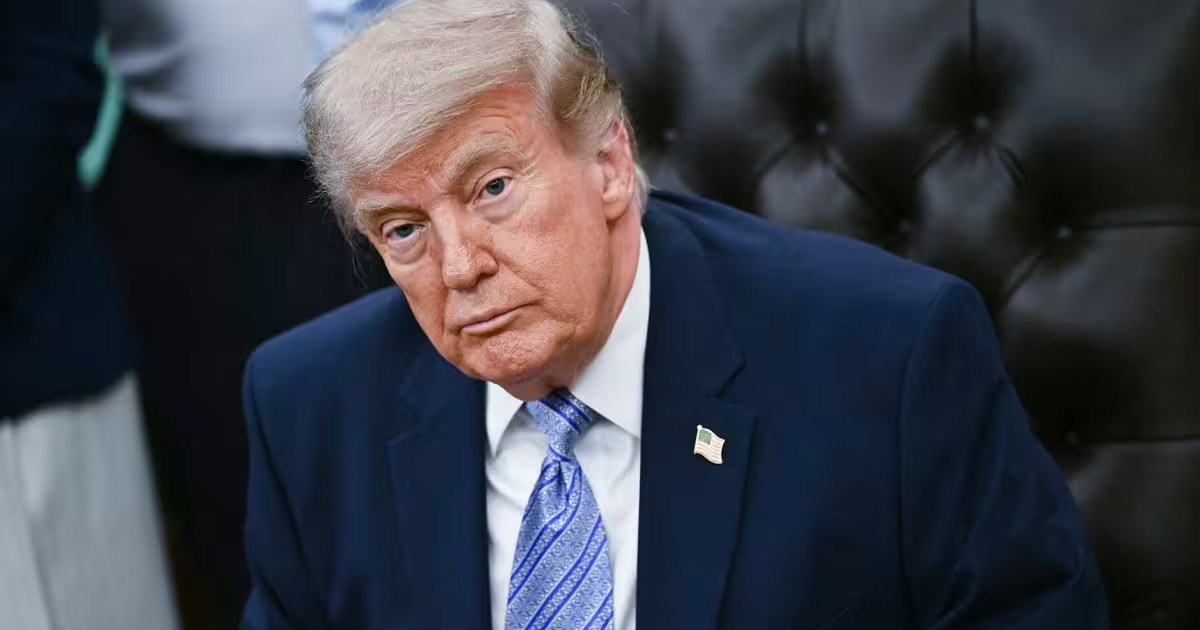
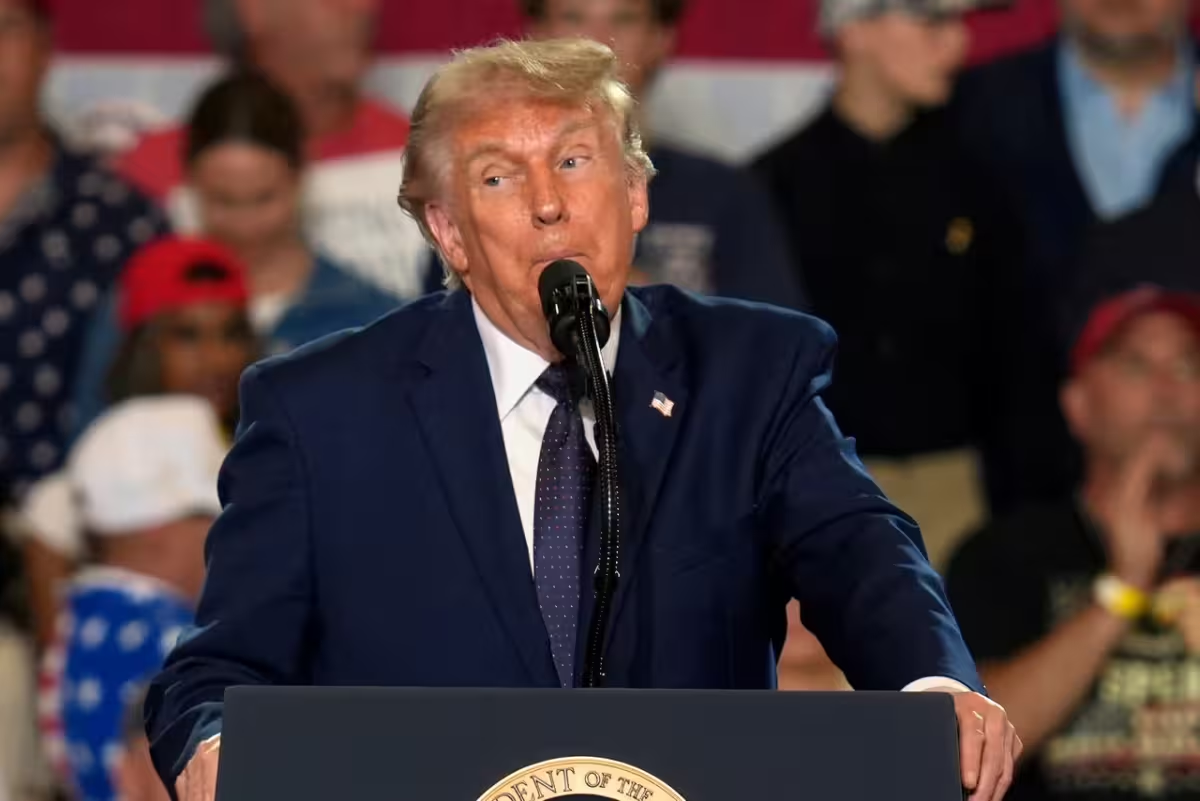

Those market drivers sit alongside a fast-moving diplomatic story. A day before instructing patience, Trump had publicly declared that Washington and Tehran were largely agreed on a deal centered on reopening the Strait of Hormuz. Yet the administration has also signaled that, after three months of military activity in the region, a firm, near-term settlement is unlikely — a sober appraisal that undercuts the certainty of the earlier announcement.
That split between public optimism and private caution is the tension now steering prices. Officials and negotiators have not yet achieved full agreement on core items, and notable disagreements remain; those unresolved points leave investors pricing in both a possible de-escalation premium and the risk of prolonged instability.
The practical effect is straightforward: gold has become the market’s immediate hedge against policy and price uncertainty. Spot gold’s intraday peak at $4,579 and the U.S. futures settlement at $4,560.30 show traders placing a premium on bullion even as oil’s slide trimmed some inflation expectations. In Turkey, the gram price movements to 6,734 and a morning trade at 6,708 lira reflect the same dynamic in local terms, with the gram altın kuru tracking the international move.
What happens next will depend on two linked developments. First, whether negotiators move from broad statements of agreement to concrete, reconciled terms — or whether remaining gaps stall progress. Second, whether oil stabilizes above the recent two-week lows or continues downward, which would remove one supporting factor for higher metals prices. Given the administration’s warning that a swift, definitive deal is a low-probability outcome after months of military activity, markets are likely to remain sensitive to every signal from the talks and every tick in oil and the dollar.
President Trump’s mixed messaging — one day asserting broad accord, the next ordering his team to avoid haste — has left traders treating any diplomatic headline as a price mover rather than a settlement signal. That is why, for now, gold and the gram altın kuru sit higher: not because the peace is done, but because investors are buying insurance against the uncertainty that remains.