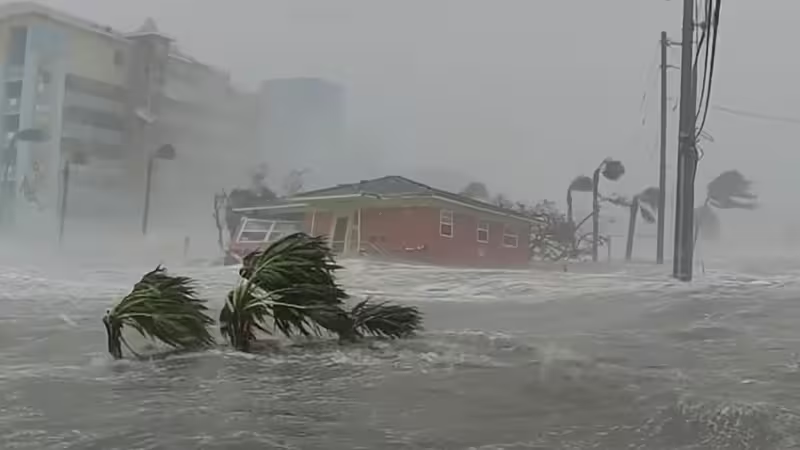
A new body of science suggests Atlantic hurricane seasons may become even more erratic, swinging from unusually quiet years to punishing hyperactive ones with far less warning. The latest research points to human heat added to the climate system as the force disturbing the atmospheric circulation patterns that help shape tropical cyclone activity.
One study released in 2024 found that the variance in Atlantic tropical cyclone activity could rise 36% by 2050, while another says the chance of a high-impact season like 2005 could increase about four times during the 2020 to 2049 period compared with 1970 to 2019. That matters because Atlantic basin hurricane activity already has the largest year-to-year variability of any tropical cyclone basin on Earth, and a larger swing would make the basin even harder to read.
The 2024 paper, Projected increase in the frequency of extremely active Atlantic hurricane seasons, identified two drivers behind the change: greater variability in wind shear and bigger swings in how stable the atmosphere is over the tropical Atlantic. It also found that the most active seasons would concentrate farther from land, over the eastern and central Atlantic, with less activity over the Caribbean.
That shift does not remove the danger. It changes where it is most likely to build. A basin that is already capable of going from calm to chaotic may do so more often, and the storms that dominate the year may spend more of their life cycle over open water before moving west.
The newer work builds on a 2022 study, Extreme Atlantic hurricane seasons made twice as likely by ocean warming, which found that warming from 1982 to 2020 doubled the probability of extremely active seasons over that period. That study did not clearly separate the effect of heat-trapping greenhouse gases from the effect of lower levels of air pollution particles, but it still pointed in the same direction: a warmer ocean is loading the dice toward more extreme Atlantic seasons.
The human cost of clustered hurricane hits is already clear in Central America. Hurricane Eta made landfall in northern Nicaragua on Nov. 3, 2020, as a Category 4 storm and lingered for three days over Central America and nearby waters. Hurricane Iota struck Nicaragua only 15 miles from Eta’s landfall location, also as a Category 4 storm, creating the worst sequential hurricane disaster on record for the Atlantic.
The two storms killed or left missing more than 300 people and caused an estimated $738 million in damage in Nicaragua, roughly 6% of the country’s GDP. There was no precedent in the Atlantic for two such powerful hurricanes making landfall so close together in space and time, and the sequence is a warning of how destructive a volatile season can become when one major storm is followed by another.
The question now is not whether Atlantic hurricane seasons will stay variable — they already are — but whether the basin is moving toward more years that resemble 2005, when 28 named storms turned one season into a benchmark for overload. The science now says that possibility is rising, and that the next extreme year may arrive in a climate that is even more primed to produce it.