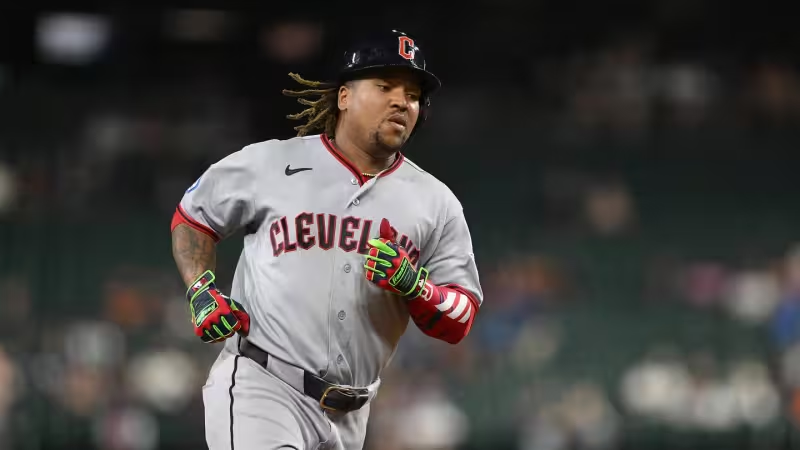
On Memorial Day the Guardians hosted the Nationals to open a three-game series, with Game 1 scheduled Monday at 6:10 PM ET and Tanner Bibee taking the mound for Cleveland against Zack Littell for Washington.
The matchup on paper is a study in contrasts: the Guardians arrived 32-23 with a +23 run differential and a starting staff ranked sixth in ERA at 3.46, while the Nationals came in 27-27 with a -14 run differential but a top-five offense (108 wRC+). Cleveland followed Monday with Tuesday's 6:10 PM ET start of Joey Cantillo opposite Washington's Cade Cavalli, and a Wednesday matinee at 1:10 PM ET that penciled in Gavin Williams against Miles Mikolas.
Offense has been Washington's identity. Joey Weimer leads the Nationals with a staggering 159 wRC+, followed by CJ Abrams at 156 and James Wood at 154. Those three hitters give the Nationals an ability to change a game in one inning, even if the rotation has struggled; Washington's starters rank 28th with a 4.87 ERA.
Cleveland's strengths lie on the mound. The Guardians' rotation ERA sits at 3.46 and the club carries a +23 run differential into the series. Offensively they are less imposing overall — 17th in wRC+ at 99 — but they have contributors up the lineup: Travis Bazzana (139 wRC+), Chase DeLauter and Brayan Rocchio provide punch when they connect.
That split shapes the immediate question: will Cleveland's pitching quiet Washington's elite hitters, or will the Nationals' top-end offense force the Guardians into a shootout? The Guardians' recent form added to the stakes — they had run hot entering the week — and their own internal message was simple: they would need to score a lot to win the series.
The series also turns on durability. Washington's scheduled starters — Littell, Cavalli and Mikolas — will have to eat innings to offset a rotation that ranks near the bottom in ERA; the Nationals' bullpen and defense have not been strengths. Cleveland's starters, including Bibee and Williams, can shorten games and hand a lead to a serviceable Guardians bullpen, but the club's offense is less consistent than Washington's, a friction point the visitors will try to exploit.
Numbers underline the friction. The Nationals' lineup produces elite run creation from its top trio, yet the team's overall run differential sits at minus-14. The Guardians, by contrast, boast a plus-23 differential and a top-six starting staff ERA, but their 99 wRC+ suggests they cannot rely on depth-of-offense alone.
How the managers deploy matchups will matter. Cleveland can win this series by letting its starters set the tone and forcing Washington into low-leverage situations, but if Bibee, Cantillo or Williams give up early runs to Weimer, Abrams or Wood, the game script flips fast. Conversely, Washington must turn its loud offense into sustainable pressure: build early leads that hide starting-staff shortcomings and make the Guardians chase in the late innings.
This series will resolve into a simple conclusion: if Cleveland's rotation keeps the ball in the yard for length, the Guardians should control the outcomes; if Washington's big three hitters get on a tear, the Nationals' offense will compensate for shaky starting pitching and take the series. The first answer comes Monday at 6:10 PM ET, when Bibee faces Littell and the contest between those two will tell us which side carried its advantage from paper to the field.