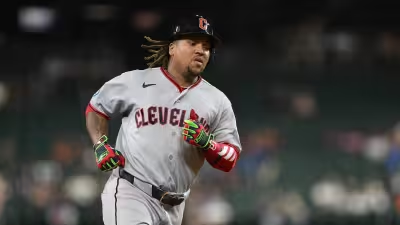
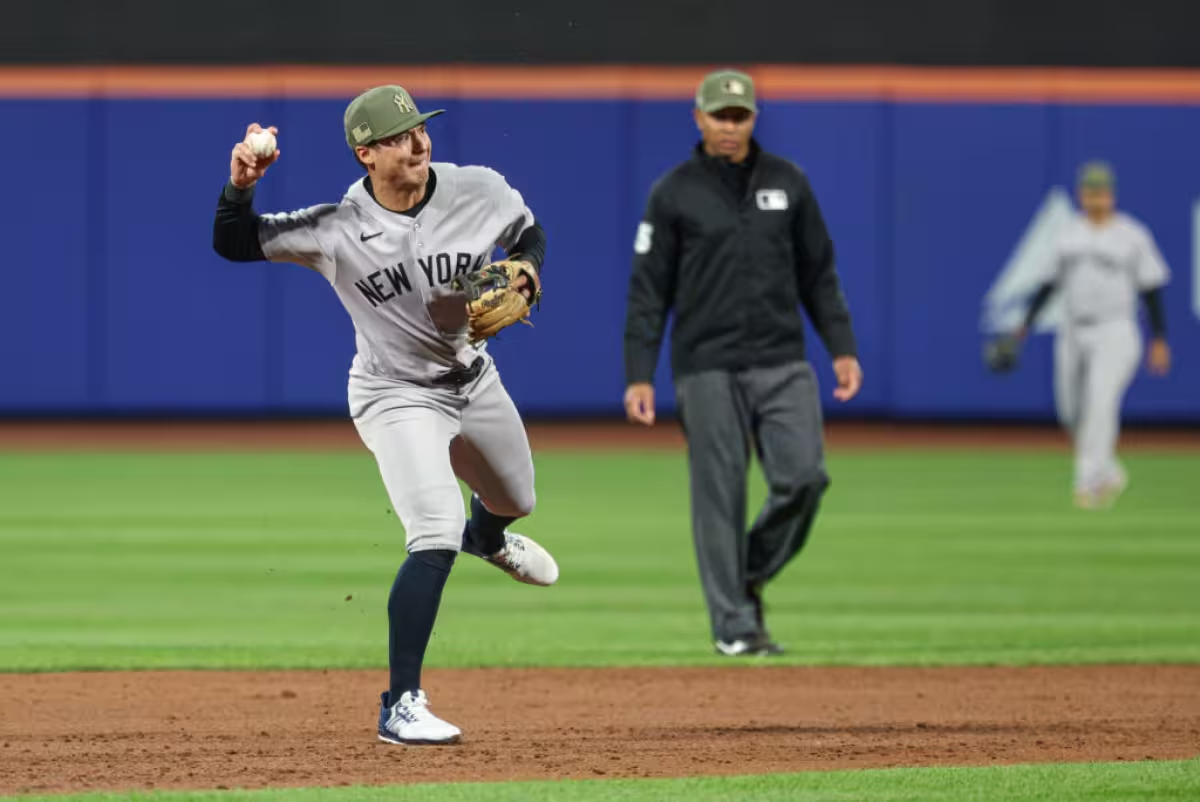
Jazz Chisholm Jr went 1-for-3 and stole a base as the Yankees beat the Rays 2-0 on May 25, 2026, and he drew attention earlier in the game for intentionally letting a pop-up drop to the grass on a Friday night play.
The sequence came with one out and Cedric Mullins on first when Nick Fortes lofted a pop-up; because there were not runners on first and second the infield fly rule did not apply, and when Chisholm let the ball fall he created a force play at second that could be used to retire Mullins. Teammate Gerrit Cole was happy after Chisholm let the ball drop.
Chisholm’s line in the victory — 1-for-3 with one stolen base — continued a hot stretch at the plate: as of May 25 he had gotten on base in nine of his last 10 games, was hitting.246 across 52 games, had five home runs, 19 RBI, 22 runs scored and 13 stolen bases.
The numbers matter because they show a player contributing in multiple ways even when traditional power numbers are modest. Chisholm’s five home runs and.246 average do not leap off a stat sheet, but the combination of getting on base frequently and creating chaos on the bases — 13 steals and a nine-in-10 on-base run — gives the Yankees another avenue to manufacture runs in low-scoring affairs like a 2-0 win.
The pop-up decision lays out the tension beneath that value. Letting the ball drop looks unorthodox, but it was a heads-up defensive move given the situation: one out, a runner only on first, and a batter who had lifted the ball. The play was legal because the infield fly rule was inapplicable, and the result — the possibility of a force out at second — is the exact sort of small-game thinking that can tip tight games in New York’s favor.
That tension — between unconventional plays and clear, rule-based calculation — is also the story of Chisholm’s season so far. Across 52 games he is producing a mix of speed and contact rather than overwhelming power, and the Yankees have been able to rely on those traits in spots. The May 25 win underlined the point: Chisholm reached base, swiped a bag, and executed a play that drew public approval from a teammate.
What follows is straightforward. If Chisholm keeps reaching base at the current clip — nine of his last 10 games — and continues to pair that on-base work with aggressive baserunning and situational defense, he will be more than a highlight-reel athlete; he will be a practical, run-producing piece for New York. Friday’s pop-up decision was a small, clear example of how he can affect games beyond the box score.