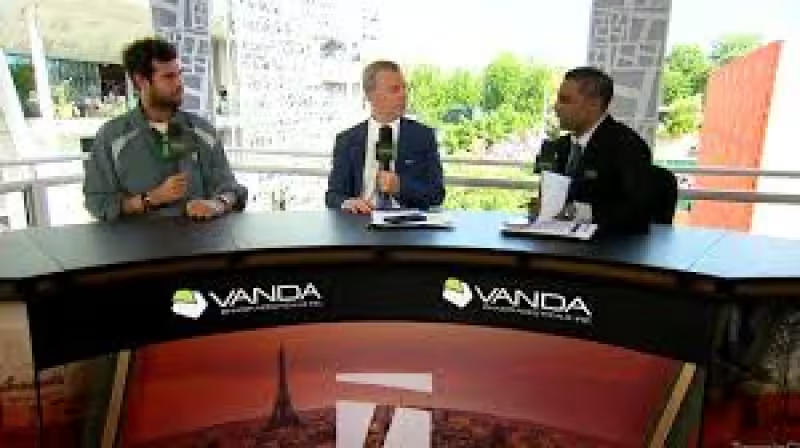
Arthur Gea stopped play during his first-round match at Roland Garros on May 24, 2026, asking to go to the bathroom while trailing Karen Khachanov 4-2 in the first set and telling officials, "I need to go to the bathroom. I can’t move anymore. I’m going to s--- on the f---ing court."
The episode unfolded on Court Suzanne-Lenglen, where a pair of officials appeared and — after the point that followed — Gea exited toward the locker rooms for a medical timeout. A trainer on site described Gea as suffering from stomach problems, and the player later said the umpire allowed the break because of medical circumstances and that he had been given medicine to settle his stomach pain.
The numbers underline the consequence: Gea requested the break at 4-2 in the first set and ultimately lost to Khachanov in straight sets, ending his wild-card entry run at Roland Garros in one match. Gea also told officials during the stoppage, "Yeah, I’m sick," and after the match said he had not felt ill the night before but began to feel sick the morning of the match.
Bathroom breaks are typically reserved for between sets only, which is why the timing drew attention on Suzanne-Lenglen; tournament protocol ordinarily requires medical timeouts to be processed through on-court officials. The sequence here — a pair of officials appearing on court and asking for a medical reason, the point that followed, then Gea walking to the locker rooms — is consistent with the on-court intervention that was recorded by officials and visible to the crowd. Earlier coverage laying out the draw had previewed Khachanov meeting Gea in the opener at Suzanne-Lenglen.
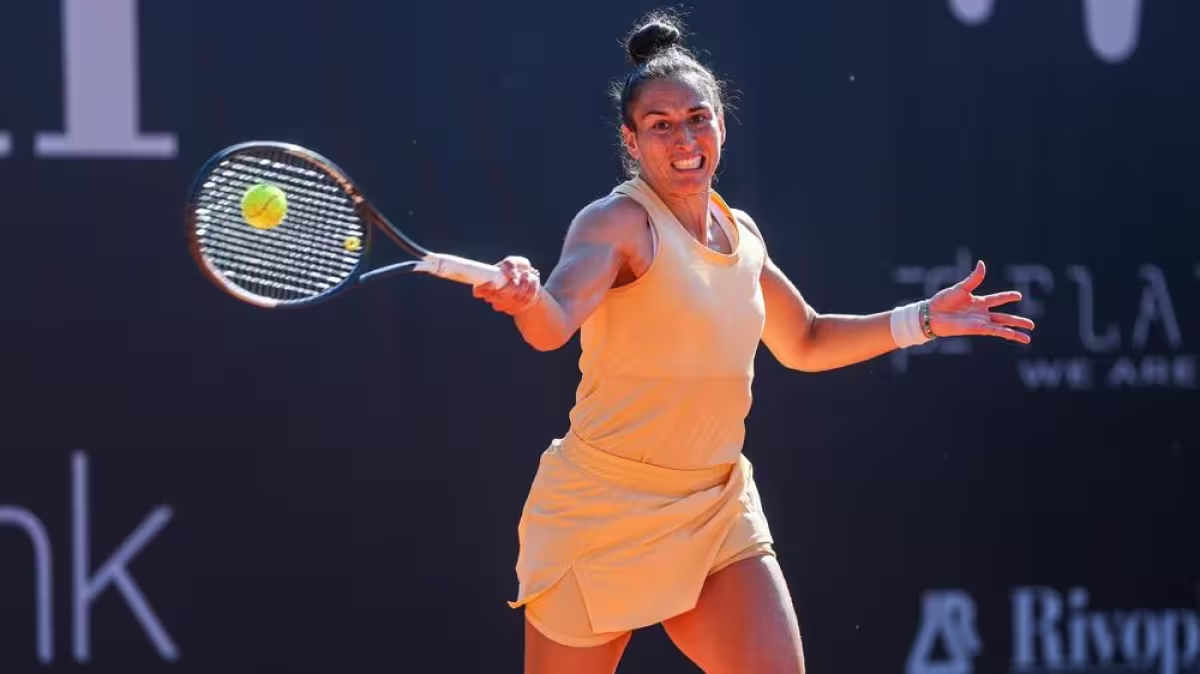
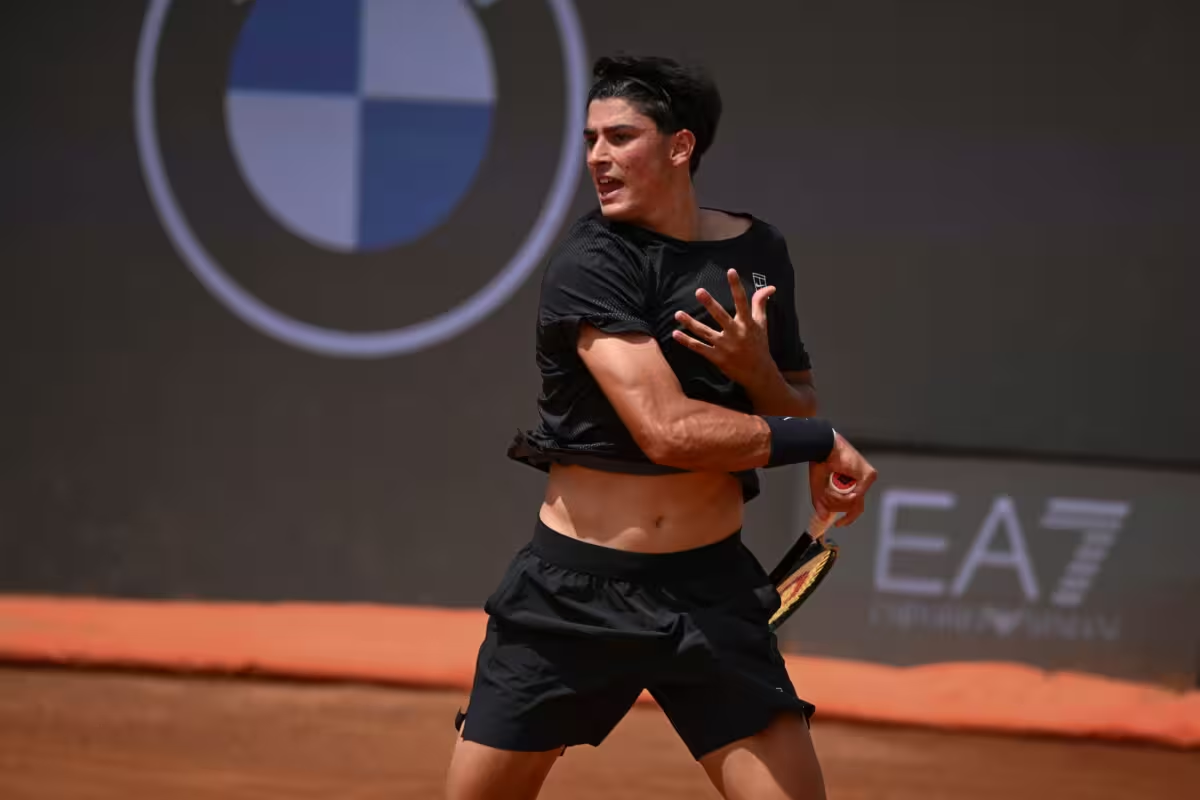

That protocol creates a friction point in any match: players may require urgent relief, but the rules around mid-game bathroom-related interruptions are narrow. Gea’s request came mid-game, after a single point, and his blunt description of his condition amplified the moment: he warned he could not move and used the explicit language captured on court. Tournament staff treated the matter as a medical incident, a trainer cited stomach problems, and Gea said afterward that staff administered medicine to ease his symptoms.
The break did not reverse the match. Gea returned to the court and completed play but could not overturn the scoreline; he was beaten in straight sets by Khachanov, bringing his short stay at Roland Garros to an end. Gea had entered the tournament with a wild-card entry, and his abrupt mid-set plea and subsequent exit overshadowed what for many would have been a debut storyline at the clay Grand Slam.
The episode leaves two clear takeaways. For the player, it was a physical collapse in the moment: Gea said he had felt fine the night before and only became sick the morning of the match, and he credited medical staff for allowing the timeout and providing treatment. For the event, the incident is a reminder of how tightly rules around bathroom and medical breaks can intersect with the unpredictable realities of illness on match day.
Gea’s loss hands Khachanov the victory and progression from the first round; for Gea, the tournament ends with that medical timeout and the straight-sets defeat on May 24, 2026, a debut curtailed by a sudden illness rather than pure competition.