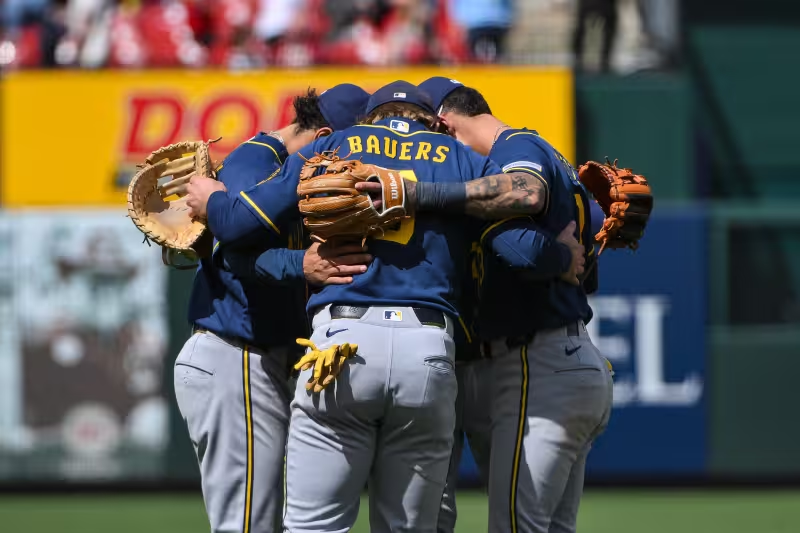
Milwaukee opened a three-game series against St. Louis on May 24, a short, consequential set that finished with a 2-1 result and sharpened an already tight National League Central race.
Jacob Misiorowski started the May 24 game for Milwaukee against Matthew Liberatore for the Cardinals, giving the series a clear opening act: two young arms on a stage where every game carries outsized value. The schedule left little room for recovery — the Brewers were to send Kyle Harrison to the mound on May 26 at 6:40 p.m., and listed a TBA starter for their May 27, 1:10 p.m., matchup with Dustin May.
The numbers explain why a three-game sweep or split matters. Milwaukee entered the series in first place at 30-20; St. Louis was second, 1.5 games back. Those margins are narrow enough that one weekend can rearrange the division table.
Offense painted a contrast. The Brewers came in hitting.246/.333/.361 as a team with 34 home runs, 246 runs and 54 stolen bases. The Cardinals countered with a different profile:.242/.323/.393, 60 homers, 233 runs and 34 steals. Two teams separated by a game and a half, but with visibly different ways of scoring runs.
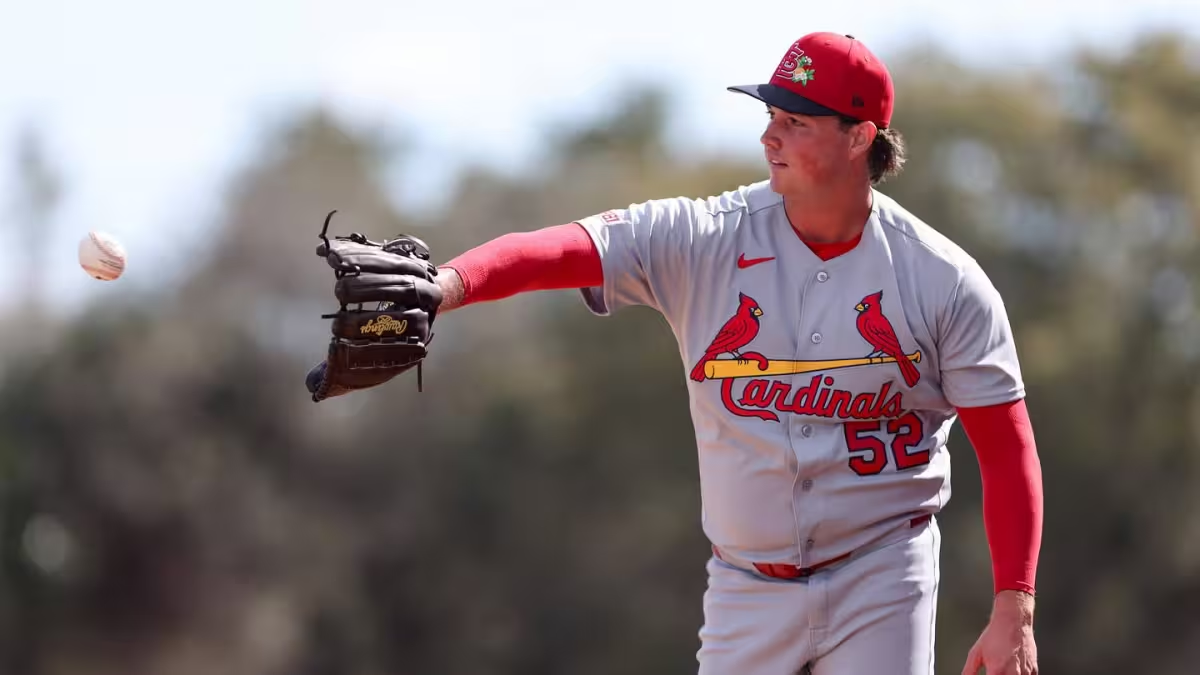
Pitching and availability added another layer. Milwaukee’s injured list at the time leaned heavily toward pitchers: Quinn Priester, Brandon Woodruff, Angel Zerpa, Rob Zastryzny, Jared Koenig, Akil Baddoo and Brandon Lockridge were on the IL. St. Louis’s injuries were concentrated on position players: Lars Nootbaar, Nathan Church and Ramón Urías. And while neither club was at full strength, the mix suggested different pressures — Milwaukee to manage depth on the mound, St. Louis to cover lineup holes.
One individual stat stood out before the series: Aaron Ashby, who had an 8-0 record and a 2.61 ERA across 23 appearances. That kind of consistency can be decisive in tight late-May races, even if Ashby’s role in any specific game of the series wasn’t listed among the starting assignments.
The lead-up to the series added texture. Milwaukee had swept the Cubs earlier in the week before dropping two of three to the Dodgers over the weekend. St. Louis arrived after weather disrupted their road trip in Cincinnati: rainouts on Friday and Sunday and a 1-1 doubleheader on Saturday. Fatigue and momentum enter the ledger alongside batting averages and ERAs.
Tension came from what didn’t line up cleanly. The Brewers led the division but carried fewer home runs than St. Louis, even as they had more total runs. Their injured pitchers raised questions about who would carry innings later in the month. The Cardinals, with more pop but fewer steals, faced the trade-off of power versus balance. Those contradictions guaranteed that the series would test more than starting rotations — it would test depth, bench decisions and bullpen workload in a tight window.
The most immediate question now is obvious: who will take the mound for Milwaukee on May 27, the game listed with a TBA starter against Dustin May? That choice will matter for the short series and for how each team manages a crowded calendar in a race where a single game can tilt standings and strategy alike.