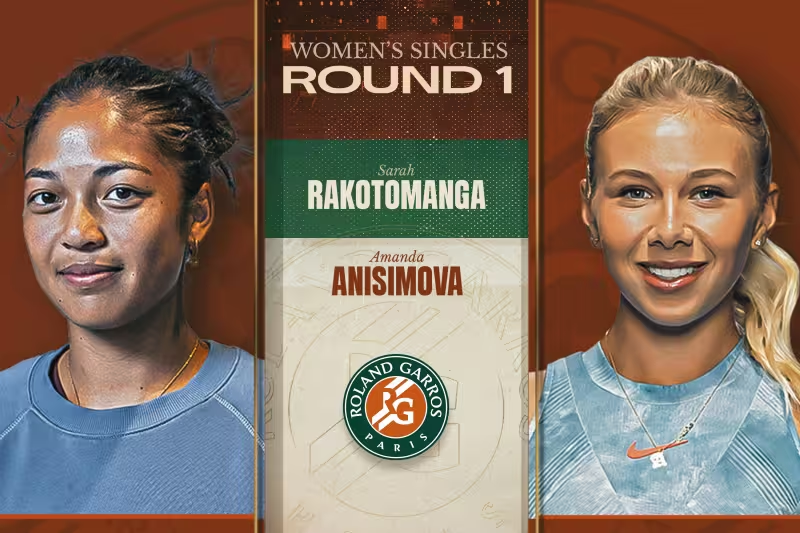
Amanda Anisimova is scheduled to return to competitive play Monday against Sarah Rakotomanga after injuring her wrist at the Miami Open in March and not being seen on a match court since then.
The matchup suddenly matters because Rakotomanga is arriving with momentum and a résumé that has jumped fast: the 20-year-old made her WTA Tour debut last year, won the Sao Paulo title and climbed from No.349 at the start of the period to finish last year at No.123; she is currently ranked No.153. For Anisimova, the central variable is physical — her wrist, still untested in match conditions since the injury, following a week in which she has been increasing the intensity of her training and practice.
Saraha Rakotomanga’s ascent has been rapid and public. Originally from Madagascar, she now trains in Toulouse and competes under the French flag. She told reporters this season that “Rafa, I really like his spirit and his attitude on court,” and added, “That’s something I’ve tried to take from him.” Rakotomanga also spoke of admiration for another era’s elegance: “And I really like Federer’s game.” She summed her approach to growth simply: “I wanted my game to be clear and to have the class of Federer and the attitude of Nadal.” On patience and development, she said plainly, “I have time,” and then, “That’s it. I have time to put my game into place.”
Those quotes matter because they explain how Rakotomanga has approached her climb from the lower reaches of the rankings into the tour proper: measured, modelled on the game and temperaments of elite players, and willing to weather a period of on-court apprenticeship. That combination has produced tangible results — the Sao Paulo title and the ranking jump that set up this Monday encounter.
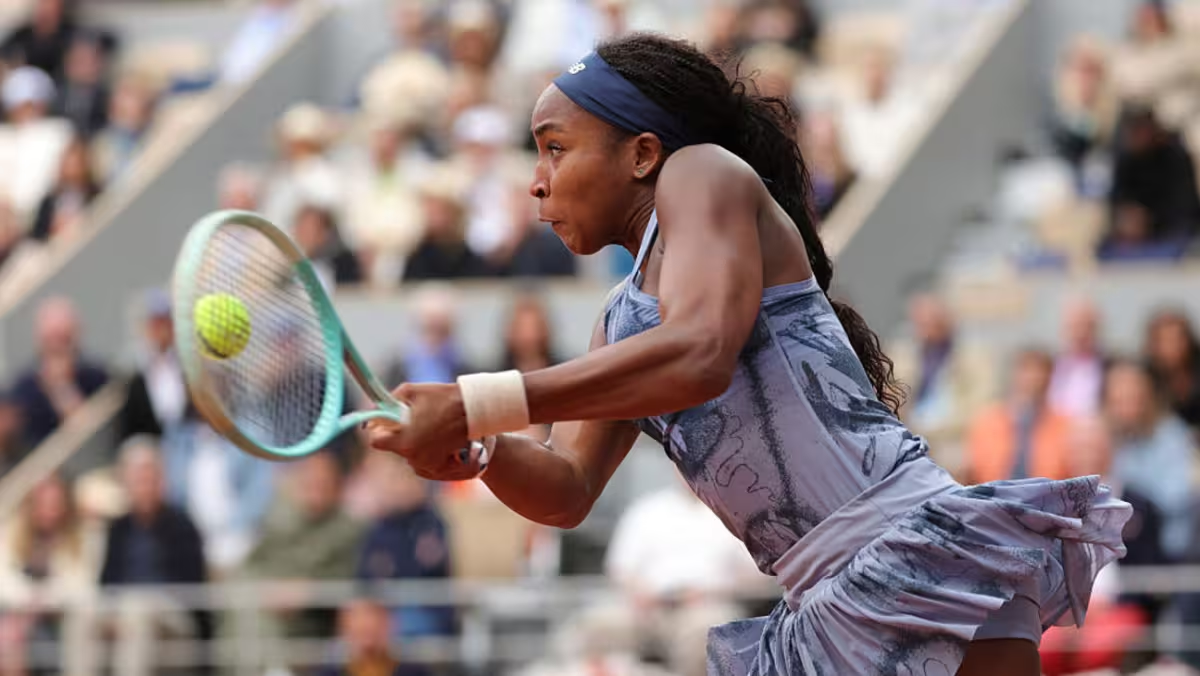
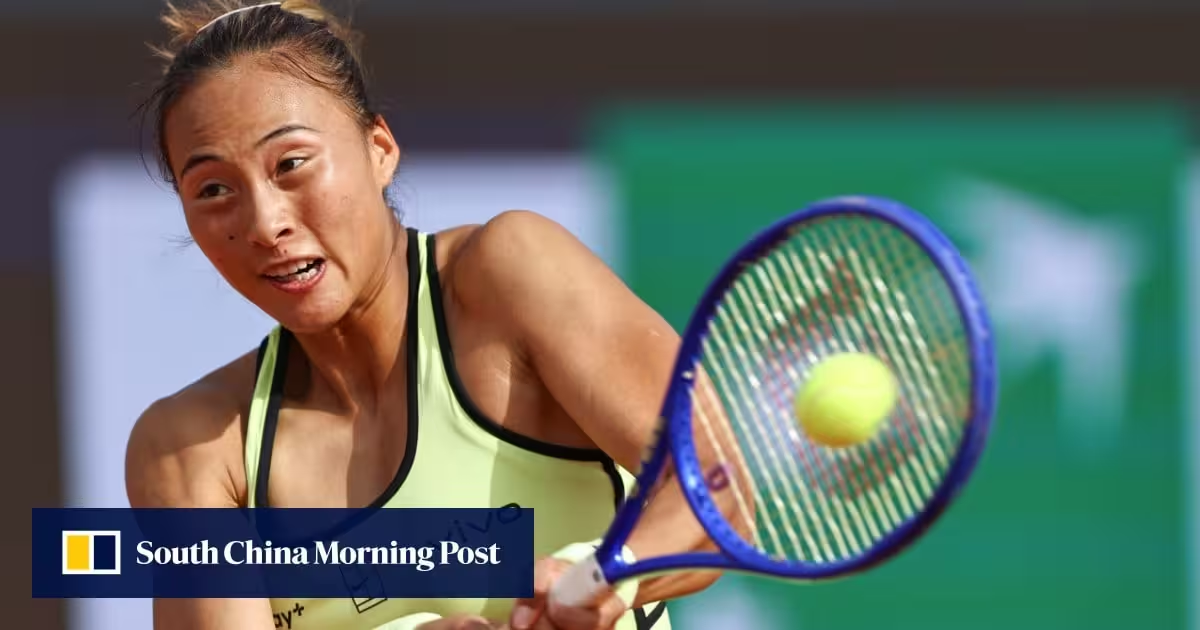
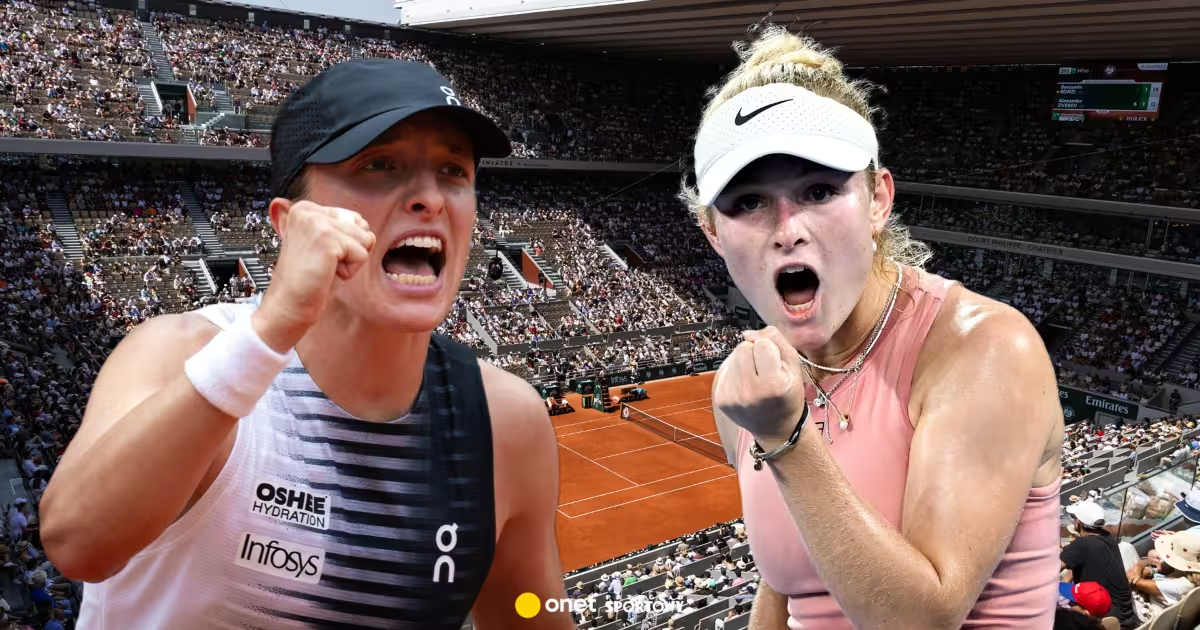
The backdrop adds texture. Iga Swiatek’s record on clay is a reminder of how quickly narratives can harden and shift: she has won four titles in seven appearances at Roland-Garros and reached the semifinals there last year, a run that helped define the modern clay hierarchy and, by some accounts, allowed her aura to fade a bit after an especially dominant stretch from 2020 to 2024. That kind of arc — meteoric success followed by fresh scrutiny — is the kind of context young players and returning veterans alike must navigate as courts and crowds reset expectations.
There is a tension at the center of Monday’s match that separates it from a routine fixture. On one side sits a player whose match fitness and durability are unproven since March; on the other sits a teenager turned young pro who has already handled the transition from challenger-level obscurity to a tour title. The match will be a test of Anisimova’s wrist under real conditions and of Rakotomanga’s ability to translate practice form and recent success into consistency against a player who has shown top-level results when healthy.
Stan Wawrinka’s words about big crowds and pressure articulate part of the nontechnical test both players face. “When you have a lot of people, big public like here in Roland-Garros, it brings in a lot of stress,” he said, adding that it is “Good stress, and also stress that is difficult to manage.” Wawrinka concluded, “This is probably what I will miss most, because I know these are emotions I won't find anywhere else.” The point is simple: match conditions produce psychological and physical strains that practice sessions do not.
The most consequential question leaving Monday’s match is straightforward: can Anisimova’s wrist withstand the demands of a return to match play, or will Rakotomanga’s recent form and clear-headed approach carry her past a returning opponent? The answer will tell us less about rankings and more about who is ready now — the young player still building toward her peak, or the returner trying to reclaim one.
For viewers who follow names like jeļena ostapenko and Iga Swiatek, the encounter will feel like another early signal of how the season’s pecking order might settle; for the players it will be immediate and exacting — a single match that could reset momentum in opposite directions.