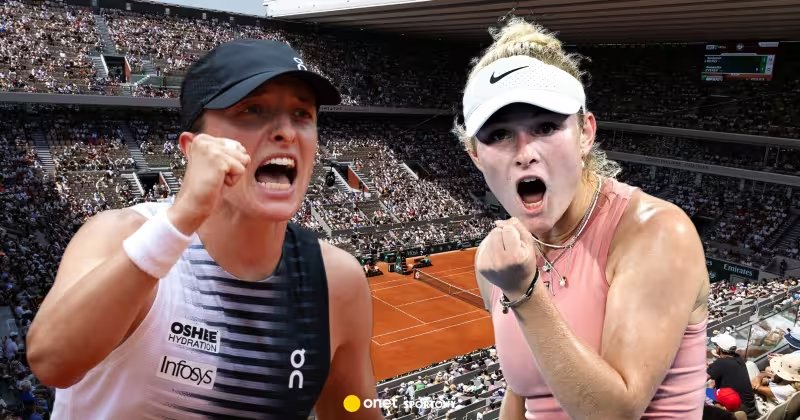
Iga Świątek began her Roland Garros 2026 campaign by taking the first set against 17-year-old Emerson Jones in 28 minutes, converting three set points and building a 5:1 lead after a decisive break.
The quick opening set was the clearest measure of the gap between the four-time French Open champion and the wild-card teenager from the Gold Coast. Jones, listed at world No. 136, showed glimpses of poise but could not stop Świątek’s rhythm as the Pole closed out the set in under half an hour.
Świątek’s start mattered on the scoreboard and on the clock: 28 minutes for a set at a Grand Slam is shorthand for control. The numbers underline it — a break to lead 5:1, three set points saved and then converted — and they arrived under a Paris sky that had already seen the top players on court the day before when Świątek appeared for training on May 24.
The match had been scheduled for Monday at 12:00, a midday slot that carried more than convenience: it put both players into a predictable rhythm and into conditions that have felt summery in Paris this fortnight, with temperatures touching 30 degrees Celsius. That matters for a teenager making an early Grand Slam appearance on Philippe-Chatrier; stamina and heat management quickly become part of the match story.
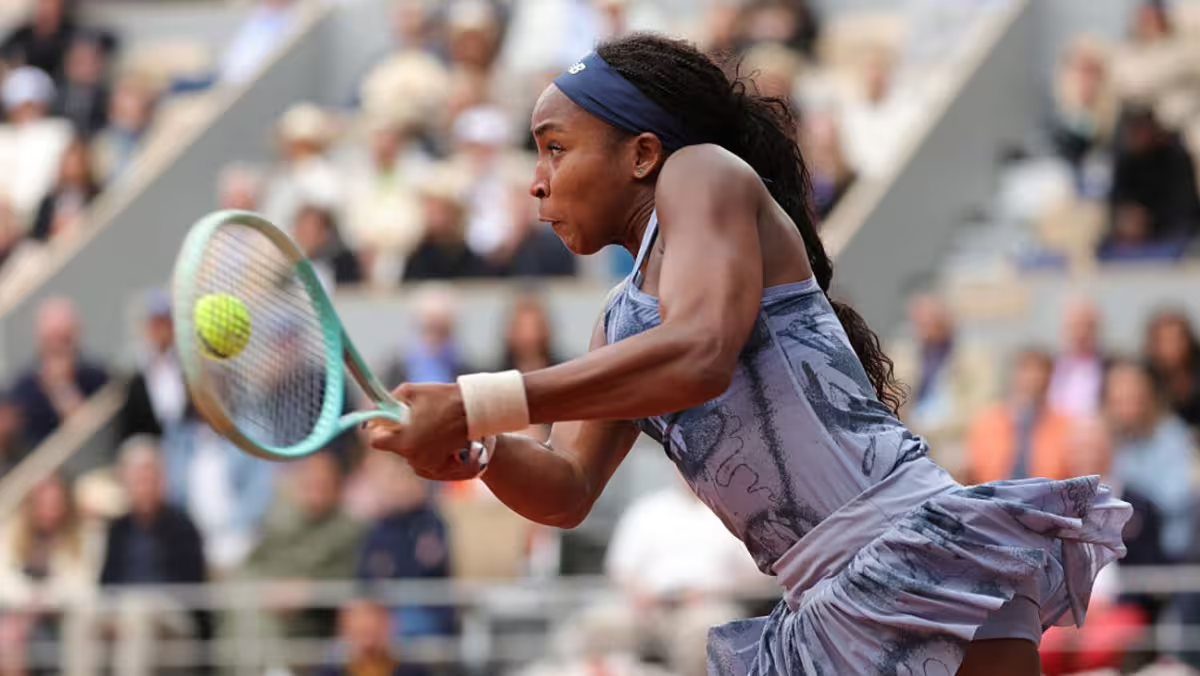
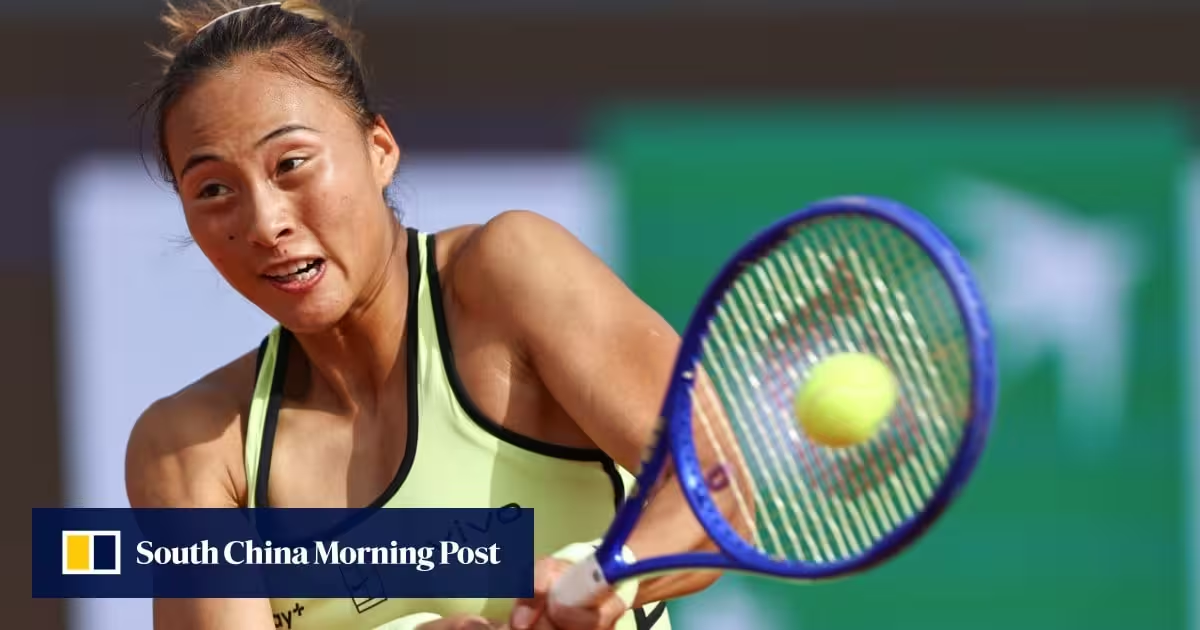
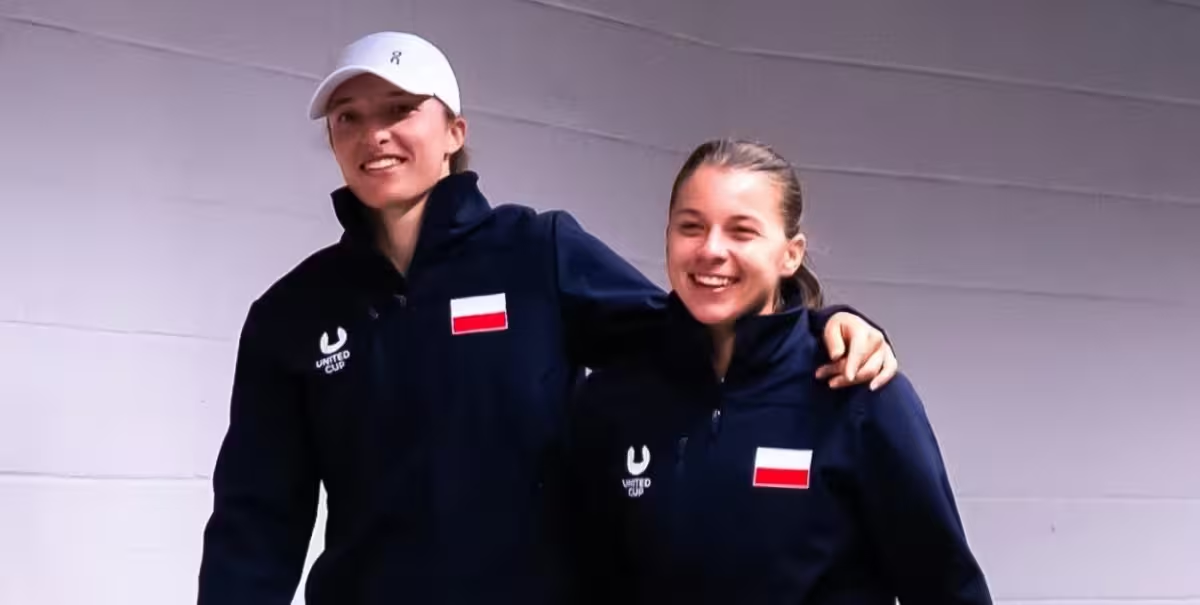
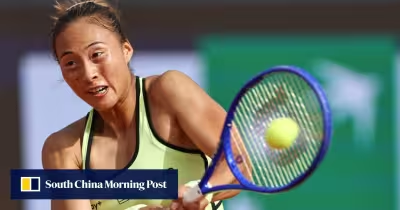
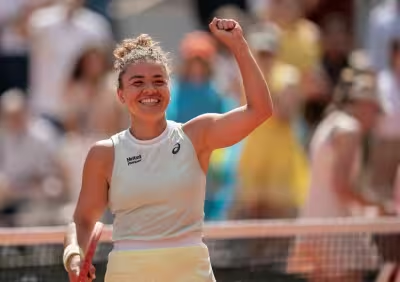
Outside Court, the draw reshuffled as the session moved on. Maja Chwalińska advanced to the second round with a 6:4, 6:0 win over Qinwen Zheng, and Sara Bejlek beat Sloane Stephens 6:3, 6:2 in 82 minutes to emerge as a potential second-round opponent for Świątek or Jones. The Bejlek-Stephens result is the type of scoreline that alters immediate planning: Stephens, the 2018 Roland Garros finalist and 2017 US Open champion, had been a known quantity, but Bejlek’s win puts a rising player in position to face the winner of the Świątek–Jones match.
There is a clear friction to the tidy opening set. Świątek, ranked third in the WTA, is the defending force at this major — champion in 2020, 2022, 2023 and 2024 — and a polished start was expected; what isn’t settled is whether a teenager with a wild card can summon the kind of run that overturns that expectation. Jones’s youth and ranking, and the fact she received a wild card to play here, mark her as an underdog, but underdogs at Roland Garros have turned pressure into momentum before.
Świątek’s first-set acceleration is a reliable signal: she arrived in Paris able to impose pace and tactics immediately. But a single dominant set is not the tournament. The immediate next fact for readers is practical and unavoidable — Świątek must finish the job against a tenacious opponent and then prepare, perhaps, for a match against Bejlek, who arrives fresh from an 82-minute win. For those who want more on the newcomer who tested the champion, see Emerson Jones Tests Four-Time Champion Iga Swiatek in Paris First Round —
On balance, the conclusion the opening hour supports is simple: Świątek looked ready and sharp — a quick first set, three set points and a 5:1 lead are the kind of start champions build on. If she maintains that level, the draw and the day’s other results point to a routine progression; if the teenager raises her level, Roland Garros could produce a proper upset. For now, Paris has delivered the first decisive sign — Świątek came out of the gate fast.