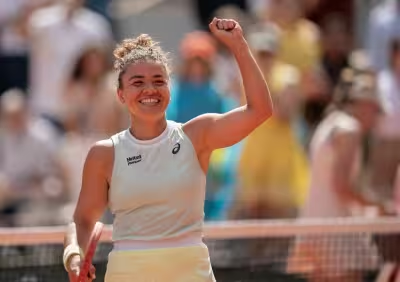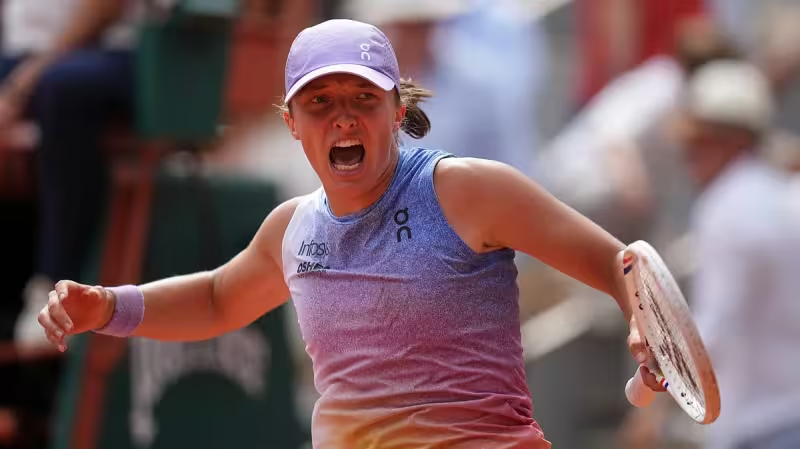
Seventeen-year-old Emerson Jones stood across the net from Iga Swiatek in the first round at Roland-Garros, the first-ever meeting between the teenager and the four-time champion.
Before the match the two completed the customary pre-match formalities and warm-up rallies; on match day Swiatek served first under the scorching sun in Paris. The fixture was listed as Iga Swiatek vs Emerson Jones as part of the Day 2 women’s singles schedule at the French Open.
The early games underlined the gulf in experience. Jones lost the first two games without scoring a single point and then, after a run of hold-and-break exchanges, finally won a game. That game arrived only after Swiatek had saved two break points — a detail that showed the teenager could push a champion to the margins of a service game even when the scoreboard read largely one-sided.
Those facts are the weight of the moment: a 17-year-old making his Grand Slam main-draw bow against one of clay’s most accomplished players, and finding at least a foothold after a brutal opening. The two blank games at the start made plain how sharp the margin is at this level; the subsequent game Jones won proved he could respond when the pressure was at its highest.
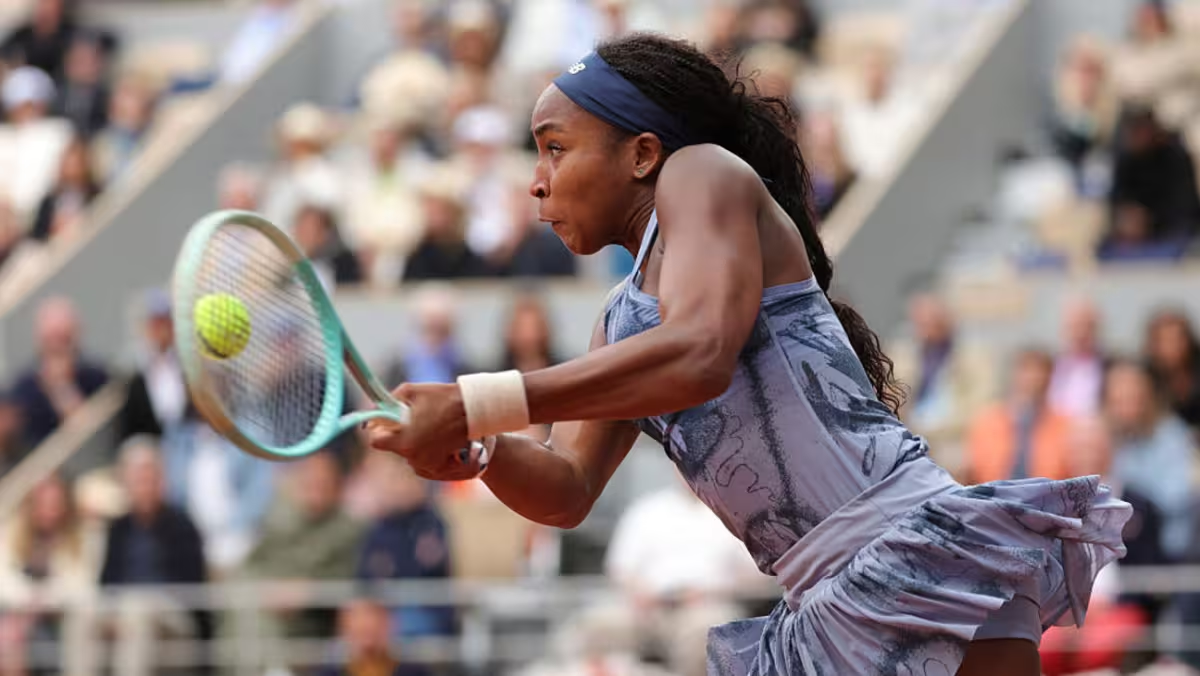
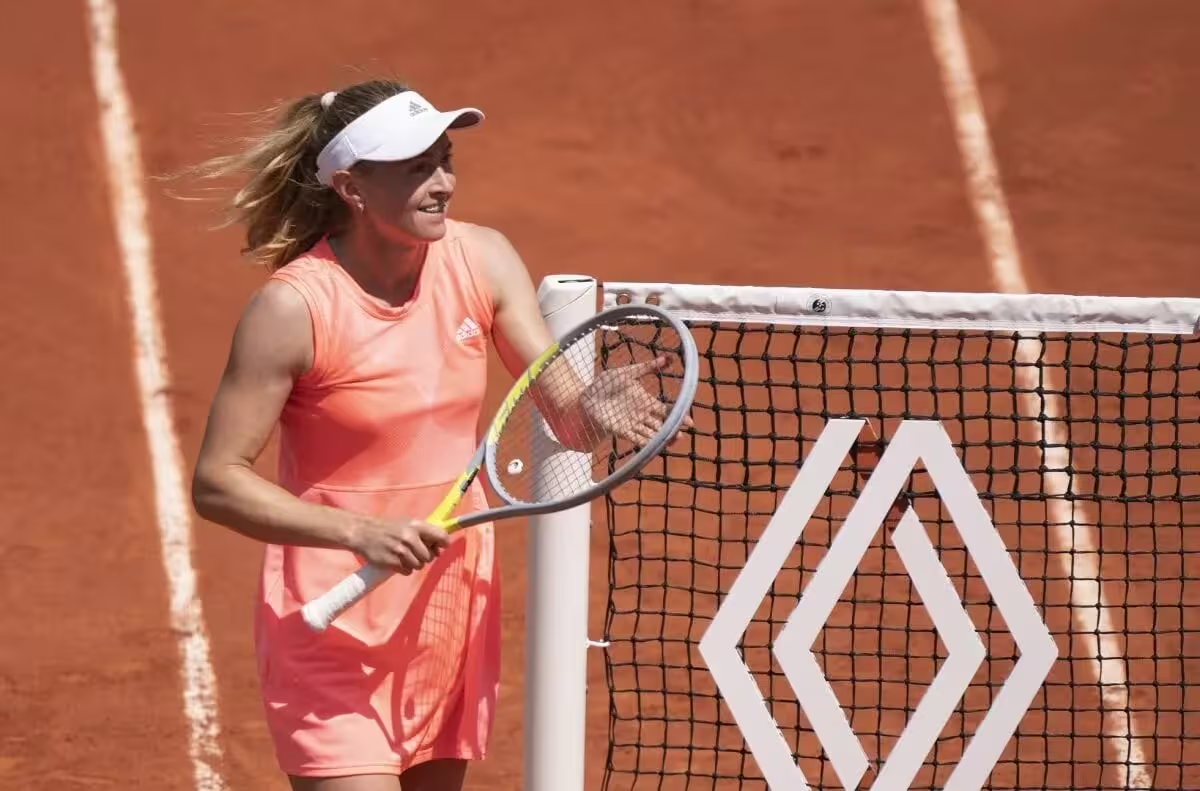
Context is simple and immediate: this was Swiatek’s opening campaign at the French Open and part of the tournament’s Day 2 action. Roland-Garros is where Swiatek’s record as a four-time champion shapes expectations, and a first-round pairing against an unseeded teenager is the kind of early test higher seeds commonly face at a major.
The tension in the match lived in the mismatch between early domination and a sudden, small reversal. Jones’s two blank games suggested a player overwhelmed by the moment; the saved break points and the game he eventually took suggested the opposite — that a single swing of play can alter the outline of a match. Those two facts sit uneasily together: the scoreboard’s early cruelty and the immediate capacity to claw a point back.
For Jones, the visible arc of the opening minutes will matter more than any headline. The young player’s first steps on a Grand Slam court included the ritual — the warm-ups, the coin toss, Swiatek serving in the baking Paris sun — and then a pattern of play that tested both men’s readiness. For Swiatek, the early hold-and-saves were a reminder that even a champion’s opening hour is not automatic; for Jones, the single game and the break points he pressed were small proof that the meeting was not entirely one-sided.
The decisive question now is precise: can the small gains Jones managed in Paris be the start of something larger, or were they only a momentary surge against a four-time champion still setting the pace? That is the outcome to watch as the French Open moves on — whether the 17-year-old’s single game and those two saved break points become a foundation he can build on, or simply a chapter in the way most young players learn what it takes on a big court.