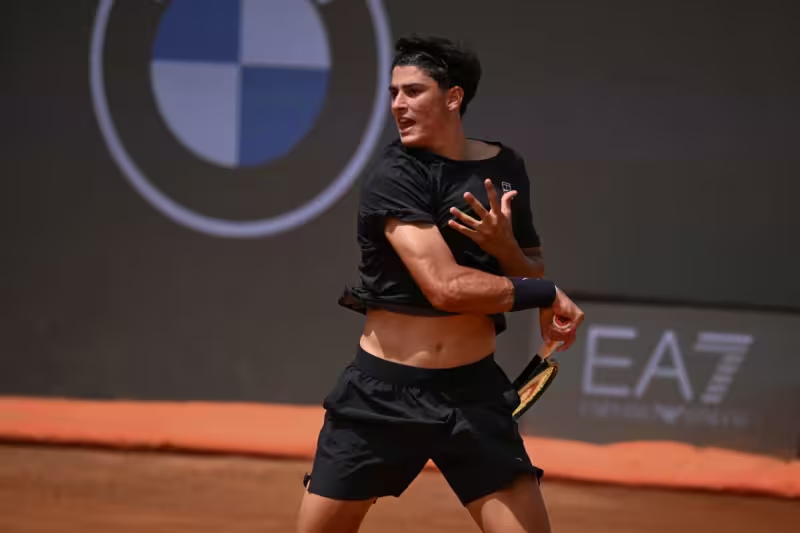
Federico Cinà beat Reilly Opelka 3-6, 6-4, 6-2, 6-7, 6-4 on Sunday 24 May on Campo 6 at Roland Garros to record his first match win in a Grand Slam main draw.
The 2007-born qualifier pulled off the upset in a contest that lasted just under three and a half hours, the scheduled third match starting from 11.00 at the Paris claycourt venue. Opelka won the opening set, but Cinà recovered to take the second and third before dropping the fourth in a tiebreak and then closing out the decider.
The scoreline — 3-6, 6-4, 6-2, 6-7, 6-4 — tells the simple arithmetic of the result; the match facts add texture. Cinà and Opelka had never met before, making this a first chapter between the two. Cinà reached the main draw the hard way, having qualified by beating Watanuki, Tomic and Galarneau in the lead-up.
For Cinà this was not only a first-round win; it was his first appearance in a Slam main draw. The victory moves him into the second round, where his next opponent will be either Stan Wawrinka or Jesper De Jong. De Jong is in that section of the draw only because he replaced Arthur Fils earlier in the tournament.
The match was a classic qualifier-versus-established-name script on clay: a young player who had to win through qualifying, then meet a big-serving, high-profile opponent on a show court. Cinà's path through Watanuki, Tomic and Galarneau furnished him with match play on the surface and the confidence to survive a five-set test under the lights on Campo 6.
Tension arrived in the fourth set, which Cinà lost in a tiebreak, and in the decisive set where the margin tightened again before he closed it out. That ability to regroup after dropping a set in a tiebreak and finish a long match will be the immediate talking point for coaches and rivals alike; it is the single practical takeaway from a player making his Slam main-draw debut.
What happens next is clear and consequential: Cinà advances and will face either a former top-tier player in Stan Wawrinka or a late replacement, Jesper De Jong, who came into the draw for Arthur Fils. The match-up will determine whether Cinà's breakthrough converts into a deeper run at Roland Garros or becomes the bright moment of a short stay.
Federico Cinà's win on Sunday is the kind of result that changes how a tournament treats a name on the draw sheet. He arrived in the main draw by beating three opponents in qualifying, then lasted just under three and a half hours to take Opelka apart in five sets on clay. The immediate question for Roland Garros now is whether Cinà can follow this first Slam victory with another against Wawrinka or De Jong; the answer will define whether this is a debut that becomes a campaign or a single headline.