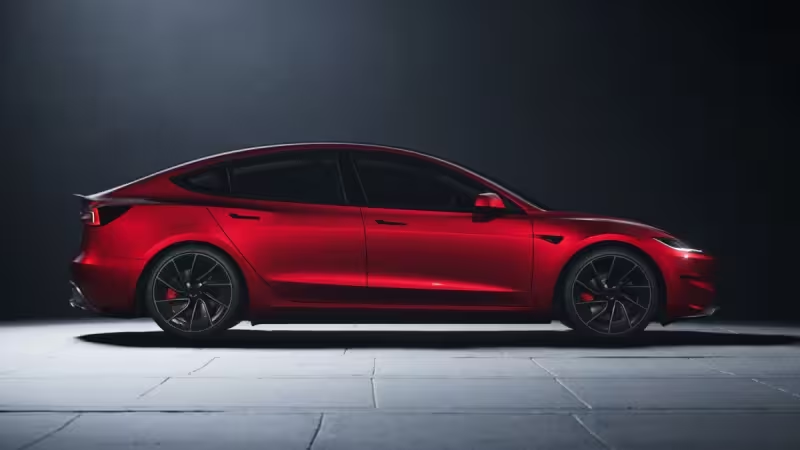
Lars Moravy, Tesla’s senior engineering leader, told a podcast audience he often thinks about adding a third motor to the Tesla Model 3 — a change that would aim to close the gap with the retired Model S Plaid’s blistering straight-line pace.
On a special episode of the Ride the Lightning podcast, host Ryan McCaffrey asked Moravy whether a third motor could find its way into the Model 3. Moravy answered plainly: "I think about it all the time," and described the idea of adapting the Plaid’s carbon-sleeved electric motors for the smaller Model 3 platform as technically feasible, though difficult.
The statement lands against one sharp fact: following the official retirement of the Model S and Model X, Tesla no longer lists a flagship Plaid vehicle in its lineup. The Model S Plaid delivered a 2-second 0-60 mph time, a benchmark the refreshed Model 3 Performance does not match. The Model 3 Performance today runs with one motor in the front and one in the rear; adding a third motor would require squeezing hardware into an already compact rear subframe.
Moravy was specific about where the engineering attention would land. He said Tesla’s pure performance focus is currently concentrated on the next-generation Roadster, which will “utilize Tesla's absolute best and newest motor technology.” He also called the tri-motor Model 3 concept a "work for reward" situation — an idea that demands extra design effort up front for a payoff only if the engineering hurdles and business case align.
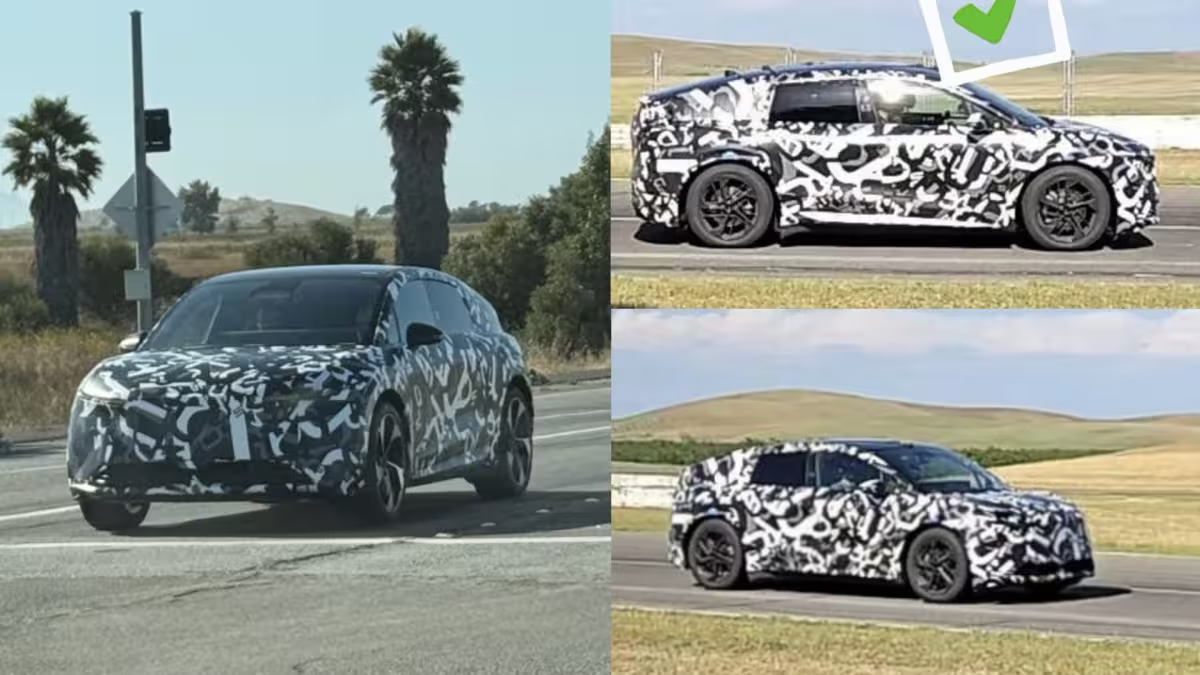
The weight of that admission is practical. Tri-motor layouts are not new to Tesla’s playbook, but they are to the Model 3 platform. Moravy said he’s been thinking about taking the carbon-sleeved motors from the Plaid cars and adapting them for the Model 3 chassis, which implies significant reengineering of mounting, cooling, software and safety systems. He also conceded that physically fitting a third motor into the rear subframe would be an "incredibly tight engineering squeeze."
Context shows why the conversation matters now. The company shelved the two vehicles that once carried the Plaid name, and Tesla engineers are openly weighing how to bring Plaid-level performance to cheaper, higher-volume cars. A tri-motor Model 3 would be the clearest way to do that: more motors mean more power and faster traction management without sacrificing the Model 3’s smaller footprint or market price band. But Moravy and his team are candid that the Roadster is where Tesla plans to pour its newest motor developments first.
The tension is obvious and immediate. Engineering leadership is at least mentally exploring the technical constraints of a tri-motor Model 3, yet resources and talent are already committed to another product whose goal is pure speed and prestige. Moravy’s comments framed the tri-motor option not as a product announcement but as an active thought exercise — something the engineering staff will revisit if and when the trade-offs tip in its favor.
For drivers and investors who pressed Tesla to replace the speed halo the Model S Plaid provided, Moravy’s candor is the clearest signal yet that bringing Plaid-like performance to the mass-market Model 3 is on the company’s radar. It is not a promise. It is an engineering possibility, constrained by packaging realities and by Tesla’s current commitment to the next-generation Roadster.
That judgment is the story’s conclusion: a tri-motor "Tesla Model 3" remains a live technical idea but not an imminent product. Moravy’s remark — "I think about it all the time" — is an honest admission from a leader who knows what it would take and where the company’s priorities sit today. Listeners who want to hear the full technical back-and-forth can find the Model 3 Plaid discussion at the 51:45 mark of the Ride the Lightning episode.