
Senator Marco Rubio said Russian Foreign Minister Sergei Lavrov rang him on Monday, May 25, to deliver a direct message from Vladimir Putin that Russia would strike Kyiv — a warning Rubio says he passed on to former President Donald Trump after seeing notices sent to all diplomatic facilities.
Rubio told reporters on Tuesday in India that Lavrov had called him personally and that Putin "wanted – had asked him to call me to relay the message directly to the president (Trump - ed.), which I did, but obviously we had already seen the notice sent out to all the diplomatic facilities." Russia's Foreign Ministry separately said Lavrov informed Rubio of Moscow's decision to begin systematic strikes on sites in Kyiv linked to Ukraine's military and decision-making centers, and that Moscow recommended foreign governments remove diplomatic personnel and citizens from Kyiv.
The Russian warning — distributed to embassies, Rubio said, not just the United States — drew fresh condemnation from Ukraine's partners and a sharp rebuke from Kyiv. Ukraine's Foreign Ministry called the message "shameless blackmail" and urged international partners to respond by increasing pressure on Moscow and strengthening Ukrainian air defenses.
Rubio stressed the human and strategic stakes, saying: "Every time you see these big strikes from one side or the other, it's a reminder of why this is a terrible war that's now gone on longer than the Second World War, and it needs to come to an end." He added a caution about escalation: "The danger in all of these wars, as they continue and then they go on, is that they always have the threat of escalation."
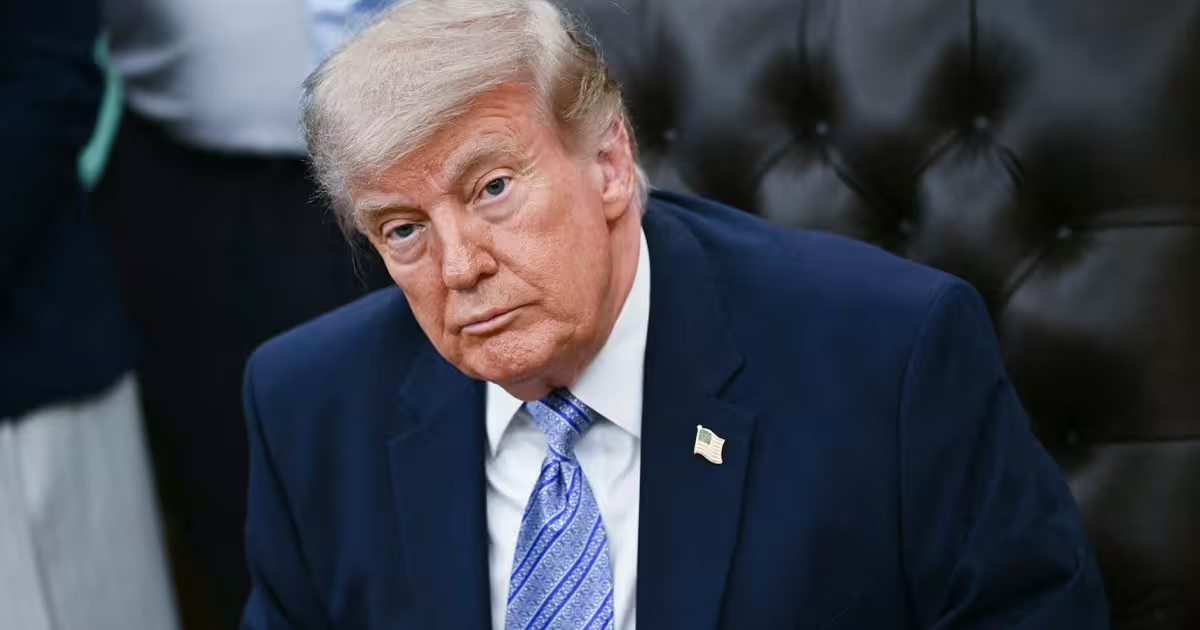
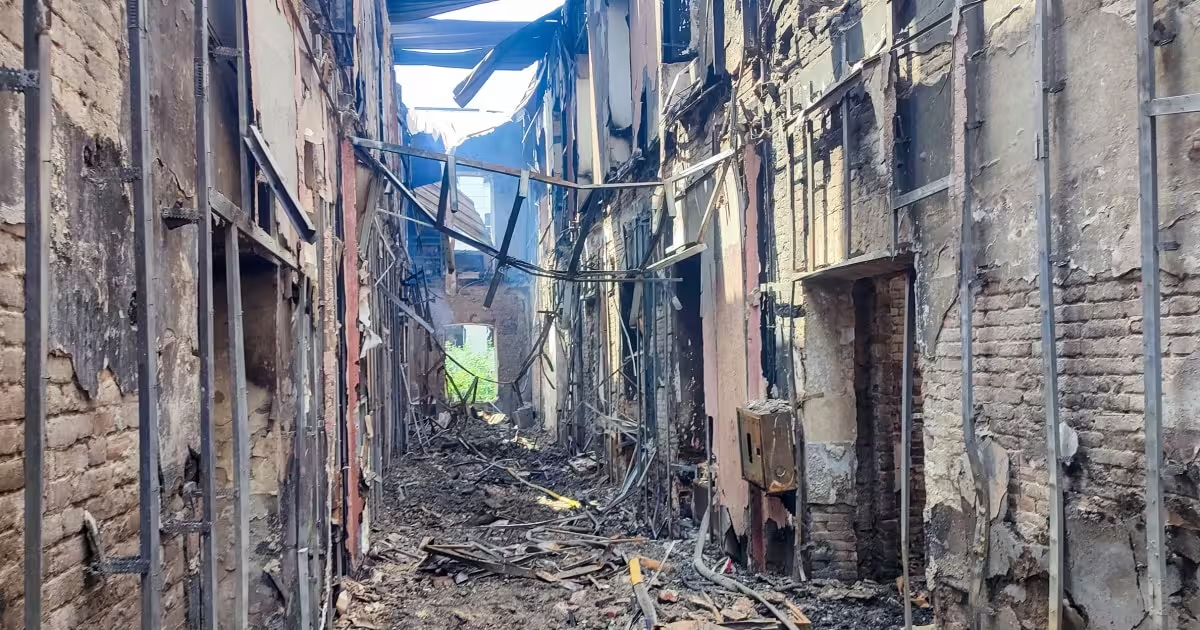

The sequence laid out by Rubio and Moscow creates an unusual diplomatic moment: a foreign minister calling a U.S. senator to request that a former U.S. president be told of an imminent operation, while an official Kremlin notice urges all embassies to consider evacuation. Rubio said Russia had not directly asked the United States to evacuate its Kyiv embassy, even as Moscow recommended the removal of diplomatic personnel and citizens more broadly.
The warning is embedded in a longer, grimmer pattern: Russia has carried out repeated missile and drone attacks on Kyiv throughout the full-scale war, yet many foreign countries have maintained diplomatic missions in the city. The Russian statement that it would target sites tied to Ukraine's military and decision-making centers and its call for evacuations underscore the dilemma facing governments that have chosen to keep staff in place despite the danger.
Rubio also told reporters there is currently no set schedule for peace negotiations aimed at ending Russia's war against Ukraine. That absence of a negotiation timeline, he said, reinforces the risk of continued strikes and the broader hazard of escalation as the conflict grinds on.
Ukraine's Foreign Ministry framed Moscow's move as intimidation and urged partners to answer with more pressure on Russia and better defenses for Ukraine. Those steps — political and military — are precisely what Kyiv and its backers say could blunt further strikes. The Russian threat, in the view of Kyiv and its partners, was intended as pressure: to force diplomatic withdrawals and sap international resolve.
The immediate decision now rests with foreign capitals that must weigh Moscow's recommendation against their commitment to a sovereign Ukrainian capital. Will governments heed the evacuation advisory and remove staff, or will they stay and intensify military and diplomatic support to blunt any new campaign? The choice will decide whether the Russian warning succeeds in shrinking Kyiv's international footprint or hardens a broader coalition determined to keep missions and aid in place.