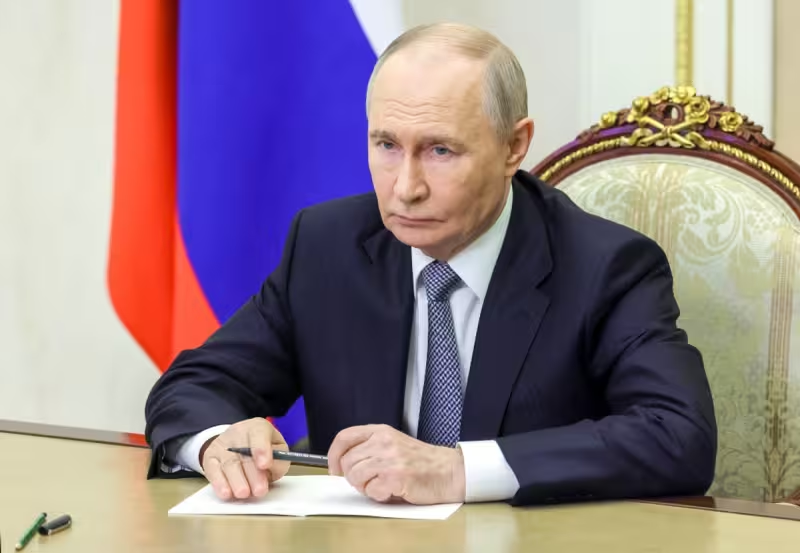
Russian President Vladimir Putin signed a decree exempting some participants in the war against Ukraine and their families from repaying overdue loans under specific conditions.
The measure applies to Russians who signed military contracts with the Defense Ministry from May 1 for at least one year and caps any write-off at 10 million rubles — roughly $139,000. Late Monday the Kremlin said participants in its "special military operation" and their spouses would be exempt from repayment obligations on overdue loans up to that ceiling, and on Tuesday reports said Putin had formalized the change in a decree.
Under the decree the write-off covers only loans issued before a recruit signs the contract and only overdue obligations — it does not clear newly incurred debt. Crucially, the relief requires that a court ruling on debt collection has entered into force or that enforcement proceedings have begun before the write-off can take effect.
The decree also lays out an absolute termination of family members' credit obligations in the most extreme cases: if a serviceman dies at the front or as a result of injury, wounding, trauma or contusion, or if he is declared to have a Group I disability, all credit obligations of his family members are terminated.
These steps mirror a package introduced by Putin in November 2024 that covered loan issues issued before Dec. 1, 2024, but the new decree extends the idea to a later cohort of recruits. According to the published timeline, the current scheme applies to recruits who have signed contracts since May 1, 2026 and committed to at least one year of military service in Ukraine.
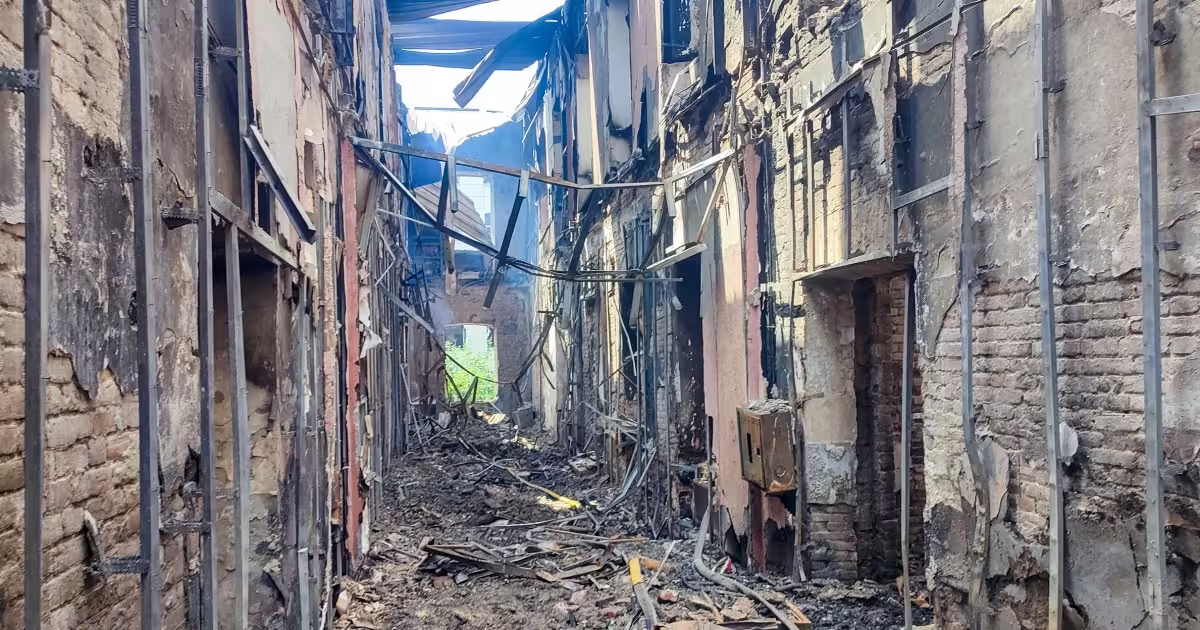

The numbers behind the announcement underscore why the Kremlin presented the policy as a recruitment incentive. The relief is capped at 10 million rubles, a figure the government flagged repeatedly when describing the measure. Reports cited by officials and commentators have suggested pressure on reservists to sign contracts has increased in recent months, and outside estimates put Russia’s deployed forces in the war zone at around 700,000 troops, with monthly losses that may exceed 30,000 personnel.
Context matters: this latest decree arrives after an earlier November 2024 package and follows public reporting that Russia’s recruitment drive had slowed. Observers said the Kremlin’s move appears aimed at reviving that drive by offering tangible financial relief to those who commit to contracts of at least one year.
But the policy contains built‑in frictions that could blunt its immediate effect. The write-off applies only to debt that already exists before signing; it does not cover new loans taken after enlistment. It cannot be applied until a court ruling on debt collection has taken effect or enforcement proceedings are underway, which creates a legal threshold many potential recruits and their families may not meet quickly. And the cap, while sizable, leaves smaller‑value debts untouched by the headline number.
Those constraints create a gap between the Kremlin’s promise and the relief an individual might actually receive — a gap that could make the policy a limited incentive in practice. The decree also extends a specific safety net for families in the event of death or catastrophic disability, but that provision, by its nature, does not address the more immediate calculus for a recruit weighing enlistment against day-to-day financial pressure.
Given those limits, the most consequential test of the decree will be straightforward: will enlistments rise, and soon? The decree’s narrow legal conditions and the requirement that debt collection proceedings already be underway suggest it will help some recruits and families, but it is unlikely to reverse a broader slowdown on its own. For policymakers betting recruitment will follow the money, the real answer will be in the coming weeks and months — measured in new contracts and the paperwork trickling through courts and enforcement agencies, not in the headline promise alone.