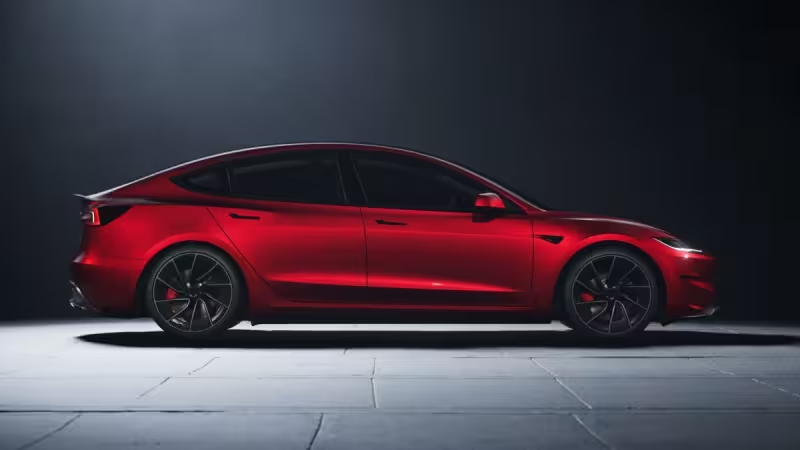
On a special episode of the Ride the Lightning podcast, Tesla engineering chief Lars Moravy was asked whether a third motor could find its way into the Model 3. At roughly 51:45 into the episode he offered an answer that was equal parts engineering candor and caution: "I think about it all the time."
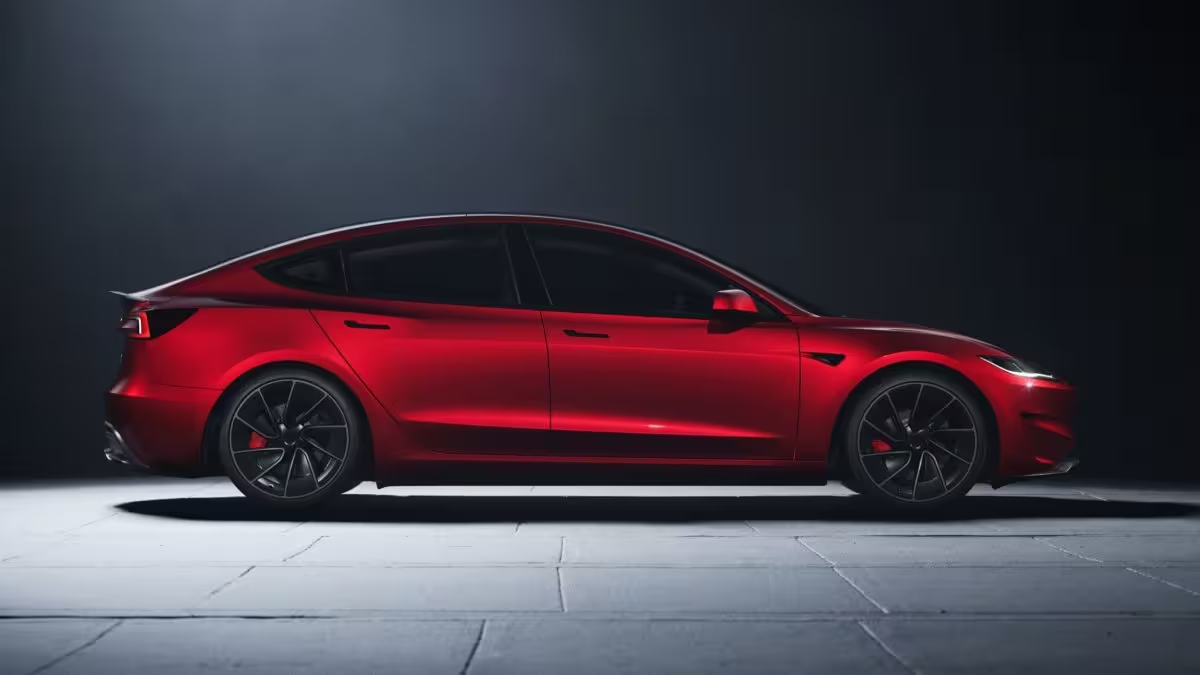
Moravy didn’t stop at a passing confession. He described taking the carbon-sleeved electric motors that originally gave the Model S Plaid its blistering acceleration and adapting them for the Model 3 platform — a conversion he said is physically possible but far from straightforward. The Model 3 Performance today runs with one motor in the front and one motor in the rear; adding a third motor would mean squeezing hardware into a rear subframe that Moravy called an "incredibly tight engineering squeeze."
The scale of what Moravy was describing matters because the Plaid-era Model S still sets the benchmark for how fast a Tesla can accelerate: a 2-second 0-60 mph time that the refreshed Model 3 Performance cannot match. That gap is why the idea of a tri-motor Model 3 commands attention — it would be the quickest production Model 3 ever built and a direct instance of high-end Plaid technology trickling down through the lineup.
Context is simple and immediate: Tesla currently lacks a flagship Plaid vehicle in its lineup, and the Model S Plaid has been the reference point for peak performance. The Model 3 Performance is the brand’s current high-performance compact, but it is slower than the Model S Plaid’s 2-second sprint. Moravy framed the tri-motor idea as part technical curiosity, part inventory planning — the same motors developed for the next-generation Roadster might one day fit other cars.
That is also where the tension in Moravy’s comments appears. He described the work as a classic "work for reward" situation: engineering effort must be directed where it yields the greatest return. Tesla’s pure performance focus is now on the upcoming next-generation Roadster, he said, and the company is prioritizing that project over what he called a niche Model 3 variant. In short: the parts and know-how exist in design, but they are committed elsewhere.
The practical obstacles underline the trade-off. Installing a third motor in the Model 3’s rear subframe would require redesigning structural elements, thermal management, and software integration — not marginal tweaks but a compact reengineering. Moravy stressed that the team’s immediate bandwidth is tied up with delivering the Roadster’s performance promises first. Once that car reaches production, he left the door open for those high-performance motors to "potentially trickle down to the rest of the fleet in the future."
For buyers and fans who measure Teslas against the Plaid standard, the implication is straightforward: the notion of a tri-motor Model 3 is technically credible and tantalizing, but it is not imminent. Tesla’s engineering leadership is deliberately funneling its pure performance resources into the Roadster; only after that program is delivered will the company seriously consider transplanting Plaid-derived motors into a compact sedan. That prioritization effectively makes a high-speed, tri-motor Model 3 an engineering possibility whose timing hinges on the Roadster’s production schedule and the company’s appetite to develop a niche, high-performance variant.
Moravy’s two lines — "I think about it all the time" and the framing of the effort as "work for reward" — give the clearest summary: Tesla knows how to do it and is holding the parts in reserve, but it has chosen a different order of operations. Expect the Roadster first; expect tri-motor trickle-down only if and when Tesla decides the payoff justifies carving engineering time away from its headline performance car.