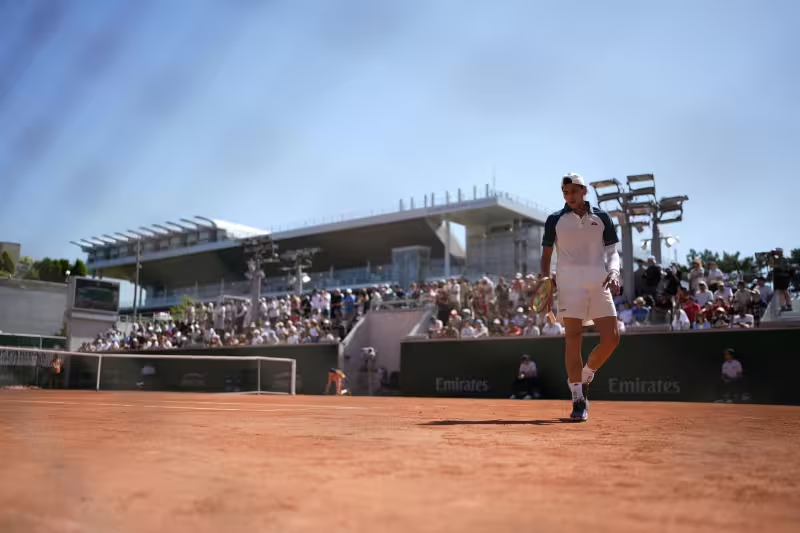
Aryna Sabalenka, the world number one, opened her French Open campaign on Court Philippe-Chatrier against Spain’s Jessica Bouzas Maneiro on day three at Roland Garros.
The match arrived with expectation: Sabalenka began the tournament as last year’s finalist and carries a run of extraordinary consistency — she has made at least the semi-finals in 12 of her past 13 Grand Slam appearances, reaching the quarter-finals in the one other start.
The numbers in that sentence explain why this opening match matters. Bouzas Maneiro arrives as the world No.50, an underdog on paper but one who stands between the top seed and a routine progression into the second week. Only once before has a women’s top seed fallen in the opening round at Roland Garros — Angelique Kerber in 2017 — so any wobble from Sabalenka would be both notable and historically rare.
Day three offered reminders that rankings and expectation do not guarantee results. On Court Suzanne-Lenglen, Australian wildcard Adam Walton, ranked world No.97, took the first set 6-2 against Daniil Medvedev, the No.6 seed, and led by that score in scorching conditions. Medvedev was nought for five on break points while trailing, a poor return on opportunities for a player whose Roland Garros record has been mixed: he has gone out in the first round six times in nine previous appearances.
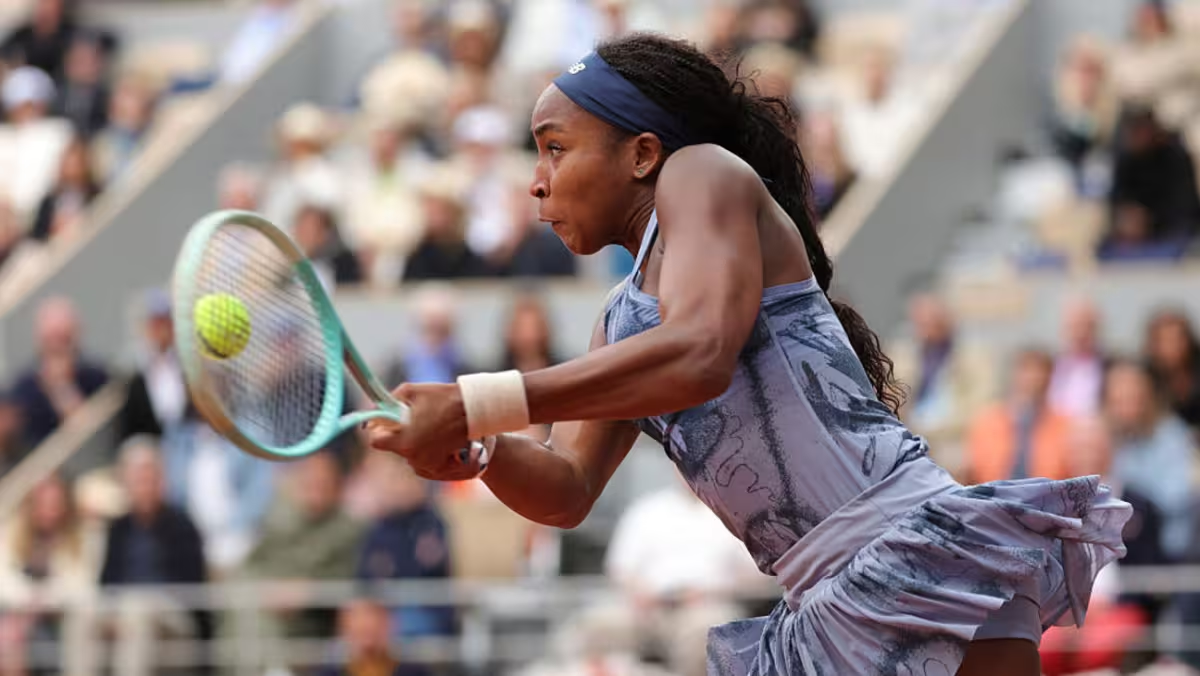
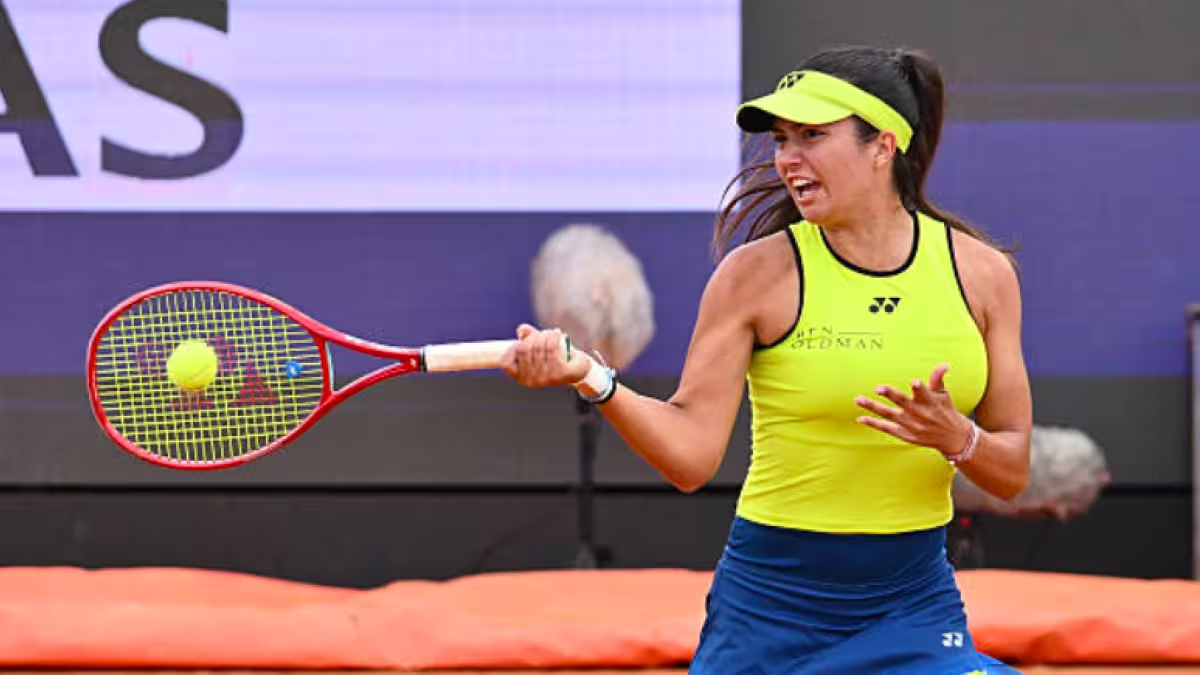
The men’s upset scare paralleled a ripple of results across the grounds. Stan Wawrinka lost a four-set match to Jesper de Jong, Jiri Lehecka fell in straight sets to Pablo Carreno Busta, and Katie Boulter survived a three-set test against Akasha Urhobo. On the other side of the draw, Iga Swiatek dispatched Emerson Jones while losing just three games, Elena Rybakina beat Veronika Erjavec 6-2, 6-2, and Elina Svitolina recovered from a set down to defeat Anna Bondar. Amanda Anisimova, Jasmine Paolini and Elise Mertens also advanced.
Those results are the weight of the day: a mix of expected progress and real surprises that underline the slippage possible on clay and the strain of the early rounds. For Sabalenka, who lost the French Open final last year, the context is simple and direct — she enters as top seed and proven major performer, and the expectation is that she will move through this round. Her past record at slams is the strongest possible counterargument to talk of an early exit.
Still, the tension is real. Only a single women’s top seed has ever departed in the opening round at Roland Garros, which makes any stumble headline-making by definition. The scene on day three suggested fragility in forms that should be reliable: Medvedev, an established top-10 player, was off his game on serve and at the net; Wawrinka and Lehecka, established names, were beaten. Those facts make Sabalenka’s match more than a routine opener — it is a check on whether elite consistency will carry through another Grand Slam beginning.
The immediate question for readers, and for the tournament, is simple: will Sabalenka convert expectation into a win and continue the sequence of deep runs that has defined her career, or will she deliver the sort of shock that has happened only once before at this event? Given her record — 12 semi-final-or-better showings in 13 slams — the sensible judgment is that she will advance. But day three showed that form can wobble and that the French Open can hand out surprises early.
Whatever the outcome on Court Philippe-Chatrier, the matches later in the day framed the stakes: a top seed with a near-unmatched run of major consistency, a dangerous but lower-ranked opponent, and a tournament that, in recent days, has already reminded everyone that rankings are only one part of the story.