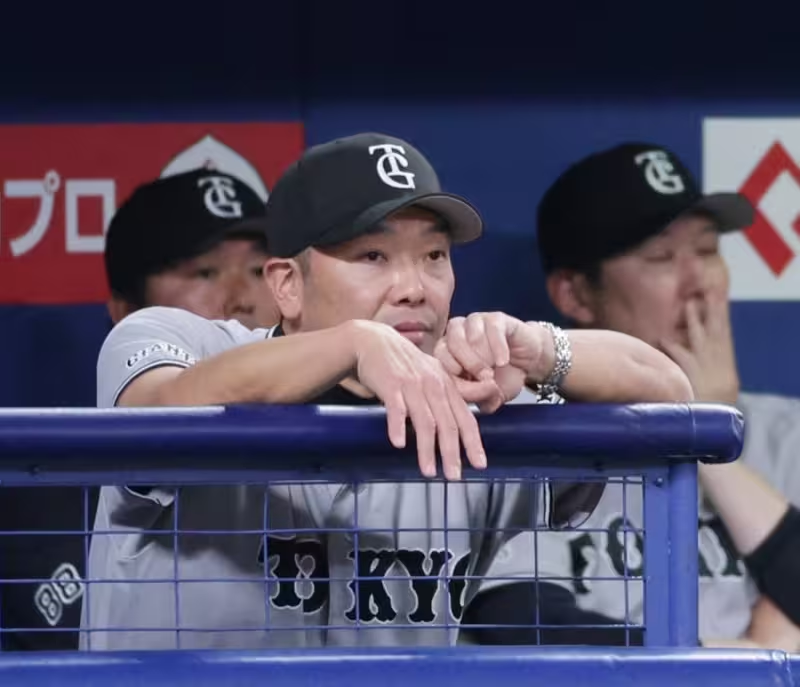
Shinnosuke Abe resigned as manager of the Yomiuri Giants on Tuesday, one day after he was arrested for allegedly assaulting his 18-year-old daughter at their home in Shibuya Ward, the club and police said.
The sequence of events is compact and stark: the alleged assault took place at the family home in Shibuya Ward; Abe was apprehended there the previous night; the Metropolitan Police Department says he admitted the allegation; the daughter suffered no injury. Abe is 47 years old and stepped down the following day.
The numbers and timing give the story its weight. A 47-year-old man arrested at his own home on a serious allegation, his daughter barely into adulthood at 18, and a resignation that came within 24 hours — those are the facts that change the calculus for the team and for public scrutiny.
The Metropolitan Police Department provided the most direct confirmation: officers arrested Abe at his home the previous night and were quoted as saying he admitted to the allegation. Police also said the daughter did not suffer an injury. Beyond those points, authorities have not released additional details about the circumstances of the alleged incident.

Context is simple and immediate: Abe held the post of manager of the Yomiuri Giants at the time of his resignation. The team announced his departure on Tuesday after the arrest overnight. The resignation severs a formal link between Abe and the Giants at a moment when the police account is the only public record of the facts.
The friction in the story is obvious. Abe’s admission to police, reported by investigators, sits uneasily beside the fact that the daughter was not injured. That contrast does not resolve the seriousness of an arrest or the meaning of an admission; it does, however, complicate any simple reading of what happened and how it will be treated publicly and legally.
For a public figure who had been managing one of Japan’s most prominent baseball clubs, the speed of events — an arrest at home one night and a resignation the next day — changes multiple innings at once. The immediate fallout is administrative: Abe is no longer the Giants’ manager. Beyond that, the Metropolitan Police Department’s statement that Abe admitted to the allegation is now the central publicly confirmed fact.
There are also unanswered but pressing practical questions that the facts force into view. How the Giants will address the managerial vacancy, what the club will disclose about internal deliberations, and whether further public statements will come from Abe or from investigators are all matters the public will track next. For now, the concrete record is the arrest, the admission reported by police, the absence of injury to the daughter and the manager’s resignation the following day.
Put plainly: Abe’s resignation on Tuesday closes his tenure with the Yomiuri Giants at the moment when the police say he admitted the allegation made against him. That concurrence of admission and resignation is the defining fact of this episode, and it leaves the situation squarely to the authorities and the parties involved to resolve next.