Brendan Wayne says his grandfather's screen presence helped shape the physical performance of Din Djarin, and he insists the character's power comes from stillness. "The more still I became, the more I became like my grandfather," he told interviewers, linking a decades-old acting philosophy to one of streaming television's most recognizable helmets.
Wayne has physically portrayed Din Djarin since the beginning of The Mandalorian, and he described a method built around economy and intention. He said he focused on making every action deliberate, treated every movement as intentional and purposeful, and arrived on set hours before filming to exercise and walk through sets while wearing the costume so the silence of a pose would read on camera.
That physical work sits alongside other pieces of the character: Pedro Pascal provides Din Djarin's voice and appears in scenes where the helmet comes off, while Brendan Wayne and stunt performer Lateef Crowder handle much of the armored on-screen movement. Wayne credited part of his approach to watching his grandfather throughout his life and to advice he recalled from director John Ford, who often encouraged John Wayne to do less rather than more in a scene.
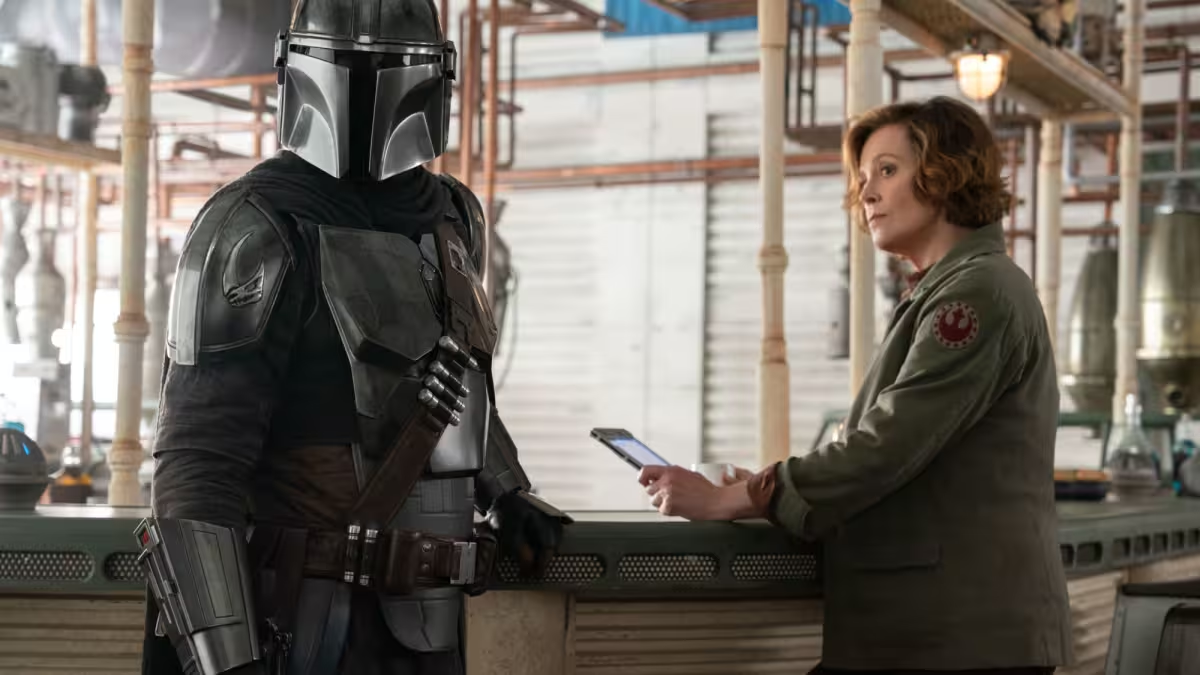
Wayne also pointed to wider influences in how he shaped the role. He said John Wayne himself studied samurai films, and Brendan likened the style he aimed for to performers such as Clint Eastwood and Yul Brynner — a lean, measured physicality rather than flamboyant motion. Those references tie into a longer lineage: the article links this movement philosophy to samurai-film influences and to George Lucas's use of Akira Kurosawa references in Star Wars.
The division between voice and body creates a built-in tension around who the on-screen Mandalorian actually is. Pascal supplies the character's spoken life in unmasked moments, while Brendan Wayne and Crowder supply the masked presence most viewers associate with Din Djarin; Wayne's claim that stillness is a deliberate craft invites audiences to read intent into what might otherwise look like restraint.
Yes, Brendan Wayne says, John Wayne's lesson explains Din Djarin's calm. By arriving early, rehearsing in costume and choosing every motion with purpose, he made stillness into a performance choice rather than a limitation. That disciplined minimalism — credited to his grandfather, reinforced by John Ford's admonitions and shaped alongside Crowder's stunt work and Pascal's voice — is the simple, visible engine of Din Djarin's presence on screen.