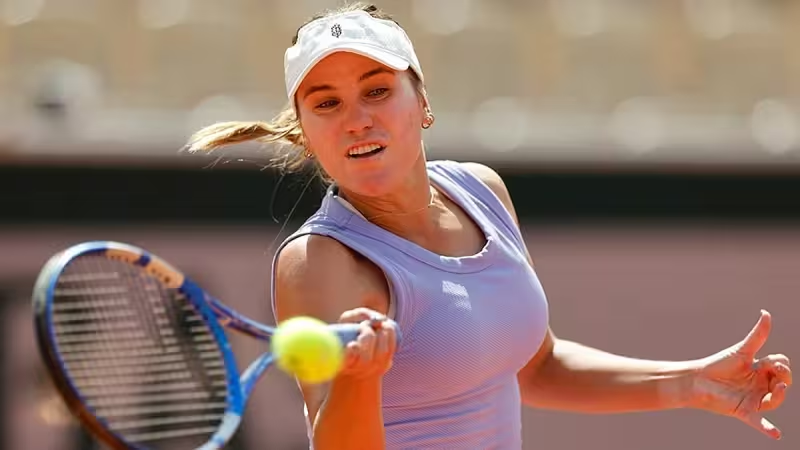
Naomi Osaka arrived at Roland Garros on opening day as the headline player in a first-round clash with Laura Siegemund, drawing live coverage and attention amid an unpredictable start to the French Open 2026.
The tournament’s early drama came in a separate match on Court Simonne Mathieu, where 17-year-old wildcard Moise Kouame produced a shock: he beat former US Open champion Marin Cilic 7-6, 6-2, 6-1. Kouame’s win made him the youngest player to reach the Roland Garros second round since 1992, and the youngest Frenchman to win a match at the clay-court Grand Slam since 1980.
Those figures — 7-6, 6-2, 6-1 and the years 1992 and 1980 — landed like a reminder that draws at Roland Garros can open with results nobody predicted. For Osaka, the result on Court Simonne Mathieu is context as much as it is warning: a named favorite in headlines, she faces a German clay specialist in Siegemund, and bookmakers and models have placed expectations on the Japanese star entering the day (see coverage by Lorenzo Sonego: Models and Bookmakers Favor Naomi Osaka Over Laura Siegemund at
Osaka remains the focal point — a player whose presence moves coverage and conversation — and her first-round meeting with Siegemund was the source’s chosen live thread. That choice matters because the field is already showing its volatility: Kouame’s victory over a former major champion is not a footnote, it is proof that young, lesser-known opponents can change the shape of the draw on clay without warning.

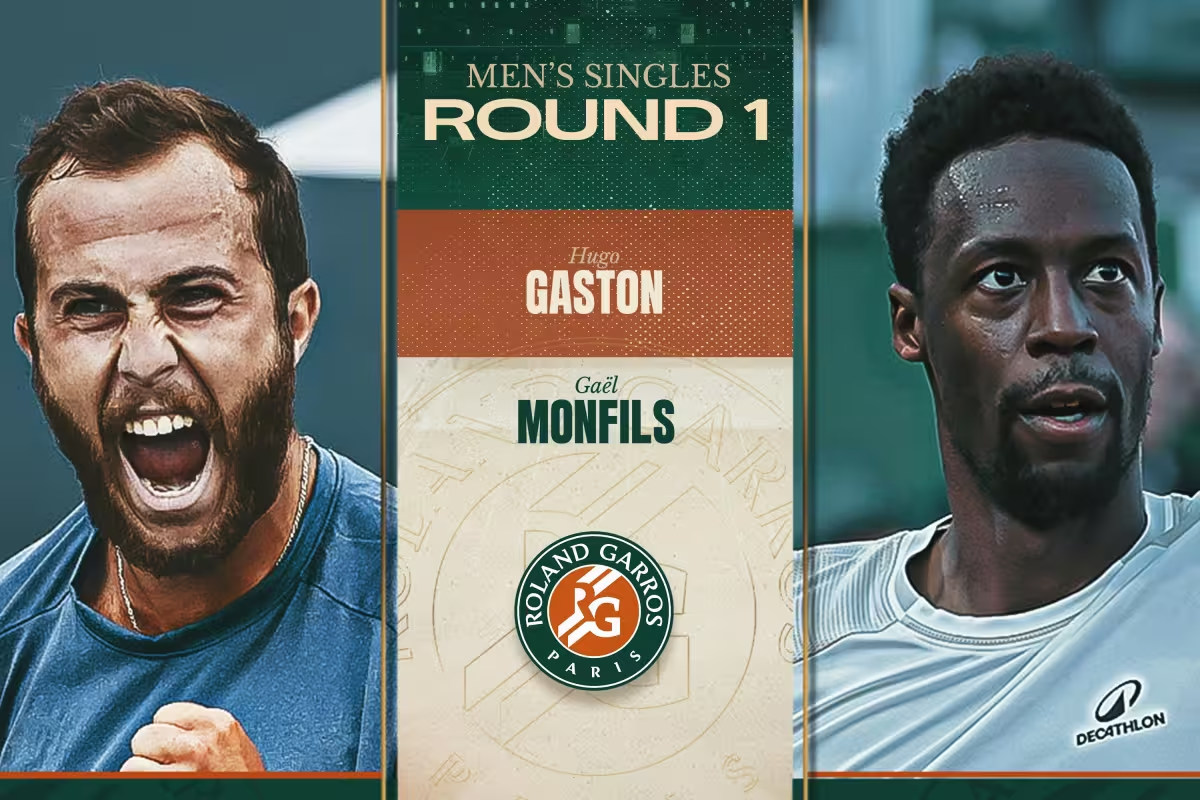
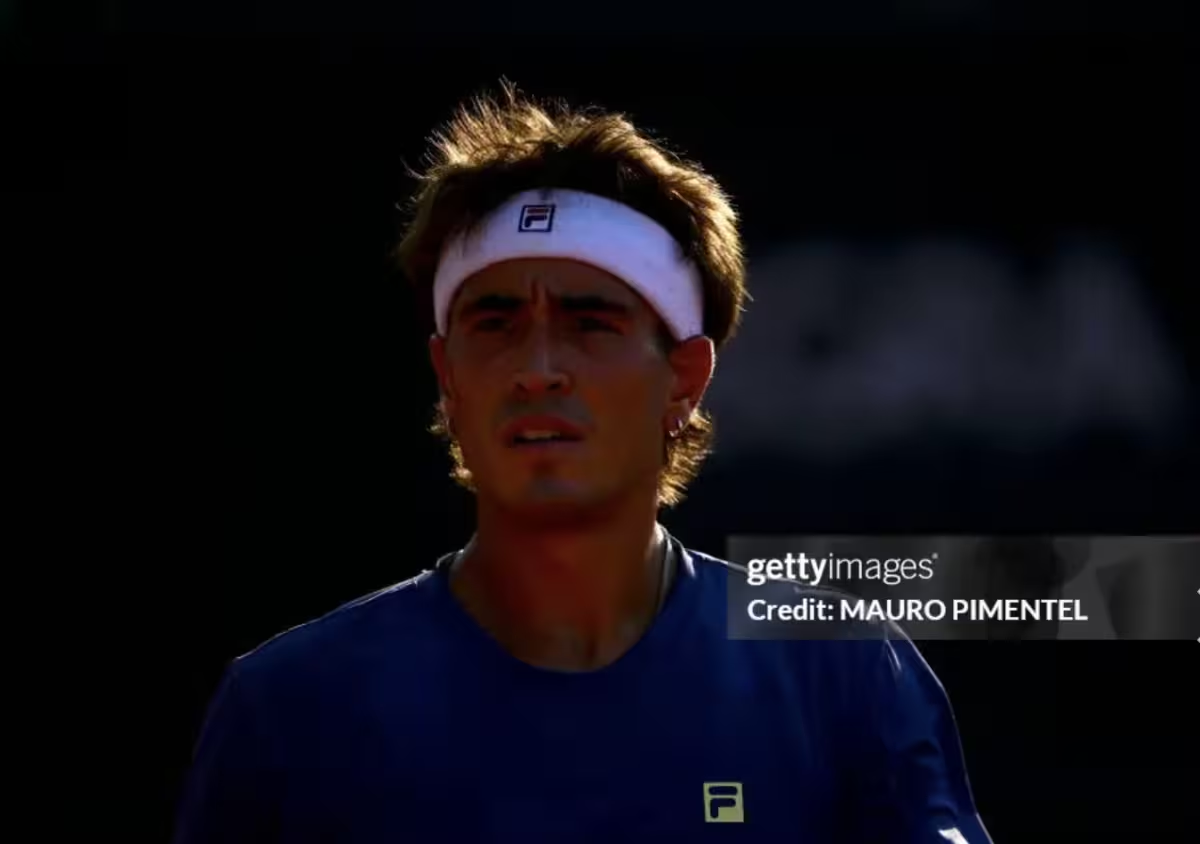
The tension is direct. On paper, the Osaka–Siegemund match pairs a globally recognized, big-match player against a German known for clay-court craft; in practice, Roland Garros has already delivered a result that complicates any tidy script. Kouame’s run — a wildcard, 17 years old, dispatching Marin Cilic in straight sets on a show court — underlines a gap between expectation and outcome that could matter for Osaka if she underestimates the surface or her opponent.
For reporters and viewers following live coverage, the immediate question is concrete: can Osaka handle Siegemund’s clay-court game and the tournament’s electric unpredictability? For the tournament, Kouame’s breakthrough rewrites at least the early narrative, giving the second week a new set of potential storylines — the emergence of a teenage Frenchman, the vulnerability of established champions, and the way clay rewards timing and temperament over reputation.
The practical next steps are simple and urgent for fans and bettors alike: watch Osaka’s match for its immediate result, and watch the lower half of the draw where Kouame now sits for the longer ripple effects of his upset. If the opening day is any indicator, Roland Garros 2026 will unfold as a contest where seeded names and big reputations can be overturned by single, clean performances — and where a 17-year-old wildcard on Court Simonne Mathieu can alter the bracket for players two, three and four rounds later.
Ultimately, Naomi Osaka’s day at Roland Garros will be judged against that new standard. The tournament has already supplied a clear lesson: on this clay, pedigree does not guarantee progress. The most consequential question left by opening day is whether Osaka can meet it.