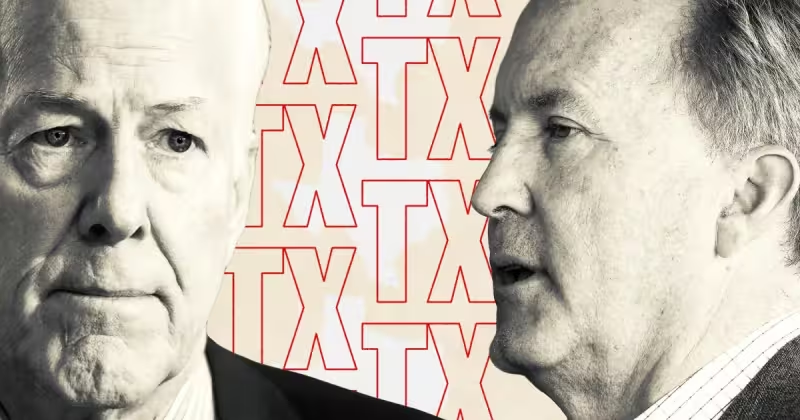
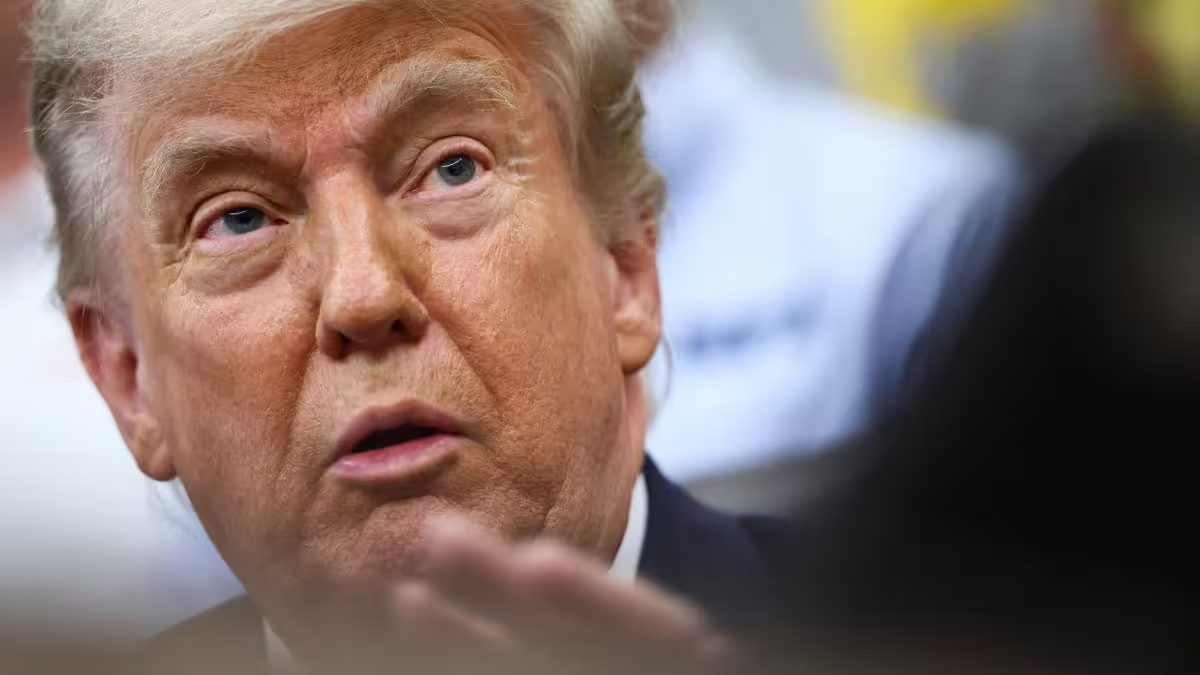
President Donald Trump threw his weight behind Texas Attorney General Ken Paxton over four-term Sen. John Cornyn in the Texas Republican Senate runoff, putting his full political force behind a challenge to one of the party’s best-known incumbents just days before Tuesday’s vote.
The endorsement came after Trump called Cornyn late in backing him, then turned to Truth Social to say Cornyn “was not supportive of me when times were tough” and that “John was very late in backing me in what turned out to be a Historic Run for the Republican Nomination, and then, the Presidency.”
The race had already become one of the most expensive Republican Senate contests in the country, with at least $76 million in campaign contributions and outside spending flowing in by the time of the article. Cornyn held a lopsided advantage in campaign finance disclosures, while Chris LaCivita had been advising a pro-Cornyn super PAC, a sign that the incumbent was leaning on the party’s donor class and campaign machinery even as Trump moved against him.
That made the endorsement more than a local Texas fight. Senate Majority Leader John Thune backed Cornyn, and Sen. Tim Scott, who chairs the National Republican Senatorial Committee, also lined up behind him. Cornyn’s camp had long presented him as a reliable conservative and a pragmatic Republican senator, and his campaign website said he had voted with Trump 99.2% of the time. But Trump’s decision to side with Paxton was meant to send a message to Republicans everywhere about where he expects loyalty to run.
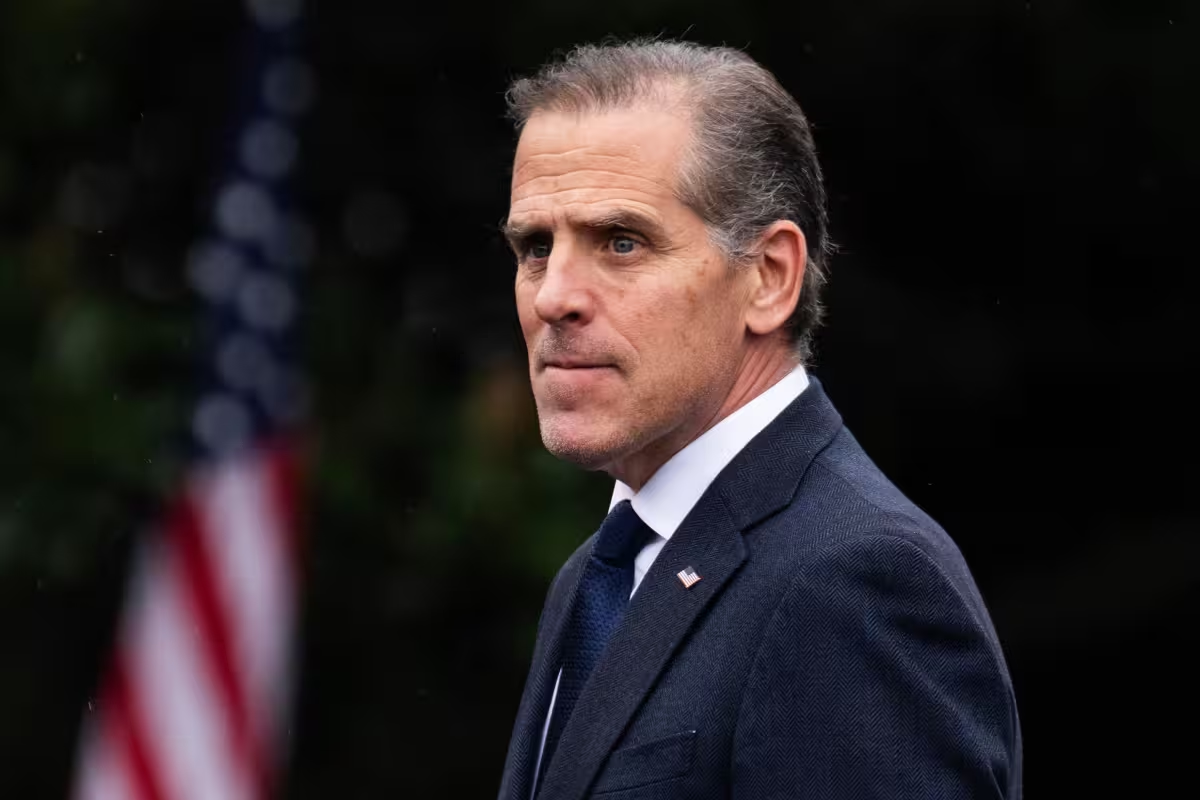
Paxton brought his own baggage into the runoff. He had been impeached by the Republican-controlled Texas House and was facing adultery allegations amid an ongoing divorce, a combination that would normally make him a difficult sell in a general election. Instead, Trump’s backing gave him the one thing that mattered most in the modern Republican primary system: a direct line to the party’s base.
The president’s move also fit a broader pattern. On May 5, Trump ousted five state senators in Indiana who opposed his push to gerrymander the state ahead of the November elections. On May 16, he succeeded in defeating two-term incumbent Sen. Bill Cassidy, R-La., who voted to convict him in his second impeachment trial. On May 19, Trump was successful in knocking out seven-term incumbent Rep. Thomas Massie, R-Ky. The Texas endorsement was the latest 11th-hour signal that Trump’s political loyalty tests are becoming the defining force inside the Republican Party.
A White House official described Trump’s backing of Paxton as an intentional “f*** you” to a stalled Republican Senate. That may be the bluntest reading of the endorsement, but it is not a hard one to make. By choosing Paxton over Cornyn, Trump did not just intervene in a runoff. He reminded Senate Republicans that even a senior incumbent with Washington’s backing can be vulnerable if the former president decides otherwise.
Tuesday’s runoff will show whether that warning still decides Republican races in practice, or whether a four-term incumbent with a fundraising edge and establishment support can survive a Trump-backed challenge at the last minute.