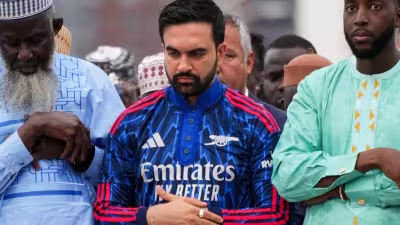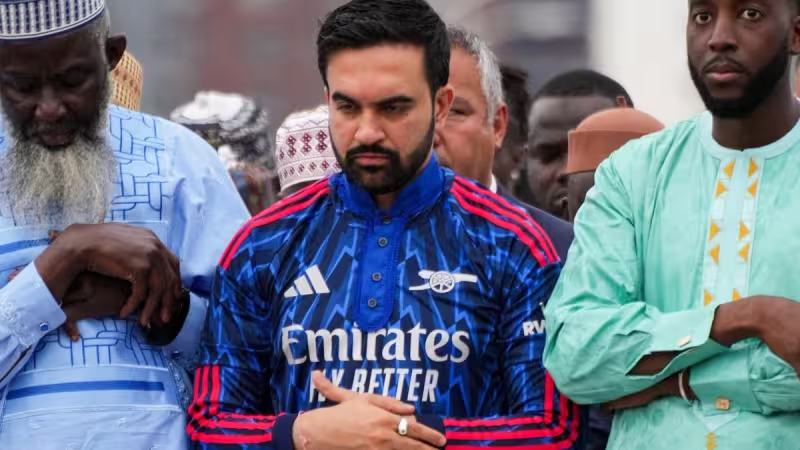
Zohran Mamdani joined worshippers in the Bronx on Wednesday, May 27, for an Eid al-Adha celebration while wearing a custom Arsenal thobe: the club’s 2025-26 blue road shirt extended beyond his knees with the crest and Emirates airline sponsor visible.
The outfit — described by the New York Post as a long blue-and-black jersey with red stripes on its sleeves and the slogan Emirates Fly Better — was worn as Mamdani stood beside Rep. Alexandria Ocasio-Cortez and addressed the crowd with a string of messages tying faith to public policy.
“Eid al-Adha reminds us that sacrifice is not a burden,” Mamdani said. “It is an opportunity to see ourselves as part of something larger. To extend a hand to those who need it most.” He added, “I am honored to be New York City’s first Muslim Mayor and I am determined to lead through solidarity. Together, we are working to ensure every New Yorker can afford the groceries, housing, and child care they need.”
The timing of the appearance underscored two currents: a civic moment for the city’s new mayor and a high point in European club football. Arsenal, for which Mamdani is a vocal supporter, was crowned English Premier League champion last week — its first title in 22 years — and will play PSG in the UEFA Champions League final on Saturday, May 30.
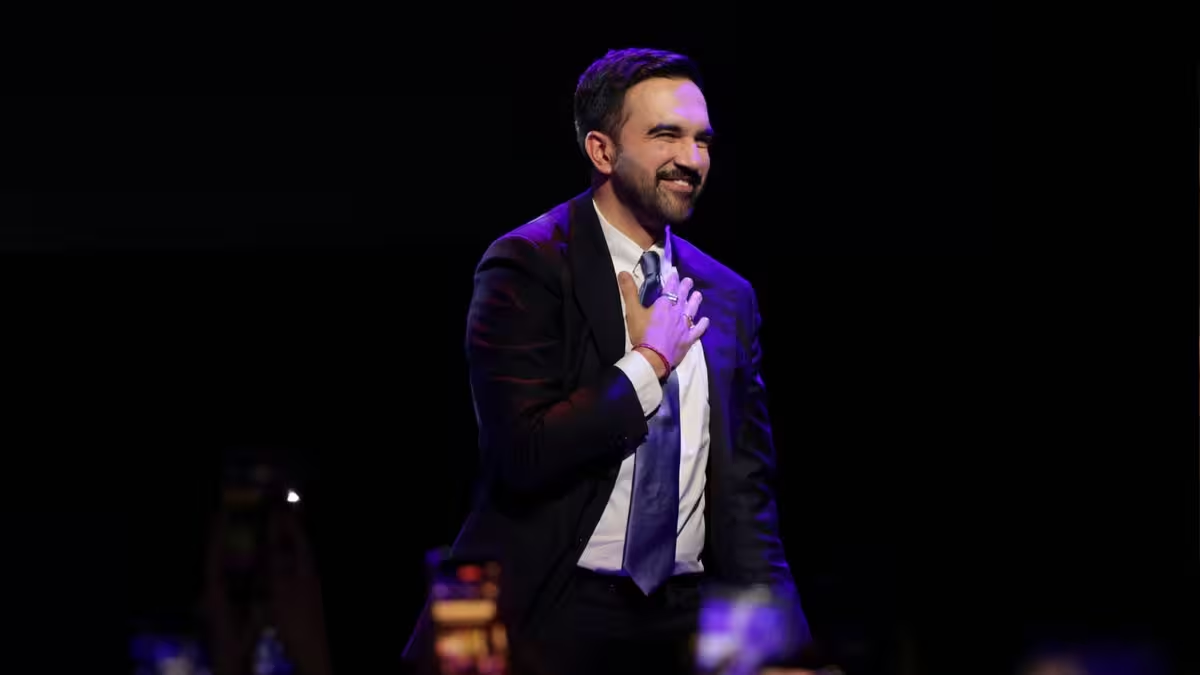
Syed Ali, at the Bronx event, summarized how Mamdani framed the holiday: “Zohran related the story of sacrifice that Eid al-Adha is centered on back to solidarity and affordability.” Eid al-Adha follows Eid al-Fitr, the holiday that marks the end of the holy month of Ramadan, and Mamdani used both religious reference and personal fandom to make a political point to a local audience.
The juxtaposition was visible: a mayor who has been identified as New York City’s first Muslim mayor standing at a religious celebration in a garment that is at once a personal fandom statement and a team shirt bearing a corporate sponsor. The mix of sport, faith and official duty made for an unusual visual — familiar to fans but notable when worn by an elected mayor during a communal observance.
Mamdani’s posts on the event reinforced his policy emphasis: “Our solidarity is our strength,” he wrote alongside the remarks about sacrifice and collective responsibility. He returned repeatedly to affordability as a direct policy target, linking the symbolism of the day to concrete priorities: groceries, housing and child care.
The larger picture for New Yorkers is one of overlapping public moments. The city is enjoying its own sports milestones — the New York Knicks advanced to the NBA Finals for the first time since 1999 — while Mamdani, freshly identified with both faith and fandom, is shaping an early public identity that blends cultural visibility with policy promises.
By wearing the Arsenal thobe and invoking both religious duty and economic concerns, Mamdani made clear what he intends to signal as mayor: that personal identity and public policy will be stitched together — a visual shorthand for a governing style based on solidarity and affordability rather than ceremony alone.