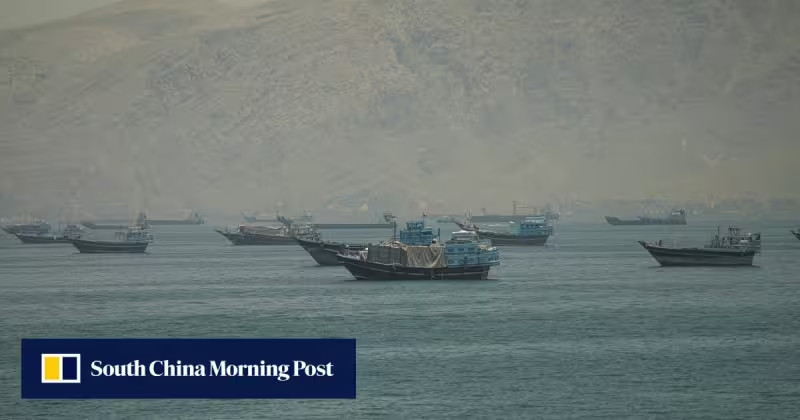
An explosion tore into the hull of a tanker close to its waterline as it sailed off Oman on Tuesday, damaging the vessel in the Gulf of Oman about 60 nautical miles east of Muscat.
UK Maritime Trade Operations said the captain reported an explosion on the hull and described the blast as an external explosion; "The crew and vessel are safe, although the master reports some bunker fuel has discharged into the sea." The agency said the crew and the vessel were safe, but that some fuel had leaked into the water.
The location and timing sharpen the incident’s significance: the blast occurred hours after US strikes on Iran and amid already high tensions around the blockaded Strait of Hormuz. The narrow waters that link the Gulf of Oman to the Persian Gulf normally carry one-fifth of global oil production, and attacks or accidents there ripple through shipping routes and markets.
Officials and maritime watchers said the damage near the waterline could have been caused by a drone boat or a limpet mine attached to the hull. Iran has been laying mines in nearby waters as part of its campaign to block Hormuz, a tactic that has turned routine tanker passages into potential combat zones and raised the cost and complexity of commercial navigation in the area.

The immediate consequence reported by UK Maritime Trade Operations was limited: no injuries were announced and the vessel remained afloat. Still, the master’s report that bunker fuel had discharged into the sea points to an environmental risk that may grow if the damage is deeper than initial assessments suggest. The leak will require monitoring and, depending on how much fuel escaped, could prompt a local response from regional authorities or cleanup crews.
The incident exposes a gap between official assurances and the practical danger of operating in contested seas. Agencies can report a crew is safe and a ship seaworthy this hour, but the use of small unmanned craft or mines means a single hit can rapidly escalate into a larger crisis — whether through spreading pollution, a cascade of navigational restrictions, or retaliatory strikes. That gap is precisely what makes the Gulf of Oman and adjacent approaches so fraught now.
Shipping companies and insurers already watch the Strait of Hormuz closely. The blast, coming after US strikes on Iran, creates a fresh layer of uncertainty about whether merchant vessels will be targeted again and how multinational navies will respond. Some commercial operators may reroute or accept higher premiums; others will press for clearer escorts or rules of engagement in transit corridors, but no such changes were announced in the hours after Tuesday’s strike and explosion.
For readers following broader coverage, cultural and sporting dispatches ran alongside the developing maritime story: Brett Goldstein attended a Netflix premiere in Los Angeles, Roman Safiullin has entered the 2026 season after a Wimbledon surge, and Jeļena Ostapenko’s return match lineup drew attention — reminders that breaking news and routine coverage move in parallel even as events at sea tighten global stakes.
The stark, unanswered question after Tuesday’s blast is also the most consequential: who carried out the external attack, and does this strike signal a sustained campaign to target tankers that would materially disrupt the one-fifth of global oil passing through the Strait of Hormuz?