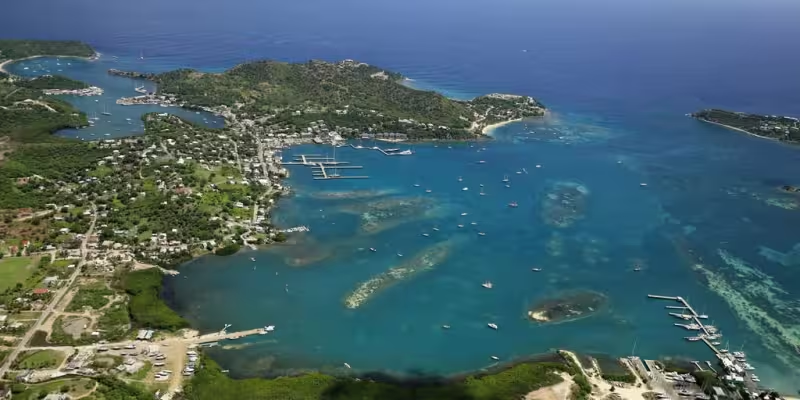
A magnitude 6.0 earthquake today rattled Antigua and Barbuda at approximately 10:50 a.m. on May 16, sending goods crashing from supermarket shelves and prompting climatologist Dale Destin to urge greater tsunami awareness and preparedness across the islands.
The United States Geological Survey measured the epicenter about 70 kilometers east‑southeast of Codrington on Barbuda’s west coast, a distance other instruments translated to roughly 43.5 miles from the village of Codrington. The USGS reported the quake had a depth of 30 kilometers. The University of the West Indies Seismic Research Centre recorded the same event at magnitude 6.4.
The shaking was felt broadly across the eastern Caribbean, with reports of tremors as far west as Puerto Rico and as far south as Martinique. Social media footage circulating after the event showed products falling from shelves in businesses and supermarkets, though there were no immediate reports of deaths or major structural damage.
At the time of the initial reports, weather and hazard outlets said there was no threat of a tsunami. Destin reiterated that the earthquake did not generate a tsunami but used the event to press local authorities and residents to increase preparedness. He highlighted prolonged shaking, sudden sea retreat and unusual ocean activity as natural warning signs people should recognize as possible precursors to a tsunami.
The quake is the latest in a pattern of seismic activity along the Lesser Antilles. Since 2016, four earthquakes of magnitude 6.0 or higher have rattled the arc of islands. Historical records show 30 magnitude 6.0 or higher earthquakes in the Lesser Antilles since 1900, including a magnitude 7.5 quake northwest of Antigua in October 1974 and the devastating Antigua–Guadeloupe earthquake recorded in 1843.
Antigua and Barbuda sit in a tectonically active region where the Atlantic Plate is being forced beneath the Caribbean Plate. That ongoing collision produces frequent earthquakes, and the islands’ history of strong temblors and occasional tsunami concerns is one reason specialists have long urged public education and preparedness measures.
The headlines from this morning are simple: a significant shake with wide reach, clear signs of household and commercial disruption, and no immediate reports of mass casualties or collapsed buildings. The tension in the aftermath comes from two facts that sit uneasily together—videos that show local damage to businesses and the official assessments that, so far, list no major structural failures. That mismatch raises immediate questions about inspections, reporting and how quickly authorities can move from initial assessment to targeted responses.
What happens next matters for public safety: authorities will need to complete systematic checks of infrastructure, prioritize inspections in areas where shaking was strongest, and follow up on the visible damage to shops and storage sites. More consequentially, this quake will likely intensify pressure on officials to act on the preparedness warnings Destin and others made: improve public information on natural tsunami warning signs and ensure evacuation plans and early warning systems are clearer and better practiced.
This earthquake today is not the region’s largest on record, but it is a sharp reminder that the Lesser Antilles remain seismically active and that visible disruption—fallen shelves, shaken communities—can appear even when a quake does not cause immediate catastrophic damage. The most important consequence is practical: without improved awareness and readiness, ordinary scenes of disruption can become far more dangerous if a future quake produces the ocean signals Destin described and residents do not recognize them or know how to respond.