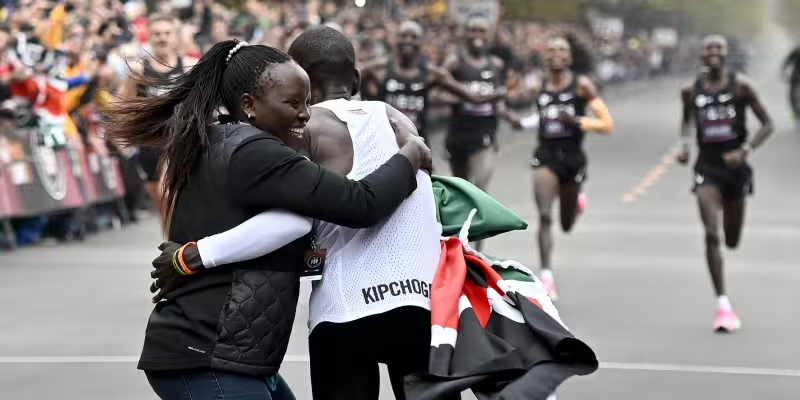
Grace Sugut crossed the finish line at the Cape Town Marathon on Sunday, completing her first marathon in 4:29:59 and joining thousands who finished on the city’s course.
Sugut’s time put her 2,353rd among 6,914 women in the field, a modest placing in a big race that turned personal at the finish when Eliud Kipchoge greeted her with a hug. Kipchoge himself ran to a 16th‑place overall finish in 2:13:29, and the pair’s embrace underlined what many in the crowd took away from the day: the event was as much about connection and story as it was about times and placings.
Before the race, Kipchoge urged journalists and runners alike to meet the distance head‑on. “My advice actually is to line up in the starting line,” he told the media. “Enjoy the whole race, feel that pain all through the race, cut through the finishing line, and, you know, she will be accomplished. She will not be the same.” Those words framed what happened for Sugut — a first marathon completed, and, Kipchoge wrote later on Instagram, a family milestone.
On social media Kipchoge reflected on his own journey in similarly plain terms. “I have run my first marathon 13 years ago,” he wrote, adding that early steps “have brought me to where I am today, but I could not do this without the support of many including my family.” He singled out Sugut in another post: “My heart is filled with pride, for my wife Grace completing her first marathon in Cape Town.”
The Cape Town stop was not only a pair of finish lines. It marked the first leg of Kipchoge’s planned world tour — a campaign in which he intends to run a marathon on each of the seven continents over the next three years. He called Cape Town special. “Cape Town, this was a special day,” he told assembled reporters, and later added, “Today was a celebration of running on this beautiful course, supported by thousands of incredible fans singing and making music along the route, and by fellow runners sharing the same race.”
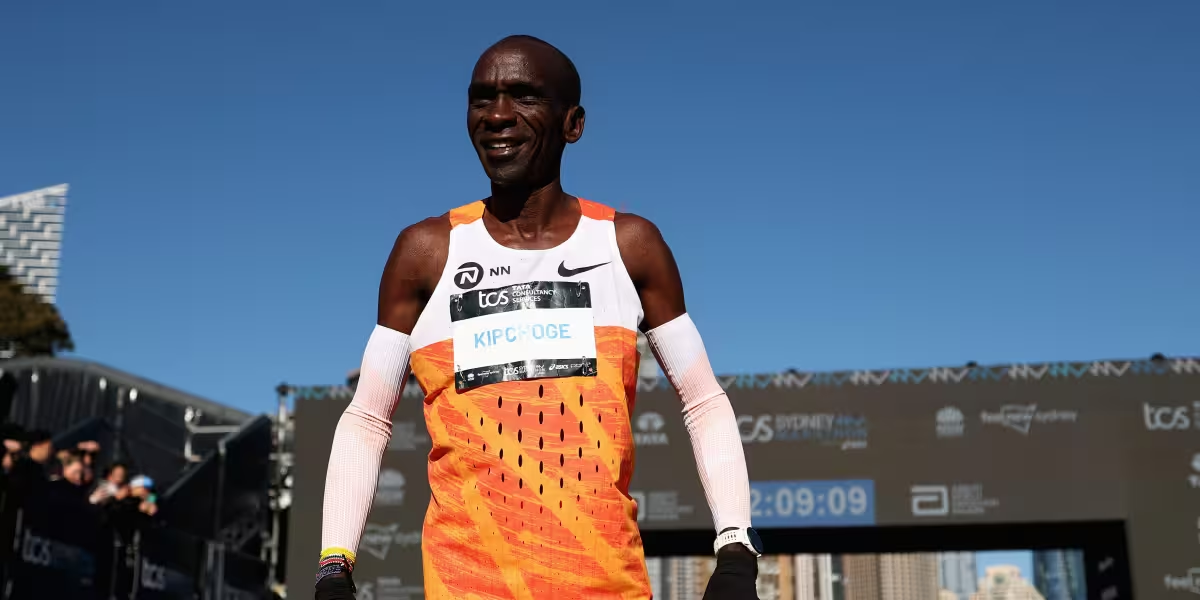
That ambition — racing for reasons that go beyond medals — helps explain the tone of the weekend. Kipchoge has been clear that his role has shifted toward ambassadorial work and raising awareness for causes tied to his foundation; the Cape Town event also feeds a fundraising element for the Eliud Kipchoge Foundation. For fans used to measuring him only by podiums, seeing him embrace his wife after a modest placing made the point: this tour will mix performance, promotion and personal moments.
There was a wrinkle in the tidy narrative, however. Kipchoge’s presence and the tour’s fanfare raised expectations that he might chase a headline time; instead the race served as a ceremonial opening and community event as much as an elite contest. “You all made our first stop on the tour one we’ll never forget,” he said, acknowledging the atmosphere while underscoring that his aims now include more than results on the road.
The world tour continues quickly. Kipchoge plans to run the Porto Alegre Marathon in Brazil on July 12 and the Melbourne Marathon in Australia in October, keeping a busy schedule this year that mixes southern‑hemisphere courses with his broader seven‑continent goal. For Sugut, Sunday’s finish is a starting point; for Kipchoge, it was the kind of beginning he described as “the perfect start” to an unusual campaign.
What remains clear after Cape Town is simple: the tour will be measured in moments as much as miles. Grace Sugut’s 4:29:59 is now a part of that story — a quiet, human counterweight to the planned continent‑hopping ambition of a runner who has made an art of turning races into broader public rituals.
Coverage of the race and surrounding stories is part of a wider set of running dispatches and event notes, from course records at the Cape Town event to road‑closure advisories in other cities; see related reporting on recent events and schedules for context, including Cape Town Marathon 2026: Mohamed Esa sets African course record and local marathon coverage and planning guides.