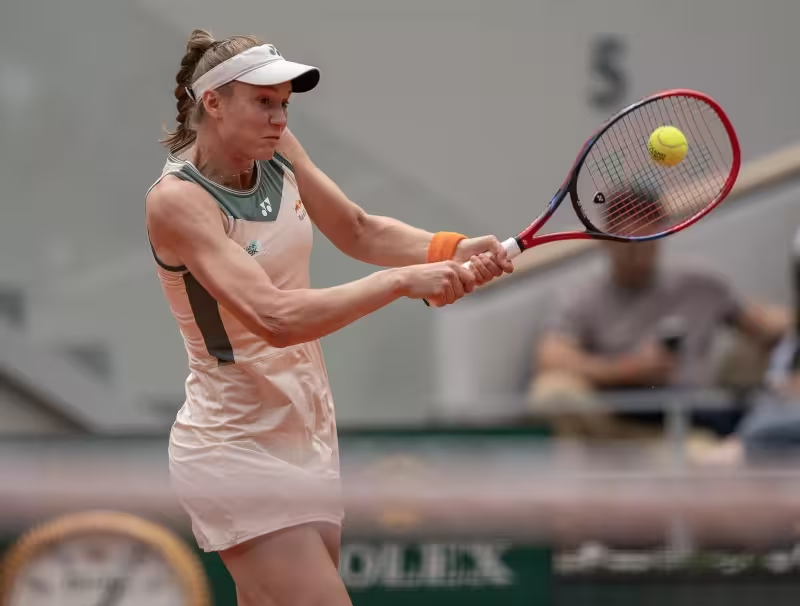
On day four of the French Open, with 16 matches on the schedule, Yuliia Starodubtseva drew 20th seed Elena Rybakina in a matchup that the preview predicted Rybakina would control with her serve and reach the third round.
The practical measure of the first round underlined why. Both players lost four games in their French Open openers, a tidy margin that left little doubt about form heading into the second matches. Nurein summed it up plainly: "Rybakina came through the opening round comfortably in straight sets."
The numbers matter because Starodubtseva is carrying points she must defend at Roland Garros — she arrived at the clay swing having reached a career milestone at Charleston — and the draw has handed her one of the tour’s most dangerous servers early on. Amanda warned: "Yuliia Starodubtseva reached a new milestone at the start of clay season with a run to the Charleston final, but since then she hasn’t shown she can compete with the very best of the WTA Tour, and right now Elena Rybakina is the very best."

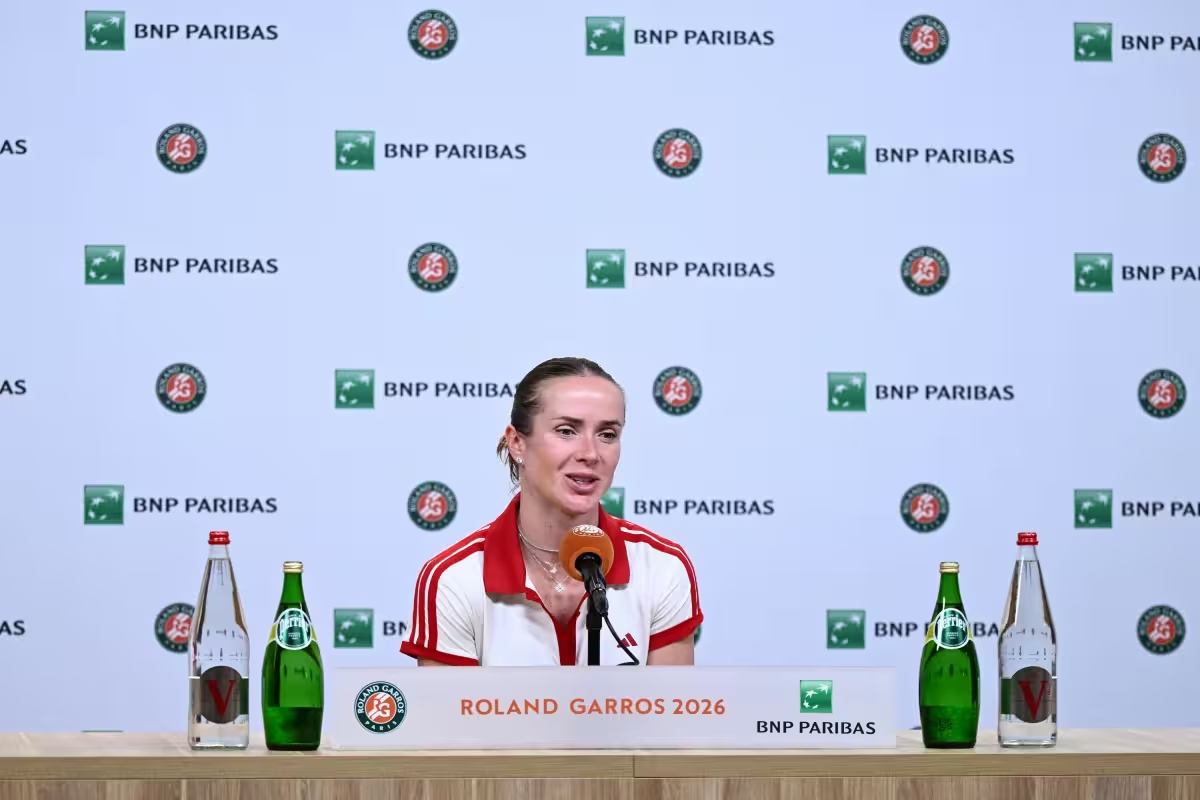

Context here is short and direct. Starodubtseva’s run to the Charleston final marked a turning point in her season; it was a clear career milestone. Since that run she has not, the article noted, proven she can regularly push into the upper echelon of WTA Tour competition. That gap in résumé is the hinge on which this match swings: few opponents have a weapon like Rybakina’s serve to force one-way points early in the rallies.
The tension is simple. Both players arrived having dropped only four games in their openers, which suggests neither is fragile. Yet Andreas offered the larger frame: "Both players lost four games in their French Open openers, but Rybakina has arguably been the best player of 2026." If that assessment holds, the clean, first-strike tennis and heavy serve that have defined Rybakina’s season will compress rallies and leave Starodubtseva little time to build the longer points that produced her Charleston breakthrough.
What happens next is predictable without being predetermined. The preview’s prediction — that Rybakina would control the points with her serve and reach the third round — rests on observable form from the opening day: efficient, comfortable wins that cost each player only four games. For Starodubtseva, defending third-round points at Roland Garros is not an abstract target; it is the immediate test. To keep those points she must extend rallies, manufacture chances inside Rybakina’s service games and find a rhythm she has not produced consistently since Charleston.
That is the clearest takeaway from the pairing: Rybakina arrives as the match favorite by dint of recent dominance, serve and straight-set momentum, and Starodubtseva arrives carrying both a career milestone and the pressure of defense. If she fails to convert the Charleston run into a repeat performance against top-tier opposition, the result will not merely be a second-round exit — it will underline the article’s central claim that she has not yet shown she can compete with the very best.