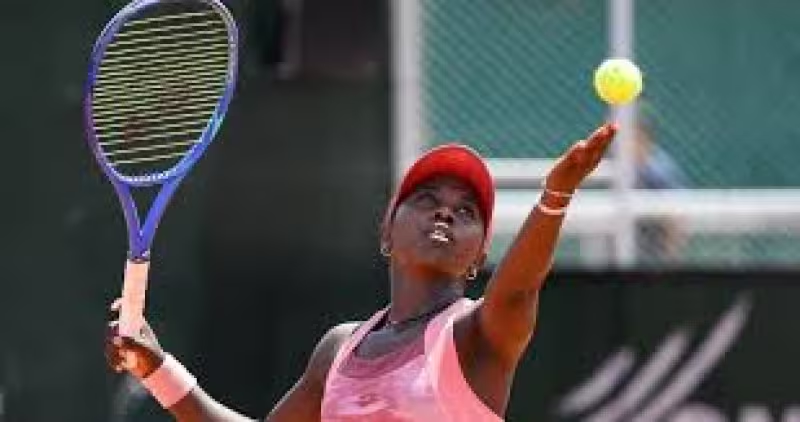
Yasmine Kabbaj beat Berfu Cengiz 7-6, 6-3 in the first round at the Grand Prix SAR La Princesse Lalla Meryem in Rabat on Tuesday, delivering the first WTA Tour match win by a Moroccan player since 2011.
Kabbaj, ranked No. 334 with a career high of No. 331, achieved the milestone as a wild card entrant and became only the fourth Moroccan woman to win a tour-level match in the Open Era. Her victory followed a breakthrough last month in Saint-Malo, where she scored her first career Top 100 win over Diane Parry at a WTA 125 event, evidence that the 25-year-old is arriving at this level with momentum.
The day produced other national firsts. Sada Nahimana defeated Ajla Tomljanovic 6-3, 7-5, becoming the first Burundian to beat a Top 100 player. Nahimana, ranked No. 231, has repeatedly rewritten her country’s tennis history in Rabat — she was the first Burundian to compete in a WTA main draw in 2023 and recorded the country’s first tour-level win in Rabat in 2025 after defeating Aya El Aouni. Her form coming into the tournament was strong: finals appearances at the Bujumbura W50 and the Platja d'Aro W35 among her four previous tournaments, and a semifinal run at the Zagreb W75 last week.
The Rabat action also featured a gritty comeback from 19-year-old Yelyzaveta Kotliar, ranked No. 528, who beat Francesca Jones 2-6, 6-3, 6-4 in two hours and 20 minutes after trailing 4-0 in the third set. Kotliar’s recovery underscored how quickly momentum can flip in these draws and how young players ranked well outside the Top 200 can upend expectations on any given day.
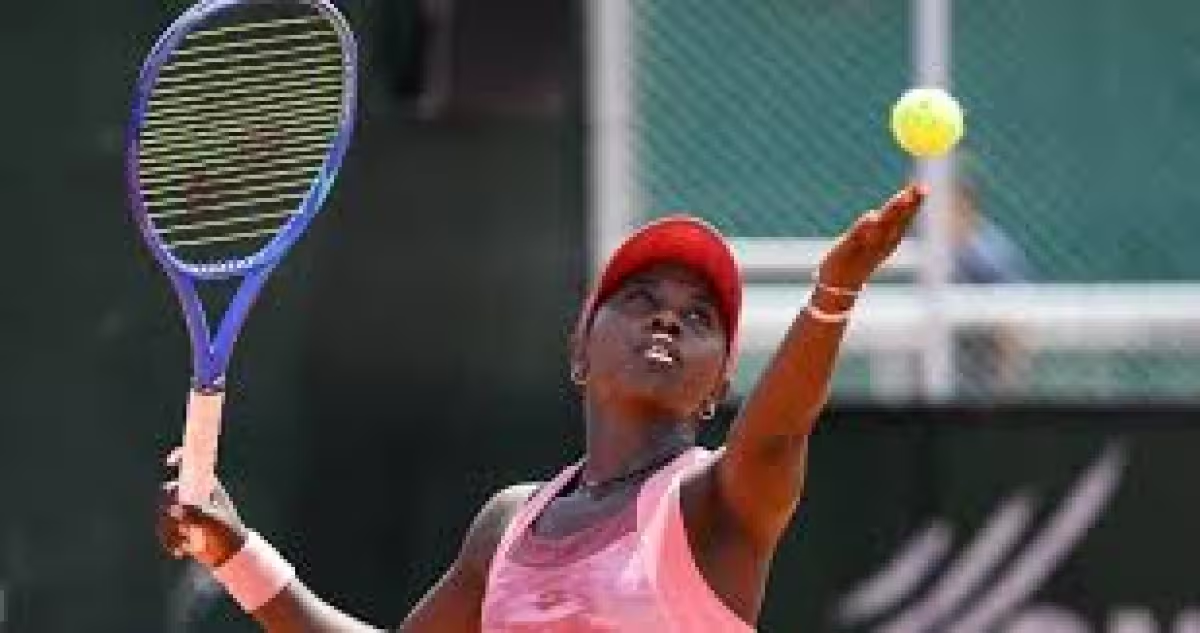
Context sharpens the significance of Kabbaj’s win. Morocco has long awaited a homegrown tour-level victory — Nadia Lalami’s run to the Fès quarterfinals in 2011 was the last landmark — and Kabbaj’s result establishes her as already the third-highest ranked Moroccan woman in WTA history. That she arrived at the milestone as a wild card at Rabat, having just made her WTA main-draw debut as a wild card in Rabat 2024, adds a local narrative: this is a player translating national opportunities into results.
The tension in these breakthroughs is clear. Kabbaj’s ranking — No. 334 — and narrow career-high gap to No. 331 underline how far a player still must climb to cement a permanent place among regular main-draw contenders, even as a Top 100 scalp in Saint-Malo shows she can do it. Nahimana’s streak of firsts for Burundi highlights how national milestones can outpace ranking progress; she has become a constant presence but remains outside the Top 200. And Kotliar’s win, from 4-0 down in the deciding set, is a reminder that rankings do not fully capture the volatility and depth on offer this season.
Rabat’s results also feed into a wider slate of attention around clay-court lead-ups elsewhere, where established names and rising talents sit on different parts of the ladder — fans following those threads will find related coverage, including matches involving players such as daria snigur ( For Morocco, though, Tuesday was unmistakably Kabbaj’s day: a home-court moment that carries both symbolism and substance.
This was not a lucky headline. Kabbaj has already proved she can beat Top 100 opposition and she did it again under pressure in front of a local crowd. The conclusion the facts support is straightforward: Kabbaj’s Rabat victory is a legitimate step toward re-establishing Morocco on the WTA map, and she leaves the tournament not as a footnote but as a player likely to push her ranking upward and force deeper attention on Moroccan women’s tennis.