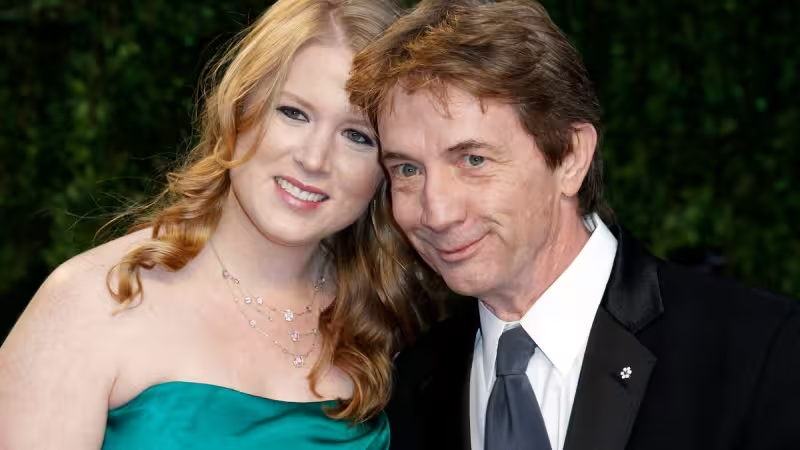
Martin Short prompted the welfare check that led to the confirmation that his eldest daughter, Katherine Hartley Short, had died in February. On Feb. 23, after not hearing from her in more than 24 hours, he asked a friend of his late daughter to check on her, and the friend later found a note on her bedroom door before calling 911.
Authorities then forced entry into the room and found Katherine dead on her bed, according to the details later cited from an autopsy report. A representative for Short confirmed her death on Feb. 24. The family said it was devastated and asked for privacy, saying Katherine was beloved by all and would be remembered for the light and joy she brought into the world.
The death has now been placed in sharper focus because of what came after the emergency call. The report cited by one account says Katherine Short, 42, was found dead by a self-inflicted gunshot wound and left a suicide note. It also says police found a Glock 19 9mm pistol by her chest and that investigators noted a documented history of mental illness and depression. The same report says there had been a previous suicide attempt in 2017 involving pills.
Short, 76, addressed the loss on May 10 in a CBS Sunday Morning interview, saying the past recent months had been “a nightmare for the family.” He said his daughter fought for a long time with extreme mental health, borderline personality disorder and other issues, and said she did the best she could until she could not. He also said he wants more people to take mental health out of the shadows and spoke of not hiding from the word suicide, but accepting that it can be the last stage of an illness.
The family’s experience has also been marked by earlier loss. Short shared Katherine and sons Oliver and Henry with his wife, Nancy Dolman Short, who died in 2010 from ovarian cancer. That history shaped the way he spoke about illness in the interview, drawing a line between mental health and cancer as diseases that can be terminal. The comparison was personal, not abstract, and it put language to a grief that had already been carried for years.
The tension in the case is that the first public confirmation came only after a welfare check, but the deeper story remained hidden for months behind grief and privacy. The family asked not to have its pain turned into spectacle, even as the report added specific details about the scene and the medical examiner’s findings. What comes next is not a new development in the case itself, but whether Short’s decision to speak so openly about suicide and mental illness pushes others to stop treating both as subjects that can stay in the dark.