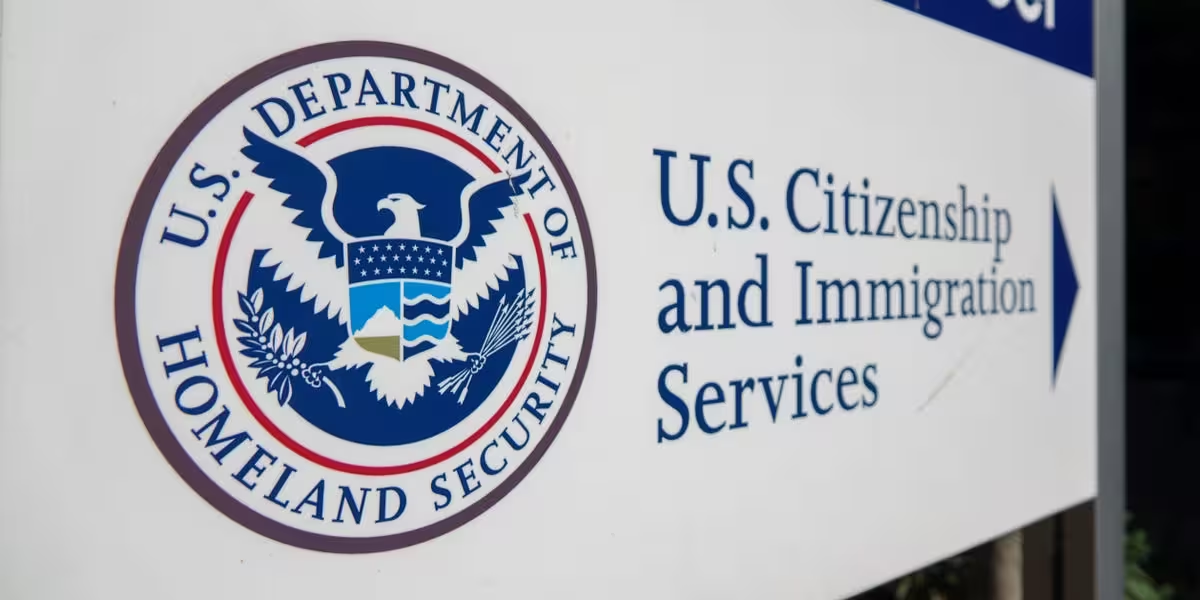
The Trump administration on Friday unveiled a new USCIS policy that would make it harder for immigrants already in the United States to become permanent legal residents. Except in extraordinary circumstances, people seeking green cards would have to leave the U.S., return to their home countries and apply at U.S. consular offices there.
For people like the families now caught in the process, the change lands hard. The Department of Homeland Security said the U.S. issued about 1.4 million green cards in 2024, and more than 820,000 went to applicants already living in the country through adjustment of status. That pathway has long allowed visa holders to remain in the U.S. while seeking permanent residency, often after years of paperwork and waiting. USCIS spokesperson Zach Kahler said the new rules would “make our system fairer and more efficient.”
But for many applicants, fairness is not how this looks. Former USCIS official Doug Rand said, “The purpose of this policy is exclusion,” and warned, “Remember that Trump has banned people from over 100 countries from returning to the U.S., so forcing them to go abroad for consular processing is no pathway at all.”
The stakes are especially sharp because the green card process is already long, expensive and complicated. The writer of the original account said their parents first applied for a green card in 1989 and that they did not arrive in the U.S. until 2002, a delay that captures how drawn out the system can be even without a new barrier. Across the country, multiple organizations help applicants navigate the process for free, but those supports cannot erase the disruption this policy could cause if people are forced to leave.
That is the friction at the center of the uscIS green card memo impact: the administration says it is streamlining the system, while critics say it will uproot lives and destabilize families. Applicants with children could be pushed into the cost of maintaining two households, and people who have already secured jobs and built careers in the U.S. could be forced out of those positions. The practical question now is not whether the policy will make the process harder. It will. The question is how many applicants will be willing, or able, to leave everything behind and try again from abroad.