
Greg Abel, who took over as CEO of Berkshire Hathaway at the start of this year, closed out the company’s position in Amazon and dramatically reallocated holdings in the first quarter of 2026, according to Berkshire’s 13F filing.
The filing shows Berkshire unloaded all of its Amazon shares—an exposure that before the sale had represented just under 0.2% of the portfolio—and more than tripled its stake in Alphabet class A shares to 54,249,798 shares, which now represent 5.9% of the company’s portfolio. The company also opened a new position in Alphabet class C stock, buying 3,585,215 shares that account for 0.4% of the portfolio, meaning Alphabet in total now makes up just under 7% of Berkshire’s holdings and ranks as the firm’s fifth-largest position after the quarter’s moves.
Abel’s first-quarter trading didn’t stop at tech. The filing shows Berkshire bought around 40 million shares of Delta Air Lines in the quarter, a purchase that pushed Delta to nearly 1% of the portfolio. The company kept its stake in Kraft Heinz while exiting holdings in UnitedHealth Group, Mastercard and Domino’s Pizza.
Numbers matter here because they change the shape of a portfolio that for decades reflected Warren Buffett’s conservative, long-holding approach. Tripling the Alphabet class A stake to more than 54 million shares and opening a class C position are clear, quantifiable shifts: Alphabet is now a top-five holding and nearly 7% of the book. The Delta purchase—roughly 40 million shares—revives one of Buffett’s long-running themes: airlines, a group he and his lieutenants have gone in and out of over the years. As Buffett once put it plainly: "Think airlines."
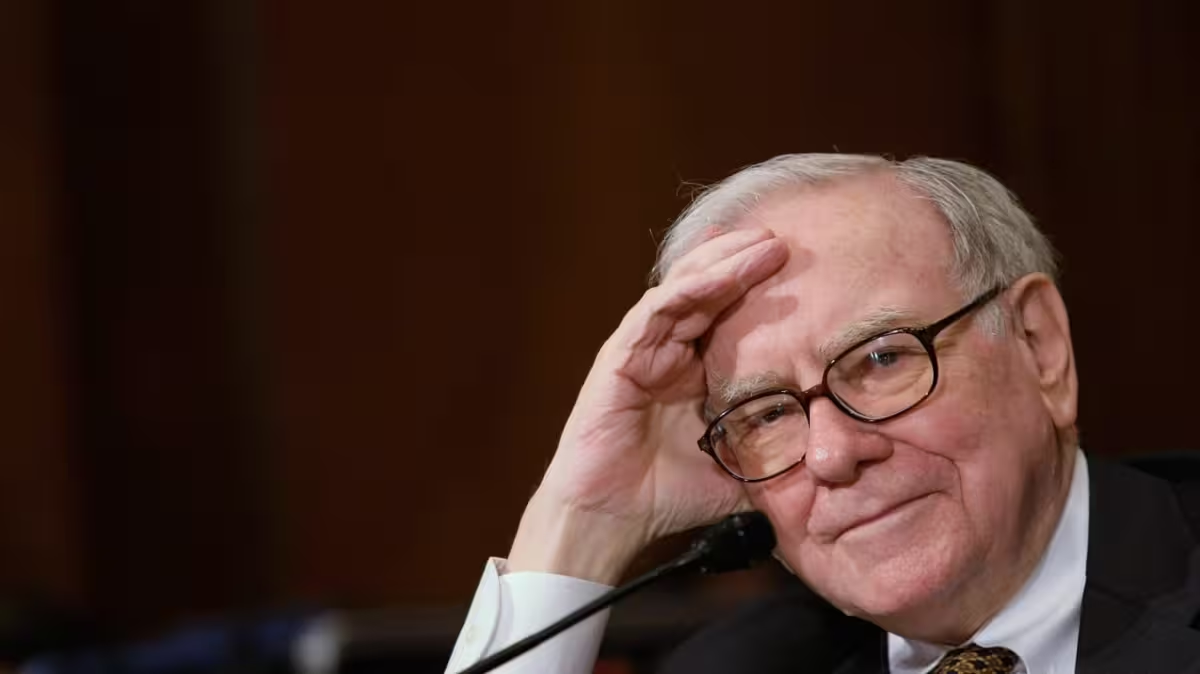
Context makes the move sharper. Berkshire’s relationship with these names did not begin under Abel: one of Buffett’s managers bought Amazon shares for Berkshire in the first quarter of 2019, and Buffett himself bought Alphabet shares in the third quarter of last year. Those earlier purchases under Buffett and his managers put tech names on a list the company historically avoided; Buffett has long favored quality companies at reasonable prices and long-term holdings, and he is generally known for steering clear of large technology bets. The 13F, however, shows the early signs of a portfolio now being run by Abel—and 13F filings do not explain the rationale behind buys and sells.
The friction in this story is straightforward. The person who bought Amazon and initiated the earlier Alphabet position was part of Buffett’s circle; the person now cutting Amazon loose and more than tripling Alphabet’s class A stake is the new CEO. That raises an obvious puzzle: are these merely tactical rebalancings, or the beginning of a different investment posture under Abel? The filing gives no explanation, and it leaves a gap between the archival record of Buffett-era purchases and the active reshaping recorded under Abel.
What the filing does make plain is that under Abel’s stewardship, Berkshire’s portfolio is moving in measurable ways—selling a small Amazon stake, increasing exposure to Alphabet to just under 7% of the book, opening a new class C position, and adding roughly 40 million Delta shares. Those are not minor fiddles; they are portfolio-defining shifts that rearrange top-five holdings and signal a willingness to tilt into technology and airlines simultaneously.
The conclusion from the quarter’s filings is simple: Greg Abel has begun to put his stamp on Berkshire Hathaway. By eliminating Amazon, bolstering Alphabet into a top-five holding and buying a large Delta stake, he has changed the company’s exposure in clear, countable ways—moves that will alter performance and scrutiny in equal measure as the company moves forward.