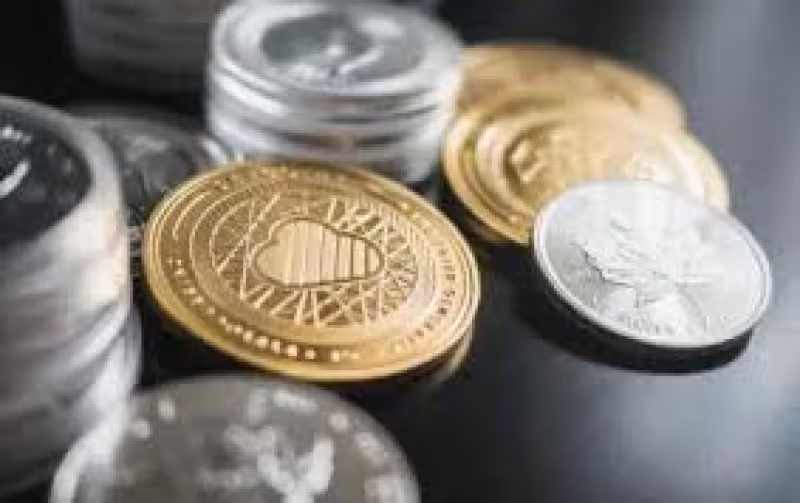
Silver rocketed over the last year, climbing from about $30 at the beginning of 2025 to roughly $79 by the start of 2026, a rise that more than doubled its price in twelve months.
The size of the move matters: rising from roughly $30 to $79 in a year concentrates gains that usually take much longer in metals markets and pulls ordinary savers and first-time buyers into a trade that for years was overlooked next to gold.
Industrial demand is the clearest mechanical reason behind the leap. Manufacturers of solar panels, automakers and electronics firms are using more silver, and that higher industrial demand is one of the verified factors pushing prices up even as other market forces shift.
Inflation and geopolitics have amplified that pressure. Historically, silver tends to perform better in periods of higher-than-usual inflation — a pattern visible when inflation was under 2% in 2019 and silver sat near $15 per ounce, and again in 2022 when inflation topped 9.1% and silver traded around $23 per ounce. Many analysts now point to the combination of rising prices and the current conflict in the Middle East as reasons investors worry about economic turmoil and supply chain disruptions.
That concern has drawn a broad set of forecasters into the same camp on outlooks. Experts at BlackRock and J.P. Morgan agree the outlook for silver remains strong, and many market watchers say silver could surpass $100 per ounce in the years ahead. By the end of 2026, consensus estimates in public forecasts put silver above $80 per ounce.



Tension between interest-rate mechanics and supply-demand fundamentals complicates the picture. When central banks such as the Federal Reserve raise rates, investors often shift money into bonds and other assets that yield interest rather than into silver; when rates fall, silver typically becomes more attractive and its price tends to rise. The recent doubling has occurred amid those shifting incentives, which means future moves will depend heavily on where rates and inflation go next.
Another friction point is accessibility. Silver coins and bars are an easier entry for new investors than gold because of a lower price tag, and that accessibility can magnify a rally as retail flows chase gains. At the same time, industrial buying is less fickle than retail sentiment: solar panels, cars and electronics will continue to consume physical silver regardless of short-term price swings.
For anyone watching markets today, the operative choices are clear. If inflation remains elevated and industrial demand keeps rising, silver is set up to climb past the $80 mark forecast for the end of 2026 and stay on a path toward the $100-per-ounce possibility that many experts cite for 2030. If interest rates move substantially higher and remain there, that could cool speculative demand even as industrial demand persists.
The price action already on the tape has pulled silver into both financial and cultural conversations — from investment pages into lifestyle pieces, and even into site coverage ranging from pop-culture pieces to sports commentary — underscoring how a once-overlooked metal has become a mainstream story.
The most consequential fact for readers today is simple: silver has already doubled in a year and market models from major firms point to more gains, making the metal a live bet on inflation, industrial growth and geopolitical risk. Investors and policymakers should watch inflation readings, central-bank moves and supply-chain headlines closely; those variables will decide whether silver reaches the $80 threshold in 2026 and the $100 mark by 2030.