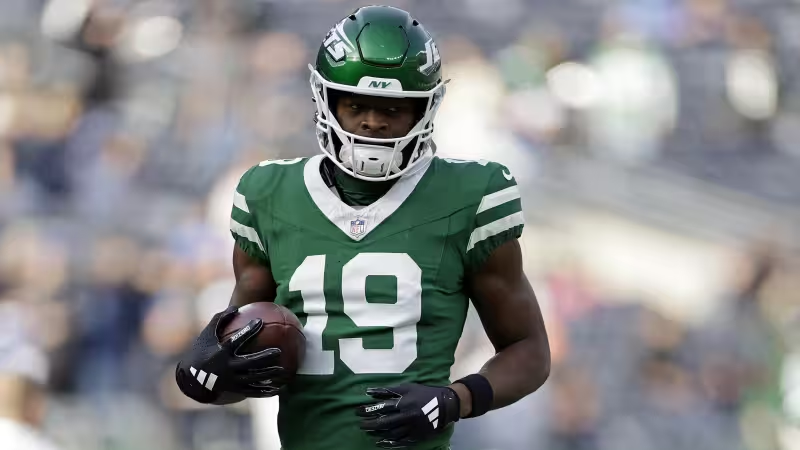
On May 27, 2026, the Seattle Seahawks acquired Irvin Charles from the New York Jets in exchange for a conditional seventh-round pick that Rich Cimini reported will be a 2028 selection.
Charles, 29, is a 6-foot-4, 219-pound receiver whose NFL résumé is built almost entirely on special teams: after signing with the Jets as an undrafted free agent in 2022 and spending that season on the practice squad, he played in 12 games in 2023 and 13 games in 2024. Across those two seasons he logged 450 special teams snaps, recorded 14 tackles and seven special teams tackles in each year, blocked a punt in 2024 and totaled just 53 offensive snaps; he did not catch a pass in either season.
His 2024 campaign ended in Week 14 when he tore his ACL in a loss to the Dolphins, and he did not play any game action last season while recovering from that injury. The Jets kept Charles last year as an exclusive rights free agent, a sign they valued his special-teams work even if it rarely translated to the offensive stat sheet.
For Seattle, the trade is a low-cost move for a player whose primary value is precisely the thing the Seahawks already prize: special teams. The pick moving to New York is a conditional seventh-rounder — minimal draft capital — and the acquisition adds a 29-year-old with four seasons in the Jets organization, heavy special-teams usage and a single notable play on defense in 2024, the blocked punt.
Context matters here: Charles’ track record in New York was almost exclusively downhill from the offensive line. He signed in 2022, spent that season on the practice squad, then carved out a role on kickoff and punt units. Over 2023 and 2024 he was a regular on special teams but saw only 53 snaps on offense. Seattle’s receiving room is already crowded, which limits any realistic expectation that Charles will carve out a meaningful role as a target in the passing game.
The tension is obvious. Charles arrives coming off a torn ACL and a season without game action; he has almost no catch history in the NFL and only 53 offensive snaps over two seasons. At the same time he has 450 special-teams snaps, 14 tackles and a blocked punt to his name — concrete evidence of the kind of gritty, role-specific player coaches ask for when they want depth on coverage units. If Charles makes the Seahawks’ roster, team sources say he would become the club’s 14th receiver in the room, which underscores how marginal the offensive upside is and how crucial his special-teams ability will be to his chances.
This is a low-risk, high-specificity move for Seattle: the club parts with a conditional 2028 seventh-round selection to add a 29-year-old who can immediately compete on special teams if his knee proves sound. The most consequential question now is not whether Charles can develop into an offensive weapon — his history says he has not — but whether he can pass a physical, show he has returned to the form that produced 450 special-teams snaps and a blocked punt, and outwork other candidates on coverage units during training camp.
Put plainly: the Seahawks bought special-teams insurance. Irvin Charles’ next meaningful moment will be training camp and the preseason timetable the Seahawks set for him; if he demonstrates full recovery and the same special-teams instincts he showed in New York, he will have a clear path to the roster. If he does not, this trade will look like what it is on paper — a prudent, low-cost gamble on a narrowly defined role.