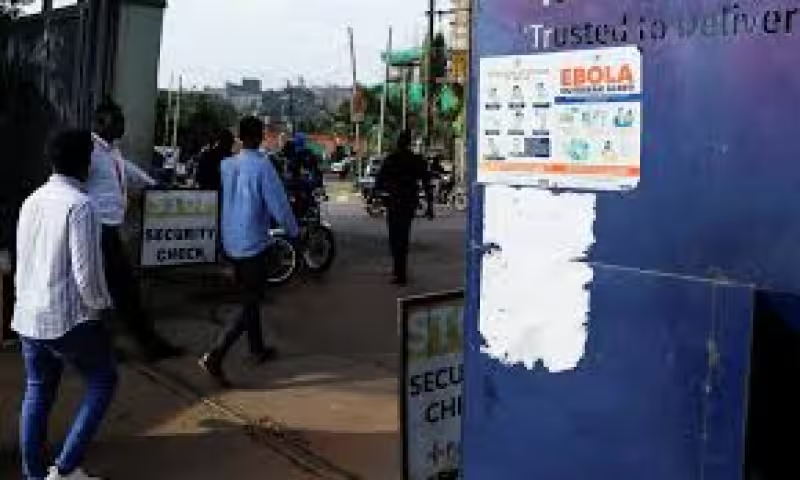
Canada announced Tuesday that travelers arriving from Ebola-affected regions must self-isolate for 21 days and that immigration authorities will temporarily suspend decisions on applications from Congo, South Sudan and Uganda.
Luc Brisebois, speaking for the government, said the measures are being implemented out of an "abundance of caution" and will remain in place until Aug. 29. Stricter border measures take effect Saturday, officials said.
The steps are twofold: travelers who show symptoms will be transferred to hospital for further medical assessment, and people who do not have somewhere to isolate will be provided with a place to complete the 21-day period.
On Wednesday, Canadian officials added that they are pausing final decisions on immigration applications from people in the affected countries for 90 days. They said that 90-day pause could be extended or lifted depending on how the outbreak evolves.
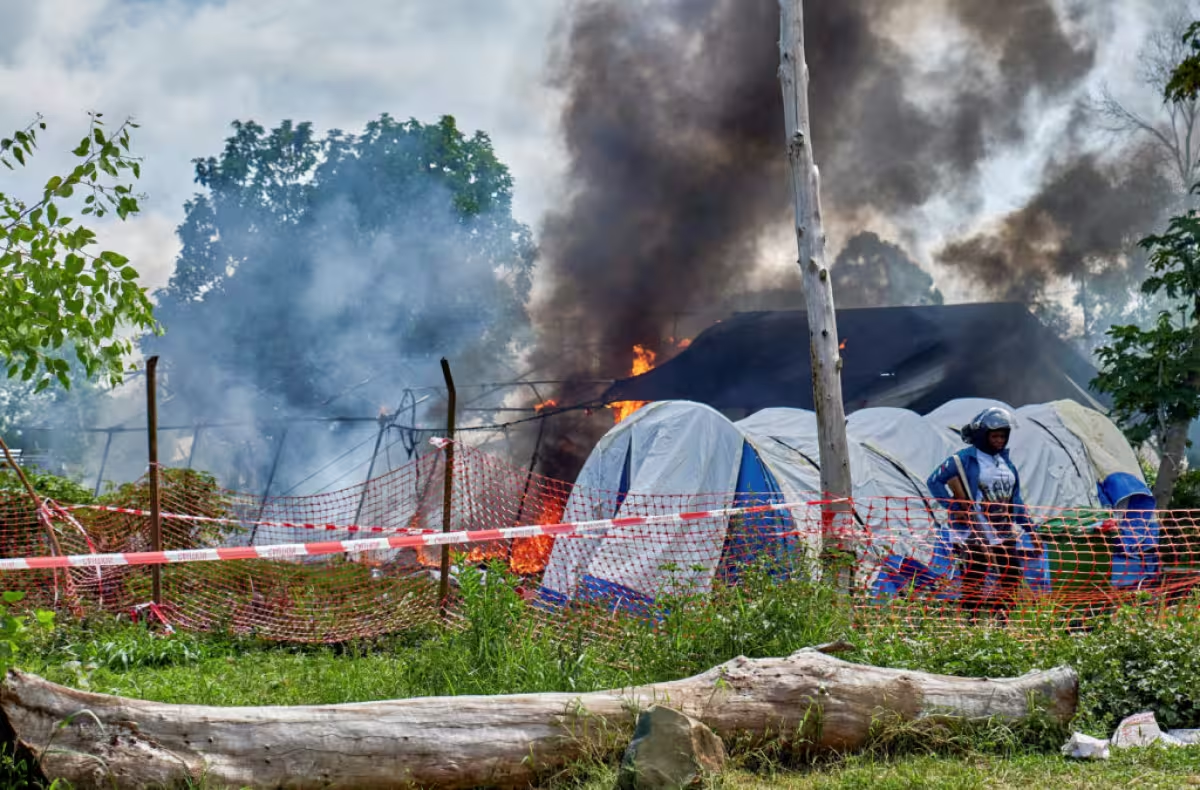
The numerical scale of the crisis underlined the urgency behind the Canadian moves: the World Health Organization says the outbreak, centered around northeastern Congo, involves more than 900 suspected cases and more than 220 deaths and is of a rare type of Ebola that is outpacing response efforts. WHO also warned the outbreak could last for months.
Those figures matter to how long Ottawa’s border and immigration adjustments might endure. The government set Aug. 29 as the date the initial measures will remain in force, but officials were explicit that the 90-day pause on final immigration decisions could be prolonged if the outbreak does not come under control.

The policy choices expose a tension between immediate public-health caution and longer-term immigration processing. Pausing final decisions for 90 days creates an explicit deadline that could be extended; setting Aug. 29 as the target to reassess locks the response in place for a finite stretch even as WHO cautions the outbreak could last for months.
For travellers, the effects are concrete and immediate: from Saturday, arrivals from the affected regions face mandatory isolation for three weeks, and anyone arriving with symptoms will be routed to hospital for assessment. For migrants from Congo, South Sudan and Uganda, decisions on applications have been halted and those applicants face at least a 90-day wait for final decisions.
Brisebois framed the package narrowly. He said the measures are an "abundance of caution," and officials stressed the limits — the temporary nature of the immigration pause, the fixed 21-day isolation requirement, and the promise to provide a place to isolate for those without one. Still, the combination of a fixed Aug. 29 checkpoint and a separate 90-day freeze creates two clocks ticking on different timelines, and officials left open the possibility either clock could be adjusted depending on outbreak conditions.
The WHO’s assessment that the outbreak is outpacing response efforts and could continue for months sharpens the stakes: if the epidemic persists, Canadian measures described as temporary could be prolonged and the 90-day immigration pause might be extended beyond its initial scope. That raises the most consequential question now facing Ottawa — will the government extend these measures if WHO’s dire timeline proves accurate?
For people directly affected by the policy and for Canadians with travel plans, the next moves are clear. The stricter border measures begin Saturday; the immigration pause announced Wednesday runs for 90 days; the government has pegged Aug. 29 as the date the first round of steps will be reassessed. The outbreak’s course, and WHO’s warnings that it could last months, will determine whether those dates hold.
Outside government briefings, the announcement will reverberate in unexpected places: travel planners, diasporas and holidaymakers alike — from cities in Canada to destinations like the bahamas — will now factor a 21-day isolation rule and the prospect of longer immigration delays into travel choices and plans.