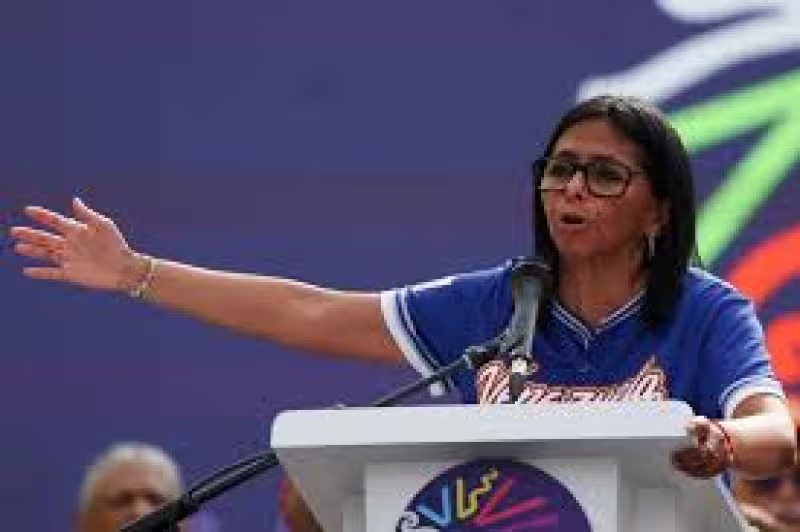
The Trump administration quietly instructed federal prosecutors in Miami to avoid pursuing criminal investigations into Venezuela’s acting president, Delcy Rodríguez, according to current and former U.S. law enforcement officials who described the directive as explicit and broad.
Delcy Rodríguez, a longtime figure in Nicolás Maduro’s inner circle, has repeatedly surfaced on U.S. federal law enforcement records dating back to 2018 but has never been criminally charged in the United States, unlike several other senior Venezuelan officials.
Former and current officials said the instruction was aimed at tamping down probes that could upset a fragile U.S. strategy to stabilize Venezuela following the capture of Rodríguez’s predecessor, Nicolás Maduro, and the transfer of Maduro and his wife to New York to face federal narcotics charges. "Everybody has been told to stand down," one of the former officials said.
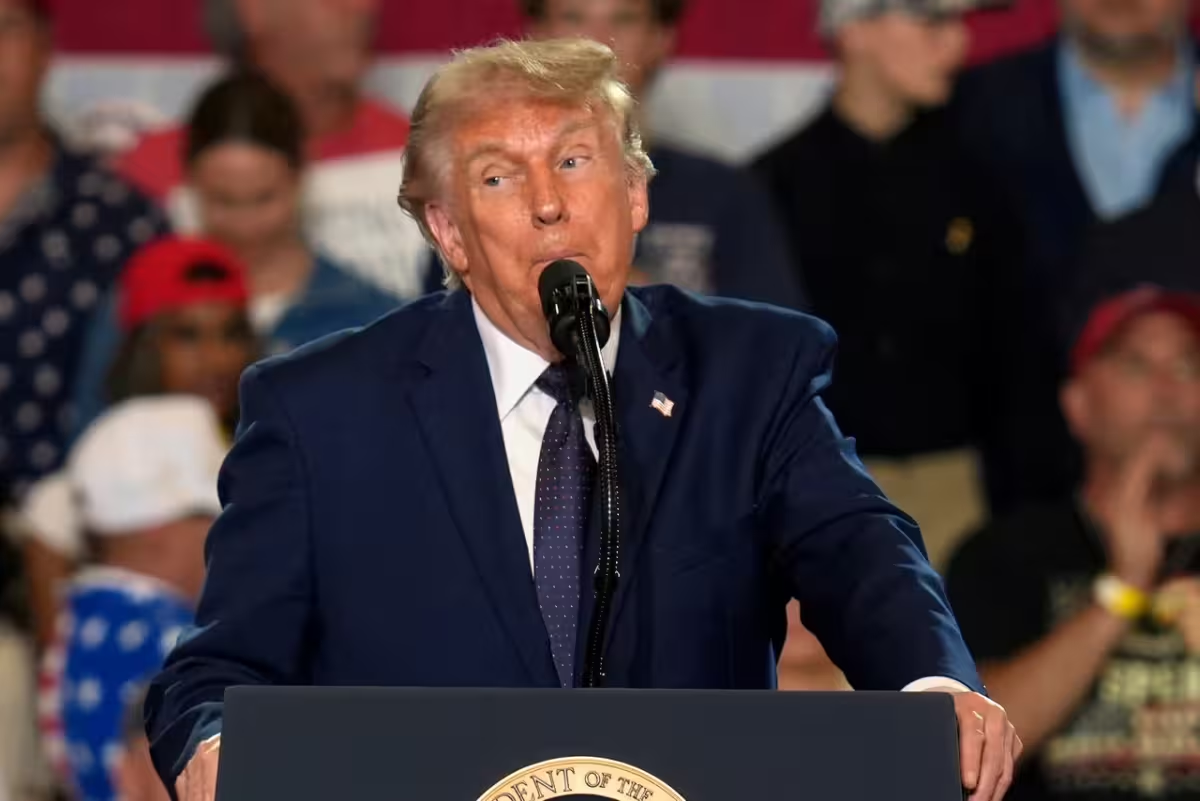
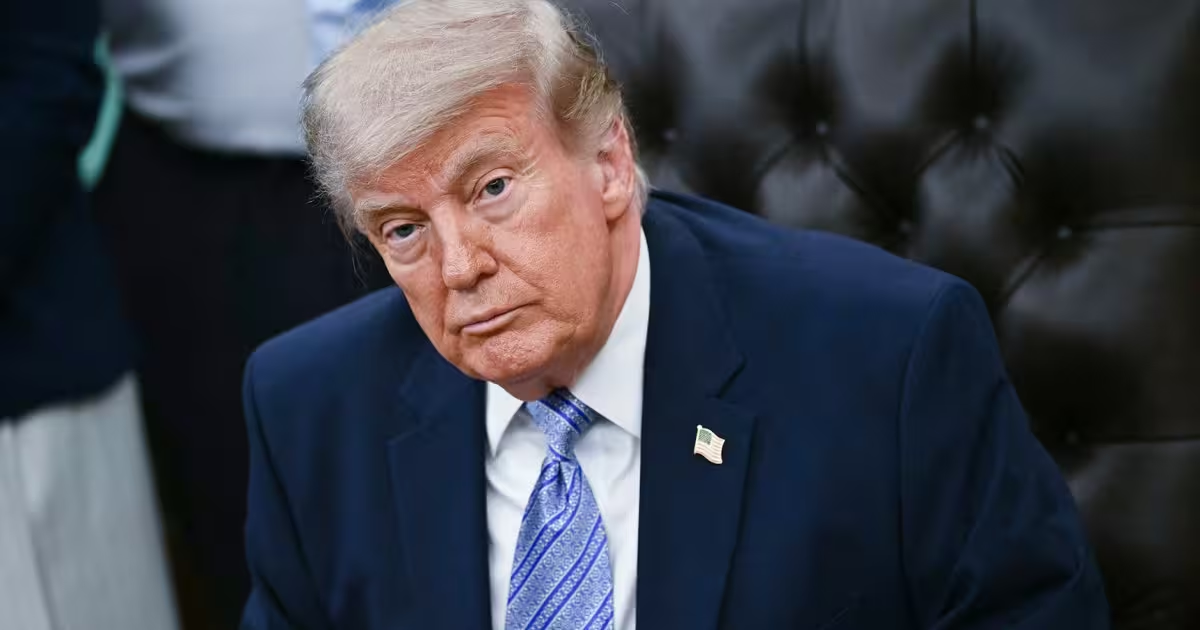
That quiet policy choice sits alongside a public warming of ties: in recent months the U.S. lifted sanctions on Rodríguez and has recognized her as Venezuela's sole head of state, and President Donald Trump praised her at least twice publicly — calling her a "terrific person" shortly after Maduro's capture and later writing that she "is doing a great job." Trump also celebrated a return of Venezuelan oil, writing, "The Oil is beginning to flow, and the professionalism and dedication between both Countries is a very nice thing to see!"
Weight to the report comes from law enforcement records and sanctions history. DEA records obtained earlier this year by The show Rodríguez consistently surfaced on the radar of federal law enforcement dating to at least 2018. She and her brother, Jorge Rodríguez, were hit with U.S. sanctions during Trump’s first term for their role in undermining Venezuelan democracy and cementing Maduro's rule — a fact that makes the administration’s decision to pause scrutiny striking to people inside the system.
Officials in Washington framed the directive as a narrow, pragmatic move: prosecutors were warned not to pursue cases that might derail diplomatic and economic steps aimed at stabilizing Venezuela and reopening oil ties. Rodríguez has in recent months hosted ceremonies with a steady stream of American oilmen; some of those ceremonies involved delegations led by U.S. Energy Secretary Chris Wright — including two meetings with Wright — and a delegation led by Secretary of the Interior Doug Burgum.
But the Justice Department pushed back on the notion that investigations were halted. A Justice Department spokesperson said "there was never an investigation into her to shut down," a line that directly contradicts the account given by the former and current law enforcement officials who described a standing order to limit scrutiny in Miami.
The contradiction is the key tension: DEA records and years of sanctions suggest Rodríguez was a legitimate investigative target for federal narcotics authorities, yet the White House’s operational choice — and public diplomacy praising her — appears to have insulated her from the very subpoenas and grand jury activity that produced charges against other Venezuelan officials. Rodríguez remains uncharged in the United States even as Washington opened the door to normalized ties and oil contracts.
The decision also lands as Venezuelan politics churn. The White House’s shift comes amid overtures to commercial interests and as opposition figures prepare their own moves: the Venezuelan opposition leader’s 2026 return and presidential bid has been widely reported and underscores the rapidly changing stakes at home and in Washington (Venezuelan opposition leader's 2026 return and presidential bid).
The most consequential unanswered question is now clear: will the Justice Department allow this pause to calcify into effective immunity for a long-standing DEA subject, or will law enforcement reassert itself if political conditions change? The answer will determine whether the United States treats the stabilization of Venezuela and the opening of its oil industry as a diplomatic priority that can override long-running criminal inquiries, or whether normal prosecutorial processes remain the baseline for U.S. policy toward Caracas.