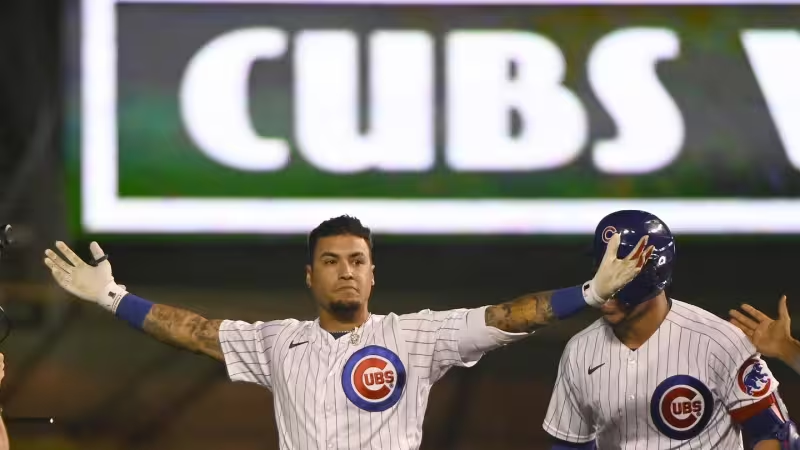
May 27 marked the five-year anniversary of a play that began as a routine ground ball in Pittsburgh and ended with Javier Báez standing safely on third base after a run scored and multiple errors.
The oddity is plain on replay: Báez, who had struck out earlier in the at bat, created an error on what should have been an ordinary grounder; the Pirates then threw the ball around as the sequence unraveled, and a play that needed only a step on first base to end the inning instead produced a run and Báez on third. The clip has been called one of the most ridiculous plays in baseball.
The arithmetic of the moment is simple and stubborn: a single routine ground ball, at least one throwing error by Pittsburgh, and Báez ending the sequence on third base — five years after the original game. That combination of mistakes and improbable reward is why the throwback surfaced again on May 27, and why the memory still lands with force for anyone who watched it live.
Context matters because Báez’s time in Chicago was not about tidy box scores; it was about tempo. Báez was a player whose hustle, aggression and flair produced memorable highlights and, at times, chaotic moments that Cubs fans came to expect. The sequence in Pittsburgh is framed by that era: the aggressive, emotional, flashy play that made him both exasperating and electrifying.
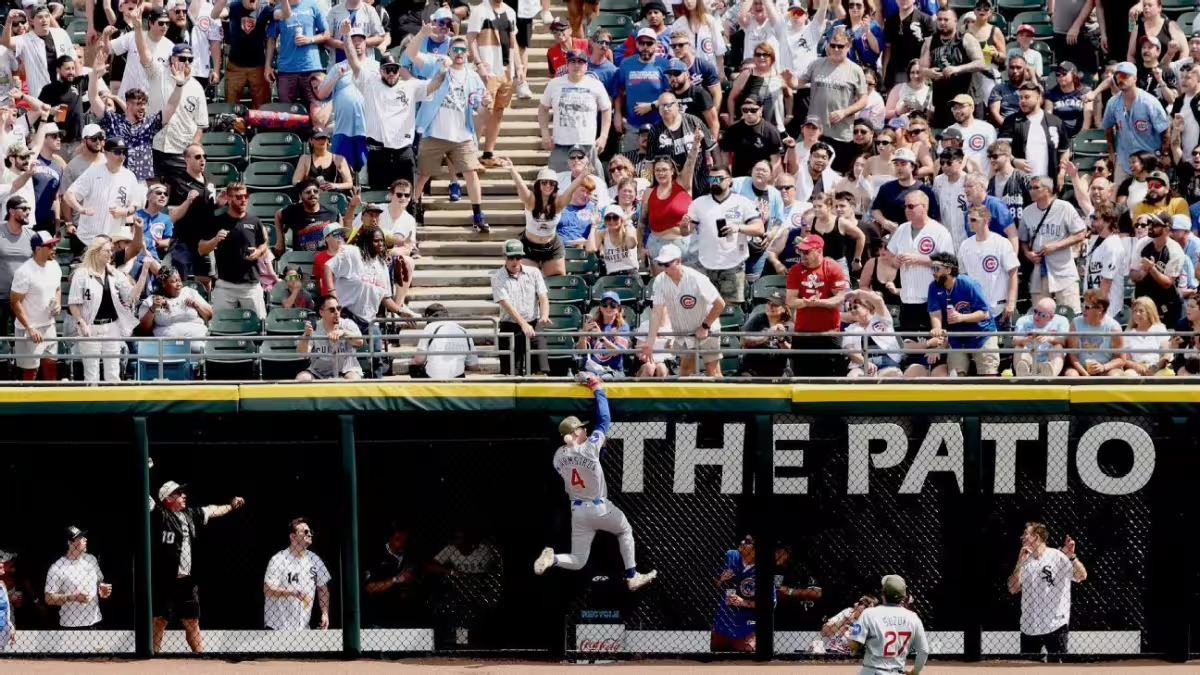

The tension in the play is its split personality. It began as a defensive lapse — Báez created the initial error and the opposing infield did not close the inning cleanly — yet it concluded as a small victory for the hitter: a run scored, an inning extended and Báez standing on third. The simplest fact in the clip also feels like its bitterest rebuke: the first baseman could have ended the inning by simply stepping on first base, and he did not.
That failure to finish the obvious task is what turns the routine into legend. For Cubs followers the play is less an isolated blunder than a thumbnail for an entire style of baseball: impulsive, imperfect and impossible to ignore. On anniversary marks like this one, highlights and talk drift between commemoration and critique — you see the hustle, you see the error, and you remember why both were so often part of the same headline.
There is a final, human beat to the story. Five years after the moment in Pittsburgh, the image of Báez standing on third base after striking out earlier in the at bat remains a shorthand for how quickly a game can flip from tidy to absurd. That shorthand is the legacy — not a tidy conclusion about talent or temperament, but an enduring reminder that baseball’s most memorable plays are sometimes the ones that refuse to make sense.
If anything follows from the five-year mark, it is this: the play does not fit a neat box. It belongs instead to the messy catalogue of moments that made Báez a polarizing figure in Chicago — the kind of player whose mistakes were as notable as his theatrics, and whose presence guaranteed that no inning would be entirely predictable.