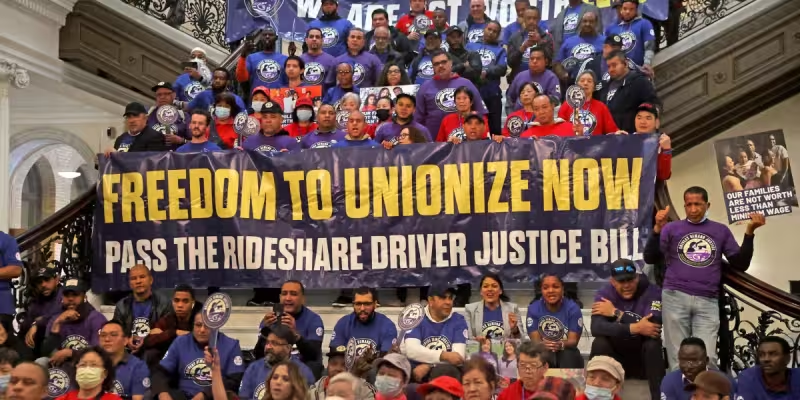
Drivers for ride-hailing apps such as Uber and Lyft in Massachusetts certified a union Tuesday, the first in the nation under a new state framework. Jean Fredo, who has driven for Uber for more than seven years, said the certification changes the math for him: "With the union, it will not feel like we’re working for nothing."
Organizers say the union could ultimately represent nearly 70,000 drivers statewide, and labor leaders called Tuesday’s result the largest private-sector organizing win since Ford autoworkers unionized in 1941. Alfred Potter captured that sweep of feeling as organizers closed in on certification, saying the campaign had been "still no more than a dream — a goalpost the app companies continued to move until they could move it no more."
The certification was allowed by a 2024 ballot measure that created a first-in-the-nation framework for ride-hailing drivers to unionize and bargain collectively while remaining independent contractors. Supporters and organizers framed the vote and the campaign that followed as a direct response to what drivers describe as rising vehicle costs, fluctuating pay and opaque app algorithms that steer work and earnings.
Victoria Acosta, who drives for both Uber and Lyft and helped lead the organizing effort on the ground, described the weeks and months of door-knocking and testimony that pushed the campaign over the finish line. "Without the support of the drivers, we wouldn’t be here," Acosta said, noting she spent months knocking on doors, testifying at hearings and speaking with hundreds of other drivers as organizers built support for the union effort. "If we did it, they can do it, too," she added, pointing to campaigns now under way elsewhere.
The win matters now because it converts a voter-approved legal framework into an active organizing reality that could reshape how app-based work is negotiated in the United States. Backers say the Massachusetts model — drivers remain independent contractors but gain a recognized mechanism to bargain collectively — will be watched closely in places like California and Illinois, where gig-economy labor fights are already active.
Still, the result leaves clear fault lines. Companies behind the apps have long argued drivers value flexibility and have opposed policies they say could reclassify workers or otherwise alter the industry. Drivers, meanwhile, highlighted the precarity of life on the platform: Fredo said drivers can lose access to the apps with little warning or opportunity to appeal. "I live with stress — always scared to lose my app," he said. "This is not a way to live."
Fredo gave the victory a personal frame that organizers used throughout the campaign. "This is my family," he said. "I’m fighting for a better life for them — just like everyone else is fighting for their families." He tied the union to concrete goals: "Now the money will not only stay in the billionaire’s pockets. The money will actually come to the workers who work very hard," and he summed up his long view with, "My dream is to save and send my kids to college, and I believe we will get there."
For drivers skeptical of centralized bargaining, the Massachusetts approach is meant to preserve the independent-contractor status while offering a recognized venue for collective negotiation. That hybrid model is the direct result of the 2024 ballot measure, and it is why supporters believe the outcome could be exported; organizers are already pointing to other states as potential next steps. Whether app companies alter algorithms, discipline practices or contract terms in response will be the practical test of how much the certification changes day-to-day work.
The friction between companies that sell flexibility and drivers demanding stability is the story’s engine. Organizers framed the certification as correcting a power imbalance; app companies framed it as a potential threat to the flexible work many drivers say they choose. The certification resolves one chapter: drivers in Massachusetts now have a certified union. The hard part begins at the bargaining table, where the union will seek enforceable changes to pay, access and dispute procedures without a conventional employer on the other side of the table.
Tuesday’s certification made a promise tangible for drivers who spent months building support on the streets and in public hearings. For Jean Fredo, who has driven more than seven years and who has described the job as a constant fight against unpredictability, the vote is more than symbolism. "With the union, it will not feel like we’re working for nothing," he said. That sense of possibility — of real bargaining power after years of uncertainty — is why thousands of drivers and labor leaders now treat the Massachusetts result as a test case for the gig economy nationwide.