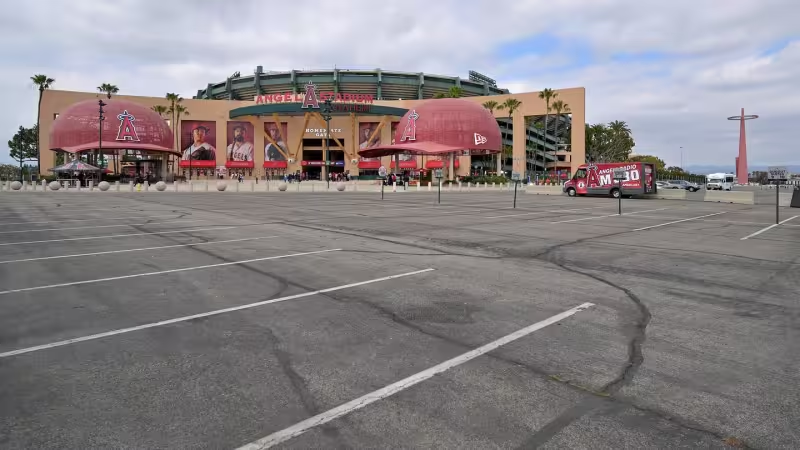
Assemblymember Avelino Valencia said the California Assembly’s unanimous vote last week on the “Home Run for Anaheim Act,” AB 2512, was a bid to reclaim the team’s identity for his city and could force the Los Angeles Angels to call themselves the Anaheim Angels in official materials.
The bill, sponsored by Valencia, who represents Anaheim, passed the Assembly without dissent and now moves to the state Senate. AB 2512 would require the team to use the name "Anaheim Angels" in official documents and marketing materials if the City of Anaheim grants special legal treatment for the sale, lease, or redevelopment of Angel Stadium. Valencia told reporters, "Anaheim is a world-class city," and said the community deserves recognition for its long-standing support of the team.
The measure is tied directly to Angel Stadium: it applies only when Anaheim extends special legal treatment tied to a stadium sale, lease or redevelopment. Supporters point to a long-running row over the team’s identity that dates to 2005, when the franchise changed its name to the Los Angeles Angels of Anaheim to tap into the larger Los Angeles media market. The city’s current mayor, Ashleigh Aitken, and a former mayor have both endorsed the bill, and Aitken has instructed the city attorney to explore whether the 2005 name change violated past lease terms.
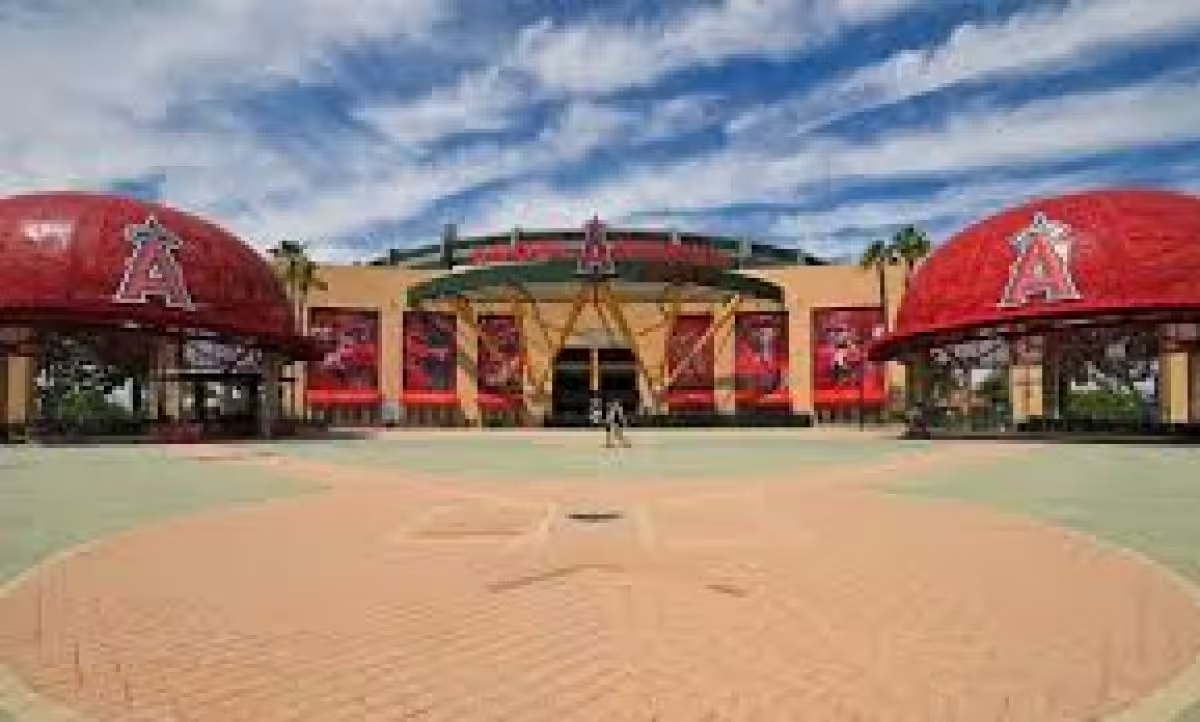
The bill lands against a rocky recent record for the Angels. The team has not reached the playoffs since 2014, and the organization has endured a failed stadium deal and a federal corruption investigation involving former Mayor Harry Sidhu. The Angels organization has not commented on the proposed legislation, leaving the central question—how the team will respond—open as the Senate considers AB 2512.
The tension in Sacramento’s move is straightforward: the bill would only bite if Anaheim offers special legal benefits tied to Angel Stadium, yet those same deals are precisely when the team’s branding matters most. Backers argue the city’s concessions should not undercut decades of local support. Opponents — who have not publicly responded to the Assembly vote — could argue the team’s decision to brand for a broader media market in 2005 was a commercial calculation unrelated to municipal approvals. Either way, the measure ties municipal leverage to naming rights in a new, legally prescriptive way.
For residents and fans, the fight over a name is also about place. Businesses and events in the city continue to draw crowds and headlines — from figure-skating shows that packed the arena to recent games at Angel Stadium — and those local ties are part of what backers say the bill seeks to protect. Coverage of events in town has included pieces such as Alysa Liu Draws Roaring Crowd at Stars On Ice in Anaheim and game reports like Zach Neto's two homers lift Angels to 9-6 win over Rangers in Anaheim and Rangers Vs Angels: Jacob deGrom starts in Anaheim as Texas chases.500, underscoring the stadium’s role in local life.
The next concrete step is procedural: AB 2512 goes to the state Senate, where lawmakers will weigh whether to enshrine a city’s leverage over a stadium into statute. If the Senate approves the bill and it becomes law, the result could be a forced reversion to the Anaheim Angels in the specific documents and marketing the law names. For now, Valencia’s message is plainly local — he opened the fight, and he closed his remarks the same way: "Anaheim is a world-class city," he said — a shorthand for why the community should, in his view, see its name in the team’s papers if the city’s own legal steps make that a condition of stadium redevelopment.