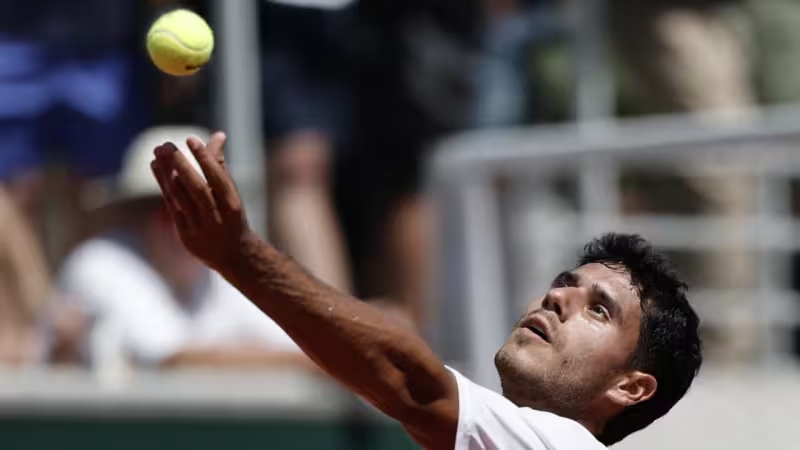
Adolfo Daniel Vallejo reached the second round of Roland Garros on 26 May 2026 after Britain’s Cameron Norrie retired while Vallejo led 7-6, 2-0.
The scoreline ended a match that had tilted in Vallejo’s favour from the tiebreak onward and, more broadly, handed Paraguay its first men’s Grand Slam main-draw win since Ramon Delgado’s triumph at the US Open in 2003; it was also the nation’s first victory in the Roland Garros main draw since Delgado beat Pete Sampras in 1998. Vallejo is ranked 71 in the world and is the third Paraguayan player ever to reach the top 100.
“Todo esto es nuevo para mí. Quiero aprovechar y disfrutar enfrentándome a los mejores jugadores,” Vallejo said after the match, speaking in Spanish about the moment’s novelty and his appetite for bigger tests. The win capped a strong run into Roland Garros: he had reached the round of 16 at the Madrid Masters 1000 and finished runner-up at the Valencia Challenger in the weeks before Paris.
Vallejo’s progress carries arithmetic weight: a top-100 player from Paraguay in the men’s game remains rare, and this victory broke a drought of 23 years without a Paraguayan man winning a Grand Slam main-draw match. For Vallejo, the result is both personal validation and national punctuation — the same history he cited when invoking Paraguayan names from the past. “Es cierto que mi país no tiene apenas tradición tenística a pesar de que acá en Paris Víctor Pecci llegó a una final (Frente a Björn Borg 1979) y una semifinal (1981 tras ganar a Jannick Noah) o cuando Ramon Delgado venció en cuarta ronda al número 1 mundial, el norteamericano Pete Sampras en 1998,” he said.
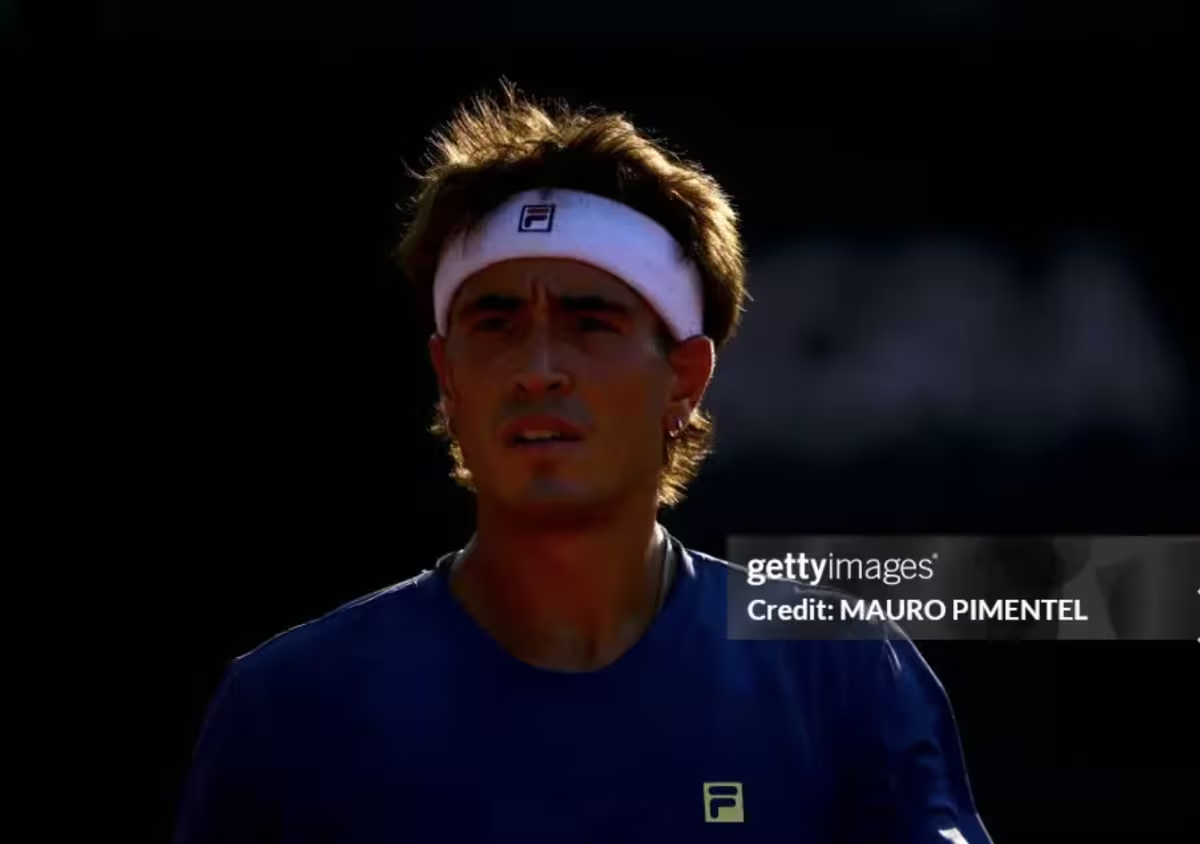
The immediate next match will be another testing assignment: Vallejo is scheduled to face Frenchman Moise Kouame in the second round. Kouame arrived in the draw having dismantled Marin Cilic in straight sets, 7-6, 6-2, 6-1, so Vallejo’s momentum now meets a player coming off a confidence-boosting win on home soil.
Tension in the story is not on the scoreboard alone. Vallejo has described the structural obstacles that sit behind his breakthrough, undercutting any tidy narrative that talent alone got him here. “Es cierto que soy el tercer tenista paraguayo en alcanzar el top 100 pero me ha costado muchísimo,” he said. He added that Paraguay’s size and lack of resources make professional preparation harder: “Mi país es muy chico y no tiene a penas recursos para la practica profesional del tenis.” He gave a concrete example of the extra burden: “Por ponerte un ejemplo, el aeropuerto de Asunción es tan chico que no tiene vuelos directos, ni siquiera con EE. UU., con lo que cada vez que tengo que disputar un torneo tengo que realizar un viaje más y sumar más horas de vuelo que cualquier otro tenista.”
That friction — a top-100 player emerging despite systemic limits — is what makes Vallejo’s run consequential beyond the match result. He is not only preserving a rare Paraguayan headline but also testing whether sporadic success can convert into a stable pathway for elite players from smaller federations.
What happens next is straightforward and immediate: Vallejo will play Moise Kouame in the second round, a match that will begin to answer whether his Paris showing is a single breakthrough or the start of a deeper run. He returned to the idea of enjoying the moment and learning from each top opponent: “Todo esto es nuevo para mí. Quiero aprovechar y disfrutar enfrentándome a los mejores jugadores.” If he can do that against Kouame, Paraguay’s long wait for Grand Slam impact may finally have a player capable of sustaining it.