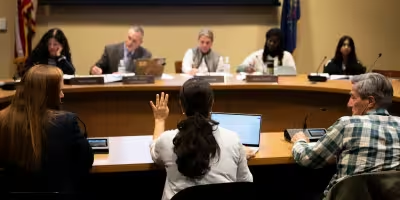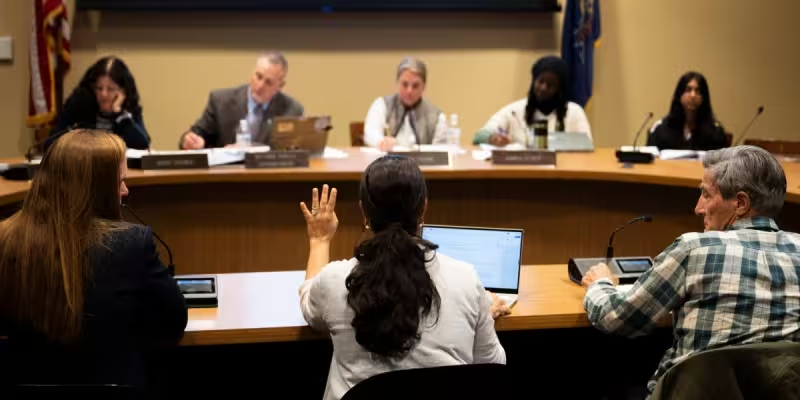
The Los Angeles school board last month passed a resolution that will remove school-issued devices for students through second grade, impose daily and weekly screen limits for higher grades and ban YouTube on school devices; eighth-grader Clementine — who does not have a phone — will feel the change this fall when the policy takes effect across the district.
The policy also bans devices at lunch and recess in elementary and middle school and orders an audit of the district’s education technology contracts — a move pushed by parents and teachers after a years-long expansion of classroom tech. Los Angeles Unified School District is the country’s second-largest school system, and the teachers’ union says the district’s education technology contracts amount to $1.6 billion.
For students like Clementine, the new rules will cut into habits that developed under the district’s previous tech push. She watches YouTube videos on her school Chromebook during the 30-minute ride to school, her Spanish class uses Duolingo, and almost all her homework is online. Parents in Los Angeles formed a group called Schools Beyond Screens last year and began pressing the district to restrict classroom devices; district leaders say the resolution is a response to those concerns and to a federal advisory issued last week warning that excessive screen use among youth is becoming a growing public health concern.
“The idea was that technology is the future, so we need to put tech in every child’s hands,” said Anna Soffer, who has watched classrooms change in recent years. “The Chromebook is just a world of distraction.” Her blunt daily example: “Every day, I’m battling, ’Who would you rather listen to, Ms. Soffer or Minecraft?’”
The weight of the decision is measurable: the district will audit contracts after spending billions on laptops, tablets and learning apps, and the vote joins at least 14 states that have proposed laws to limit screen time in schools. For families, the change is already practical — parent Katie Pace says she enforces limits at home, allowing one family iPad, one television, no screen time during the week and no screens in bedrooms — a household rule she says reflects what many parents now want from schools.
Context helps explain why the board reversed course. A few years ago many American public schools rushed to put a device in every child’s hands; cellphone bans became the norm in classrooms before attention shifted to school-issued machines. The movement for screen-time limits has coalesced into a public policy issue, with state legislatures, parent groups and federal health advisers all weighing in.
The policy contains its own friction. Teachers and families face a practical contradiction: the district is limiting screens while millions of dollars in education software remain in use and some classes, like Clementine’s Spanish course, rely on apps. Almost all her homework being online means the district must decide whether to change lesson plans, provide non-digital alternatives, or exempt certain academic uses from the limits it has set.
The teachers’ union’s $1.6 billion figure and the audit requirement underscore another tension — who decides what technology stays and what goes. District officials say an audit will review contracts and vendors; parents and advocates want tighter controls on both software and in-school use. The vote also landed amid wider coverage of classroom technology — the decision has threaded into artificial intelligence news and broader tech reporting as public debate shifts from access to limits.
The likely consequence is clear: Los Angeles Unified will be forced to rewrite the practical terms of schooling. If almost all homework is online now, the board’s policy will compel teachers, families and the district to choose between redesigning assignments, provisioning alternatives, or loosening rules for instructional tools — and that choice will determine whether the resolution reduces screen time or simply reshuffles where it happens.