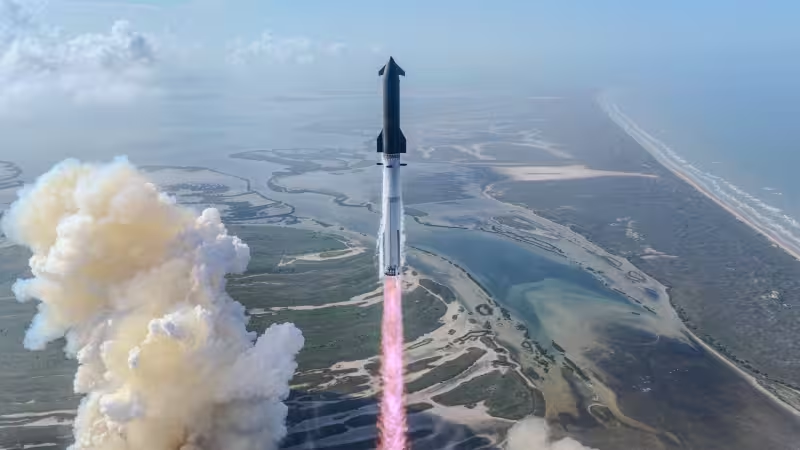
The Federal Aviation Administration grounded SpaceX’s Starship V3 megarocket on May 27 after deciding that the company’s May 22 Flight 12 launch from Starbase, Texas, ended in a mishap. The agency said the problem involved the Super Heavy booster as it arced back toward the Gulf of America after stage separation.
That decision keeps the 408-foot-tall rocket off the pad until SpaceX completes a mishap investigation and the FAA signs off on the final report and corrective actions. The agency said a return to flight depends on its finding that any system, process or procedure tied to the mishap does not affect public safety.
For SpaceX, the failure landed in the booster, not the upper stage. The company intended the Super Heavy to light one of 33 Raptor engines for a boostback burn after Starship separated, then finish with a landing burn and a soft splashdown in the Gulf. Instead, the booster appeared to suffer failures of several Raptor 3 engines shortly after the burn began, and the maneuver ended after less than 20 seconds, far short of the about one minute it was scheduled to last. The stage then struck the water at nearly 1,500 kilometers per hour and dropped into a debris response area activated by the FAA.
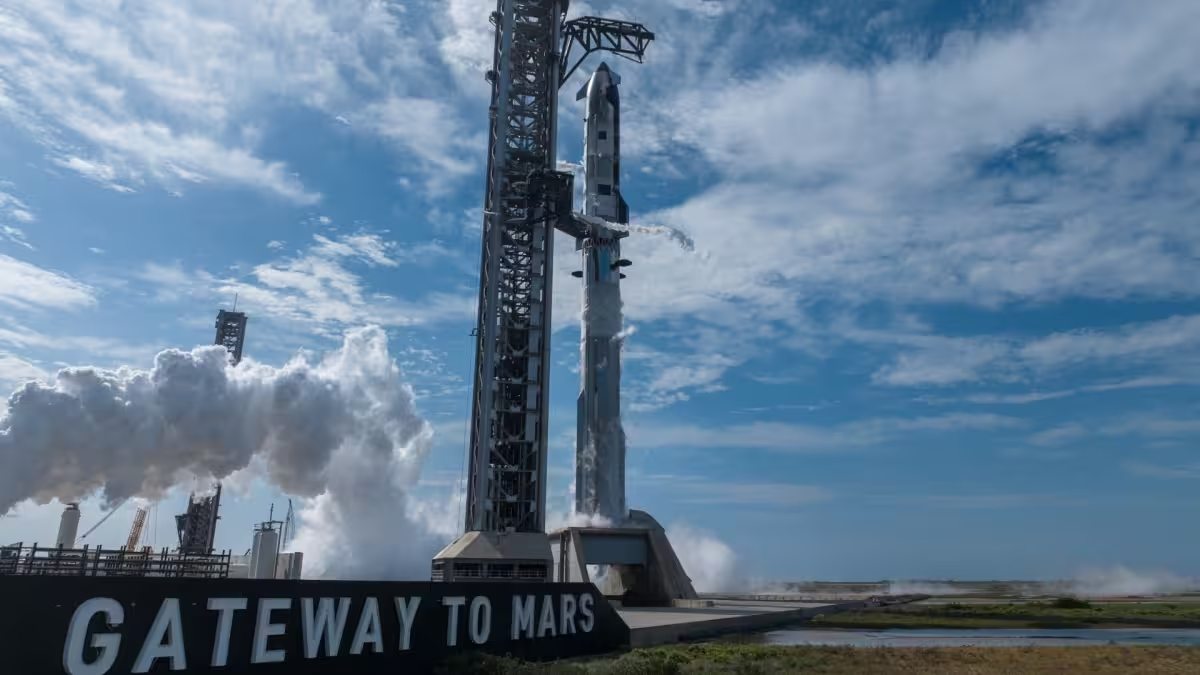

Flight 12 was the first launch of Starship version 3, a heavily upgraded spacecraft and booster stack that SpaceX says is built around new hardware, including Raptor 3 engines. The mission still produced some milestones: SpaceX deployed 20 dummy Starlink internet satellites and two actual Starlinks, and the upper stage completed a soft splashdown in its target zone in the Indian Ocean. SpaceX described the upper stage’s ending as “experiencing a hard splashdown” only after the booster’s trouble had already become clear.
The FAA had already said immediately after the launch that it was investigating anomalies involving the Super Heavy booster. On May 27, it went further and formally labeled the launch a mishap, which means Starship cannot fly again until the agency approves SpaceX’s investigation report and corrective actions. The launch also triggered debris response procedures and caused several aircraft departures to be delayed or held in the air.
That leaves SpaceX with a familiar but costly pattern: a test flight that reached some objectives, a booster failure that shut down the next step, and a federal process that now controls when the company can try again. For a program aimed at reaching 2028 milestones, the immediate question is not what Starship can do in a clean run, but how quickly SpaceX can convince regulators that the Super Heavy failure has been understood and fixed.